
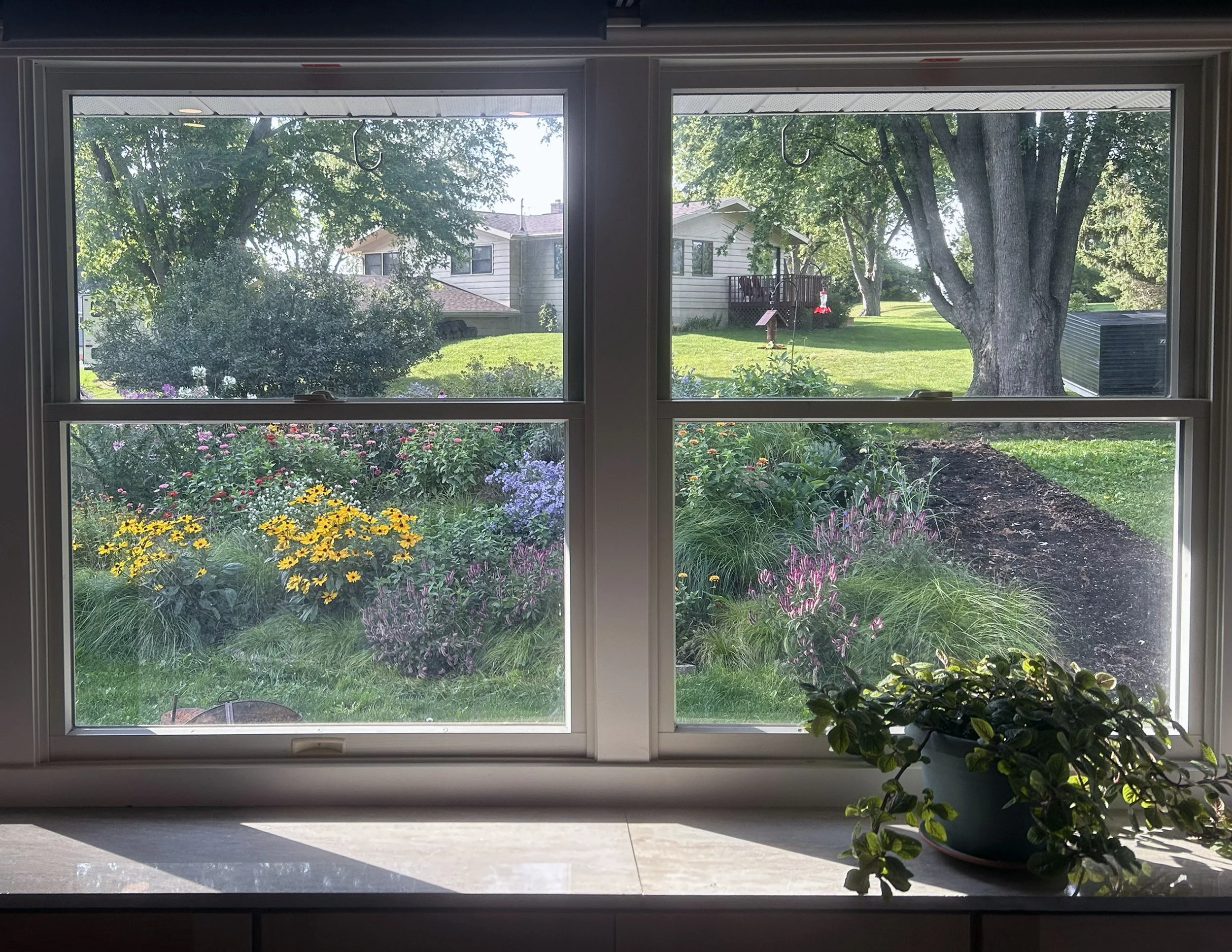
Kim’s Corner
Kim Slava is Kristin's husband and a driving force in the experimental garden that is their yard.
Greenhouse Temperature Control
TOO HOT!
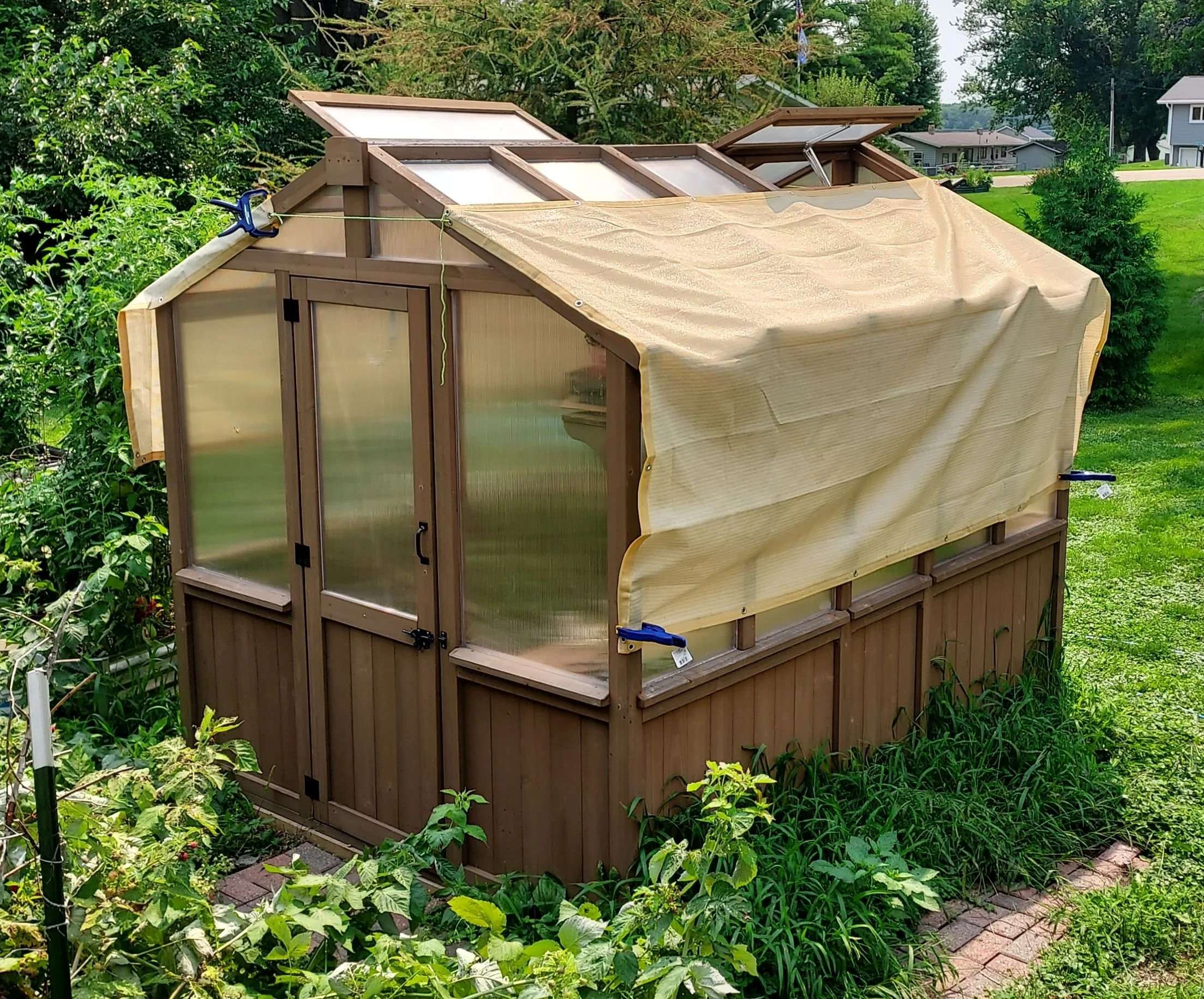
After we built the greenhouse and it got to be summer, the interior temperature could skyrocket up to above 130 degrees F. The greenhouse has two ceiling vents that open automatically when the temperature is around 90 degrees and there is a passive vent at the bottom of the back wall for inflow. Despite these built-in features it gets too hot.
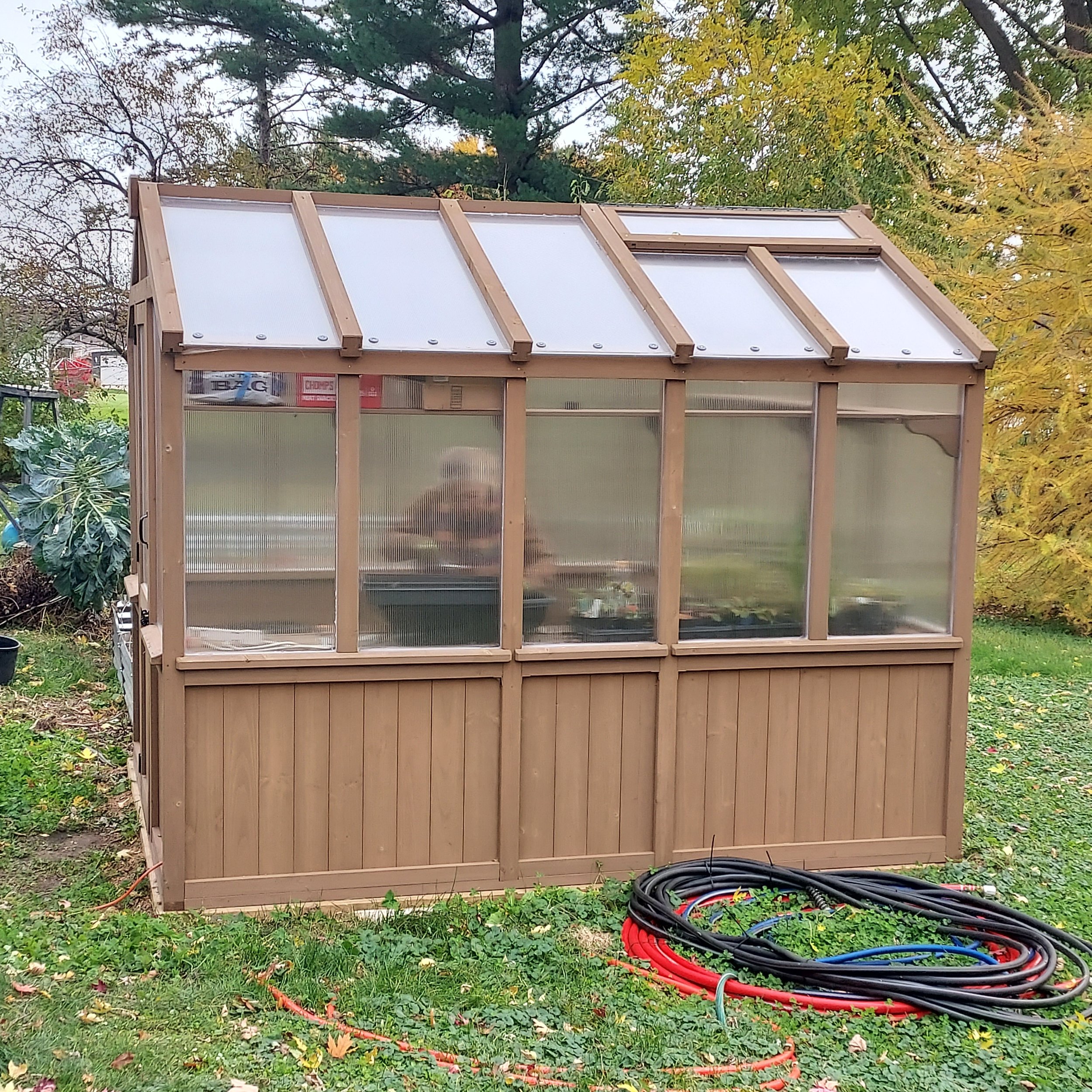
Kristin potting plants inside greenhouse.
I started by putting a cheap box fan pulling air in at the low vent…little improvement if any.
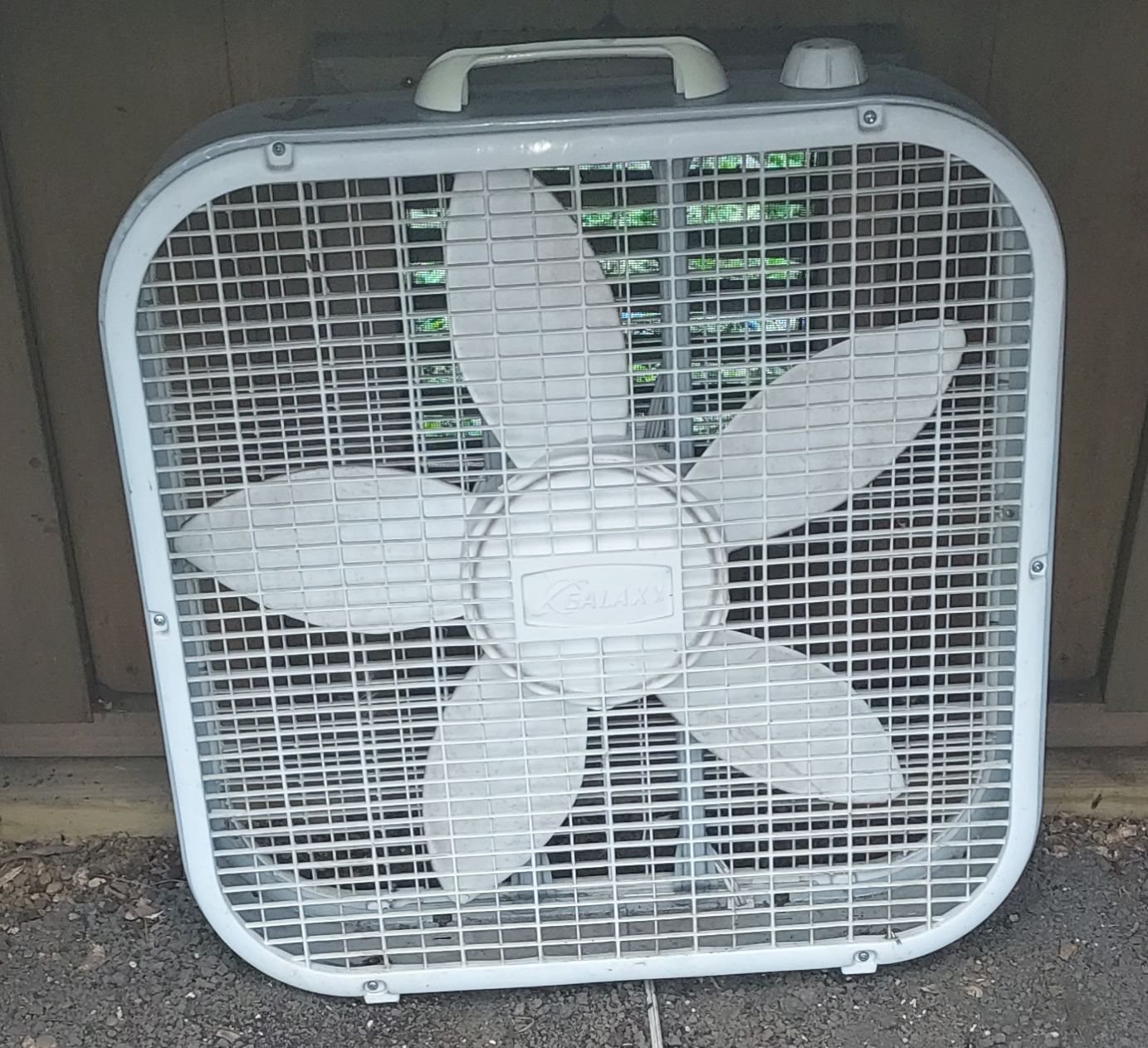
Next, I tried a more powerful fan at the low vent and still no appreciable improvement. The fan sat inside the greenhouse, up against the vent. Not air tight by any measure.

The next attempt was adding shade cloth with a 90% shade rating. This brought the peak temperature down to the mid 120 degrees. Still too hot.
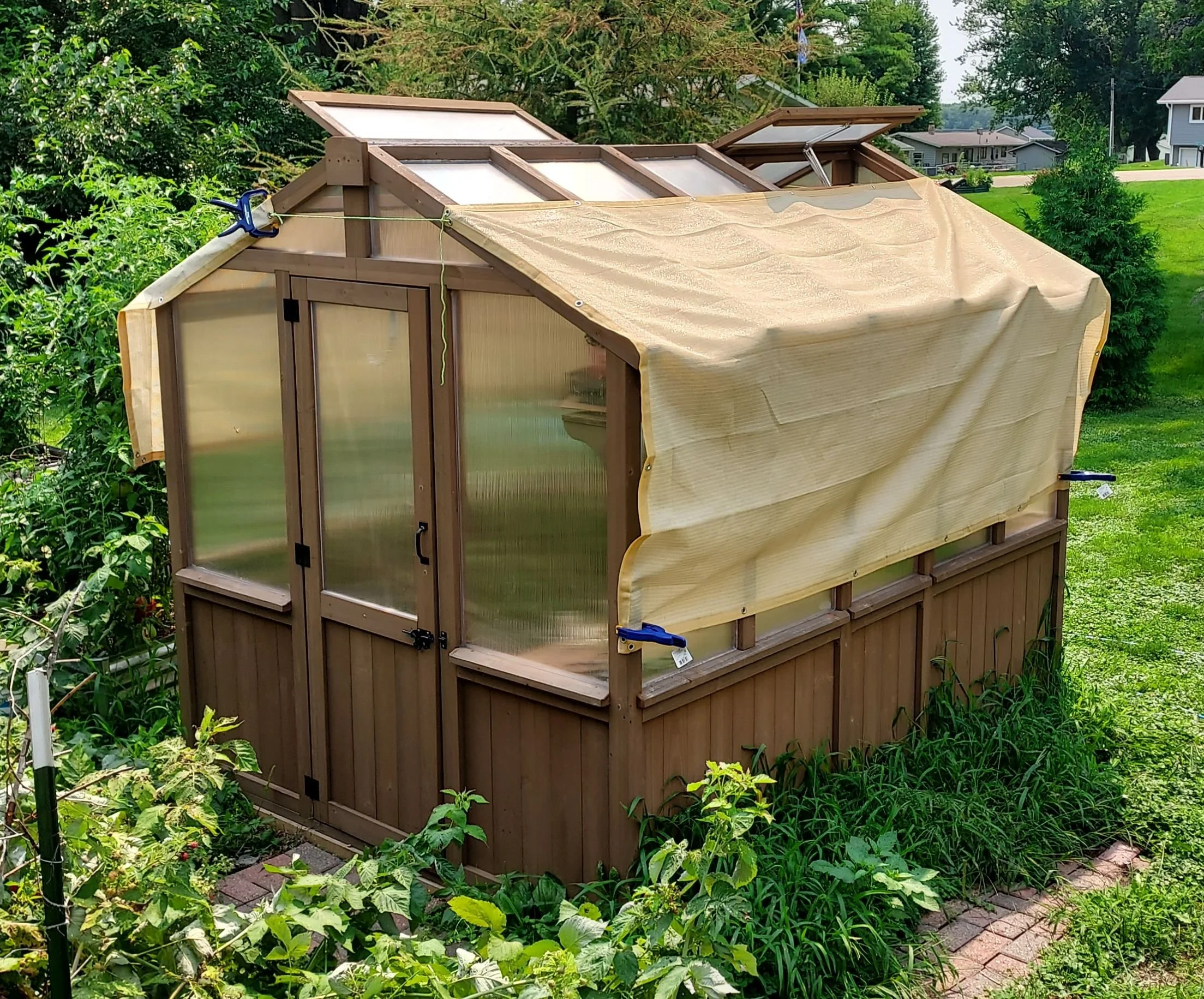
Next, I replaced the inflow fan at the low vent with a purpose-built fan rated at 1597 CFM (Cubic Feet per Minute). This fan is installed air tight to the vent, pulling air into the greenhouse at the bottom. The fan is really intended to exhaust out, so I built this airtight box to have it sucking air in.
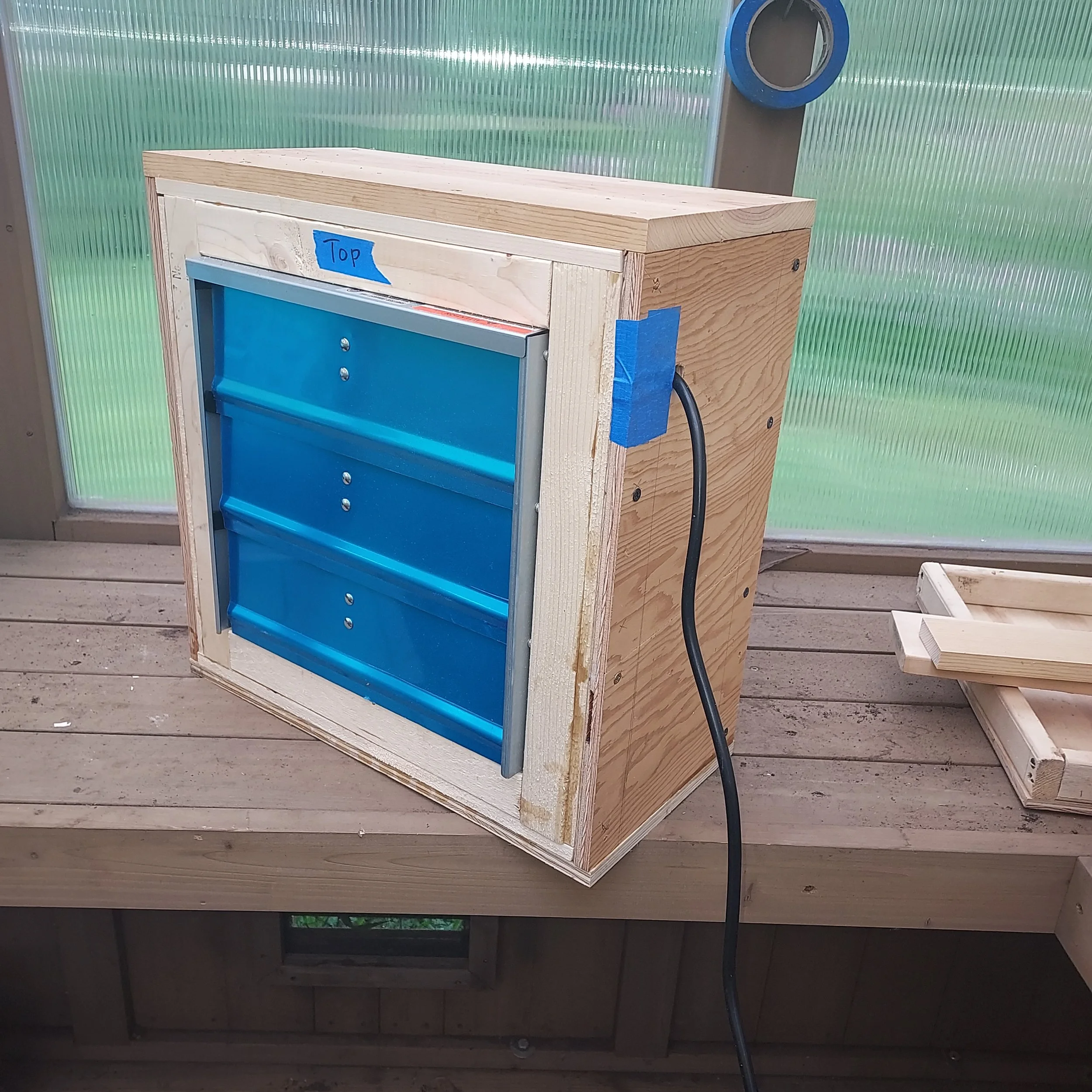
Louvers (blue) open when fan is on.

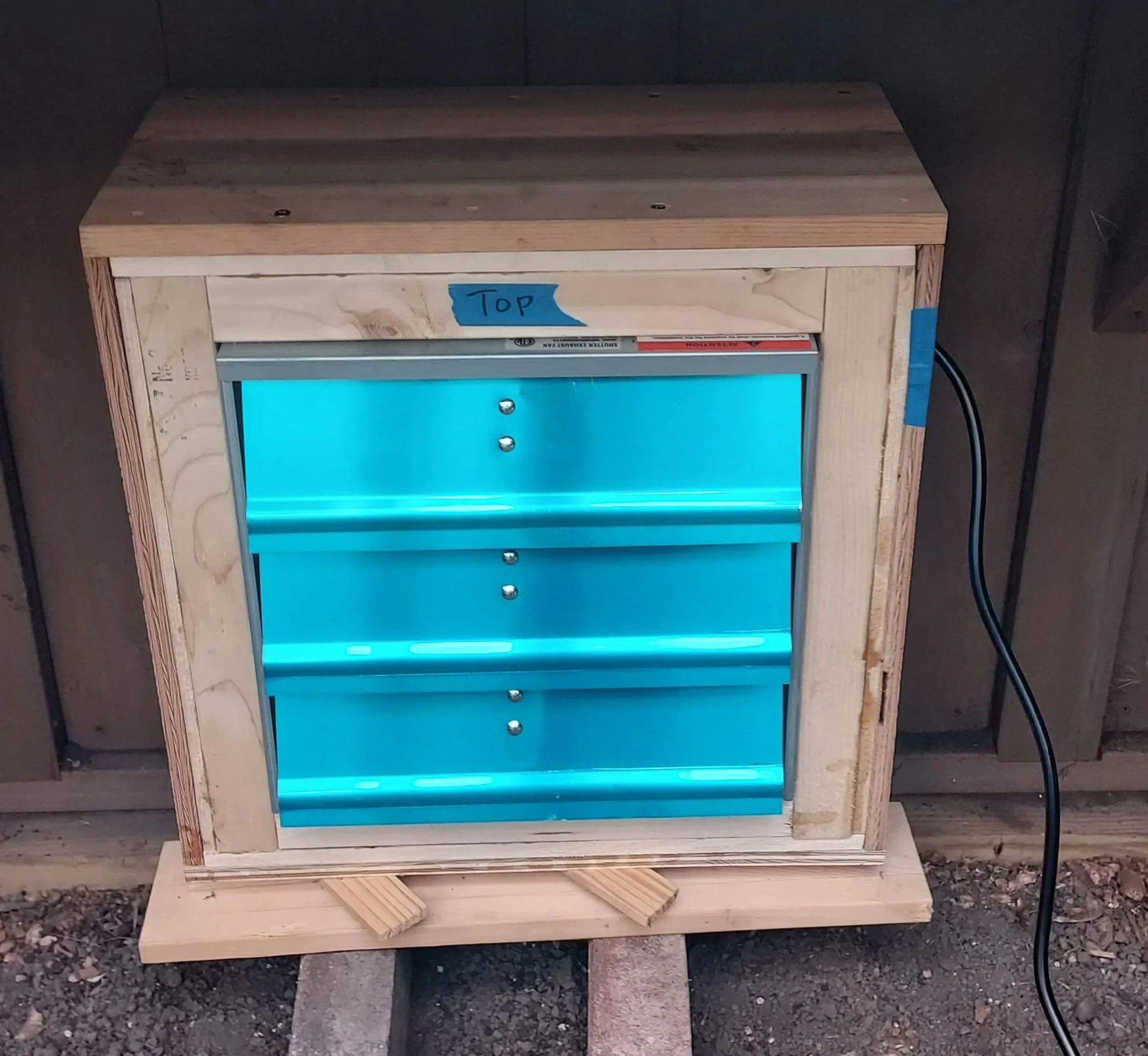
1600 CFM fan in place at vent.
The interior of the greenhouse is about 90” x 113” x 80” which is 813,600 cubic inches which in turn converts to 470 cubic feet, To my mind, this means a 1600 CFM fan should replace the air in entire greenhouse around 3 times EVERY MINUTE!
Alas, the interior temp only dropped to 115-119 degrees in the heat of the day, even if the outside temperature was in the low 80’s. I was hoping for better.
Fan rating exaggerated? It feels like the fan is more like 300 CFM.
Air pressure inside the greenhouse decreases air flow?
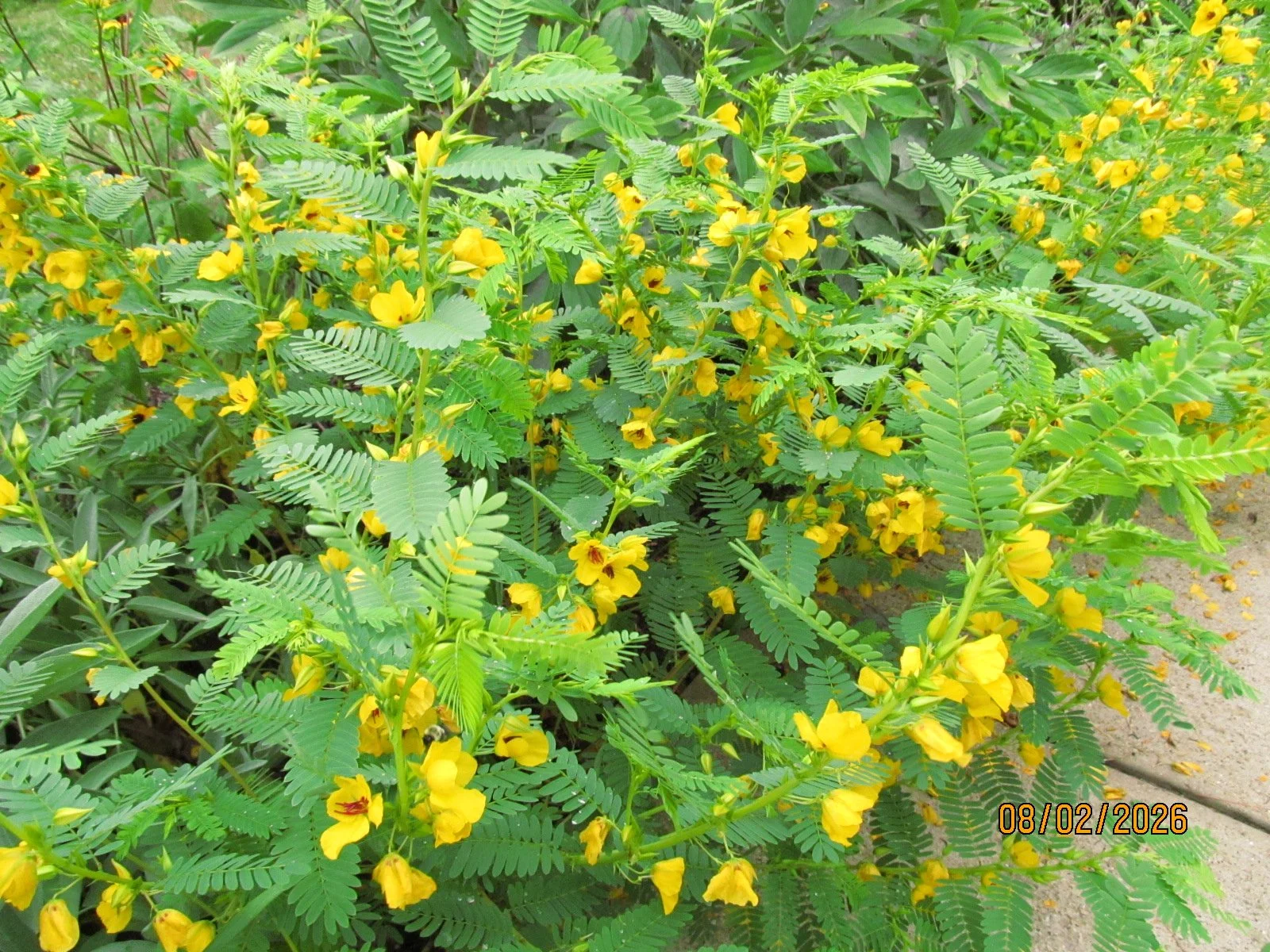
Partridge Peas (Chamaecrista fasciculata)
A humbly named plant that I find to be a lovely edging to gardens and sidewalks. Also, it is quite possibly our number one choice for attracting bumble bees. It did not come into full flower this year (2026) until late July, but here and now it is in full bloom. You hear the buzzing of the bees before you see them.
The Partridge Pea has pinnately compound leaves.
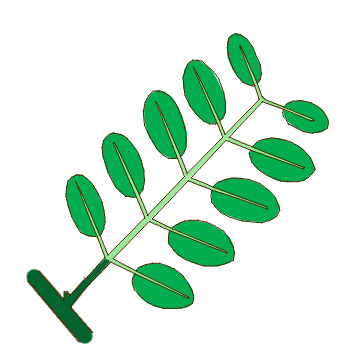
Pinnately compound - This shows a single leaf with ten leaflets.
It was originally a volunteer a couple of years ago, springing up unbidden. I first noticed the attractive (to me anyway) leaves and was gratified when it came into bloom. I collected seeds, stratified them and germinated them in the spring. But I don’t think I needed to…it self-seeded and now, it’s third year, it appears to have attained a stable beachhead along the sidewalk to the front door.
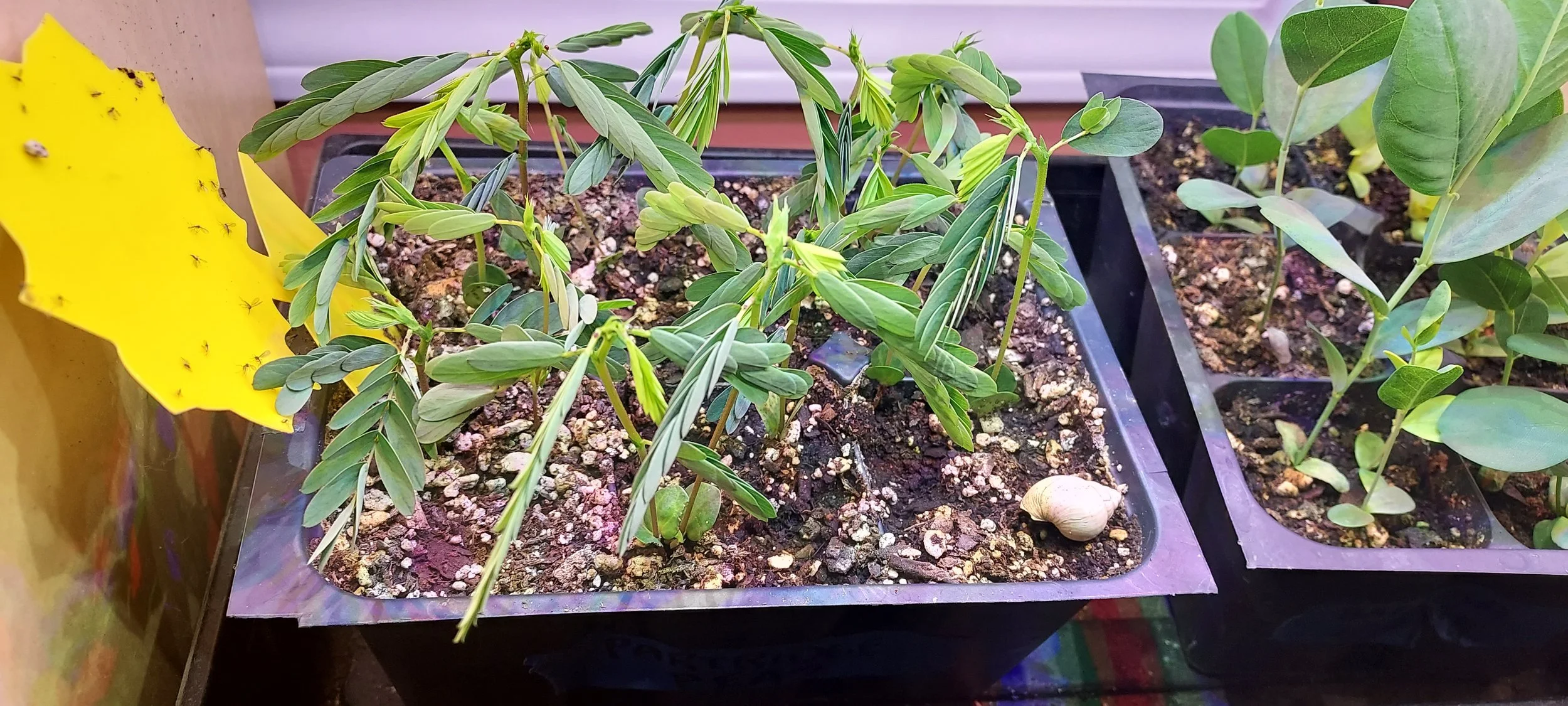
Partridge Peas on the left. Grown from seeds gathered last autumn and stratified in the refrigerator. The seeds are shown a few photos down from this one.
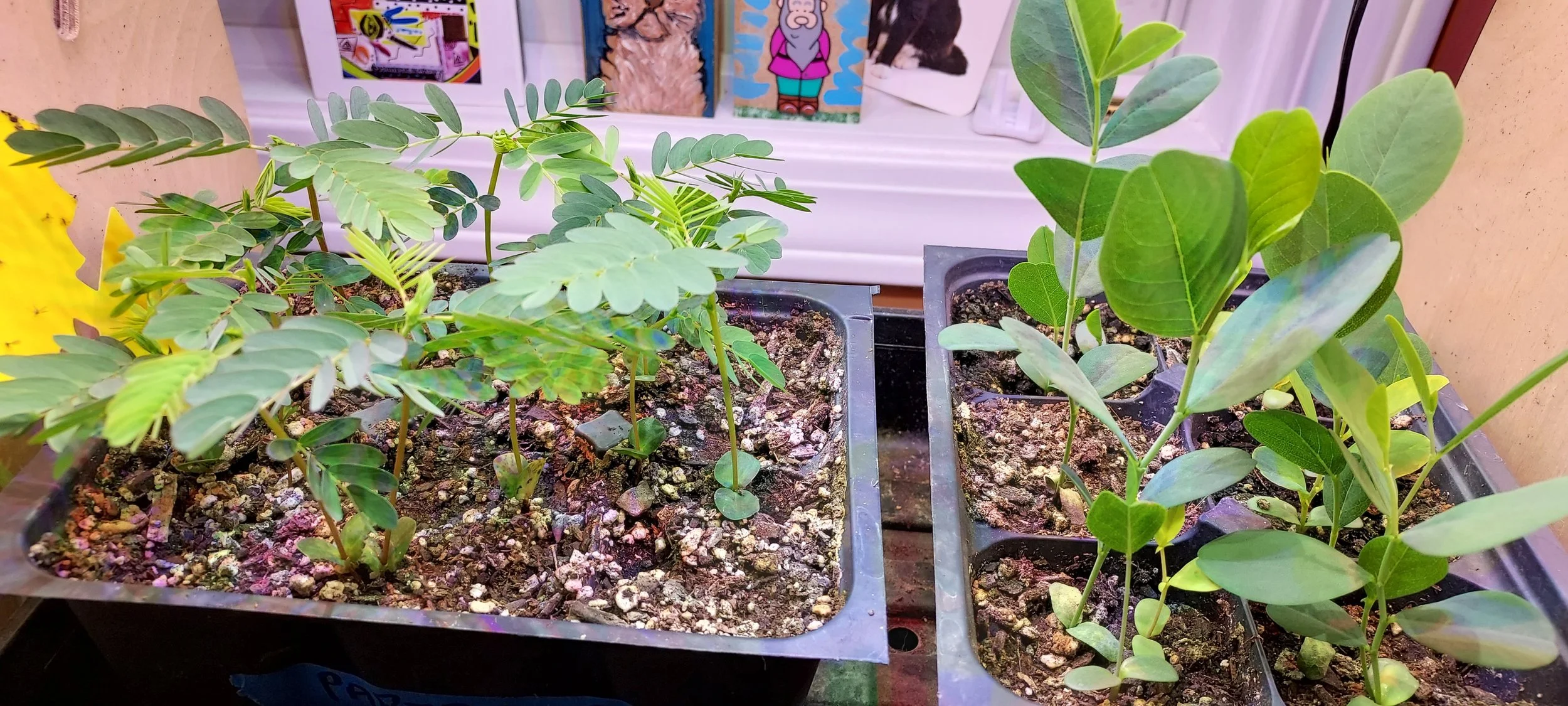
Partridge Pea seedlings on the left, Baptisia on the right.
While it’s not particularly aggressive, I think it would be easy to eradicate Partridge Peas if for some reason you chose to do so. They can grow to two feet before they start bending over, the stem reaching as much as 4 feet in height.
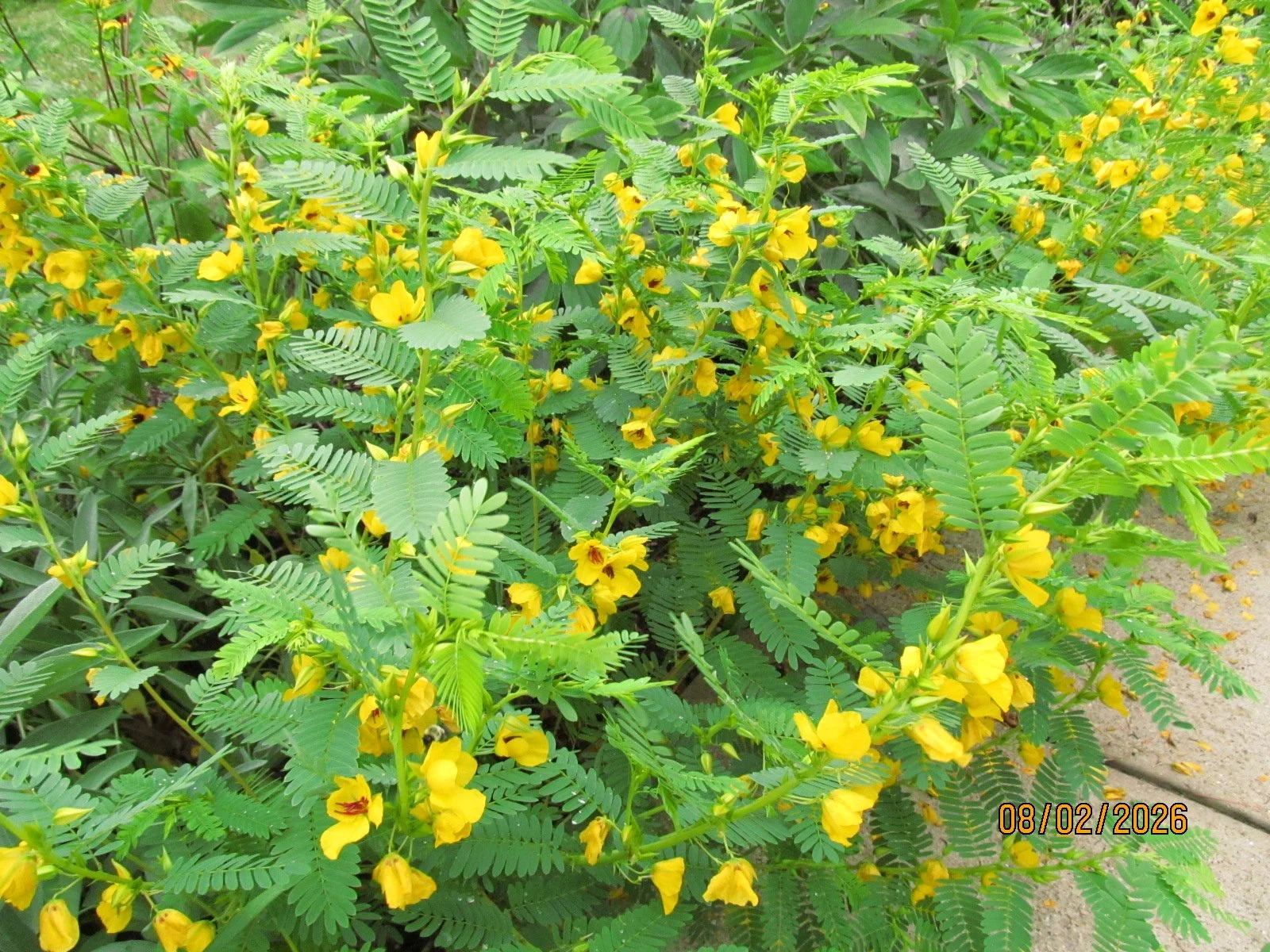
Partridge Peas full flower - Aug. 2, 2026
It was challenging to get photos of the bees. The camera settings were such that it wasn’t able to capture things in motion. Also the bees crawl so far into the flowers you can only see their rumps.
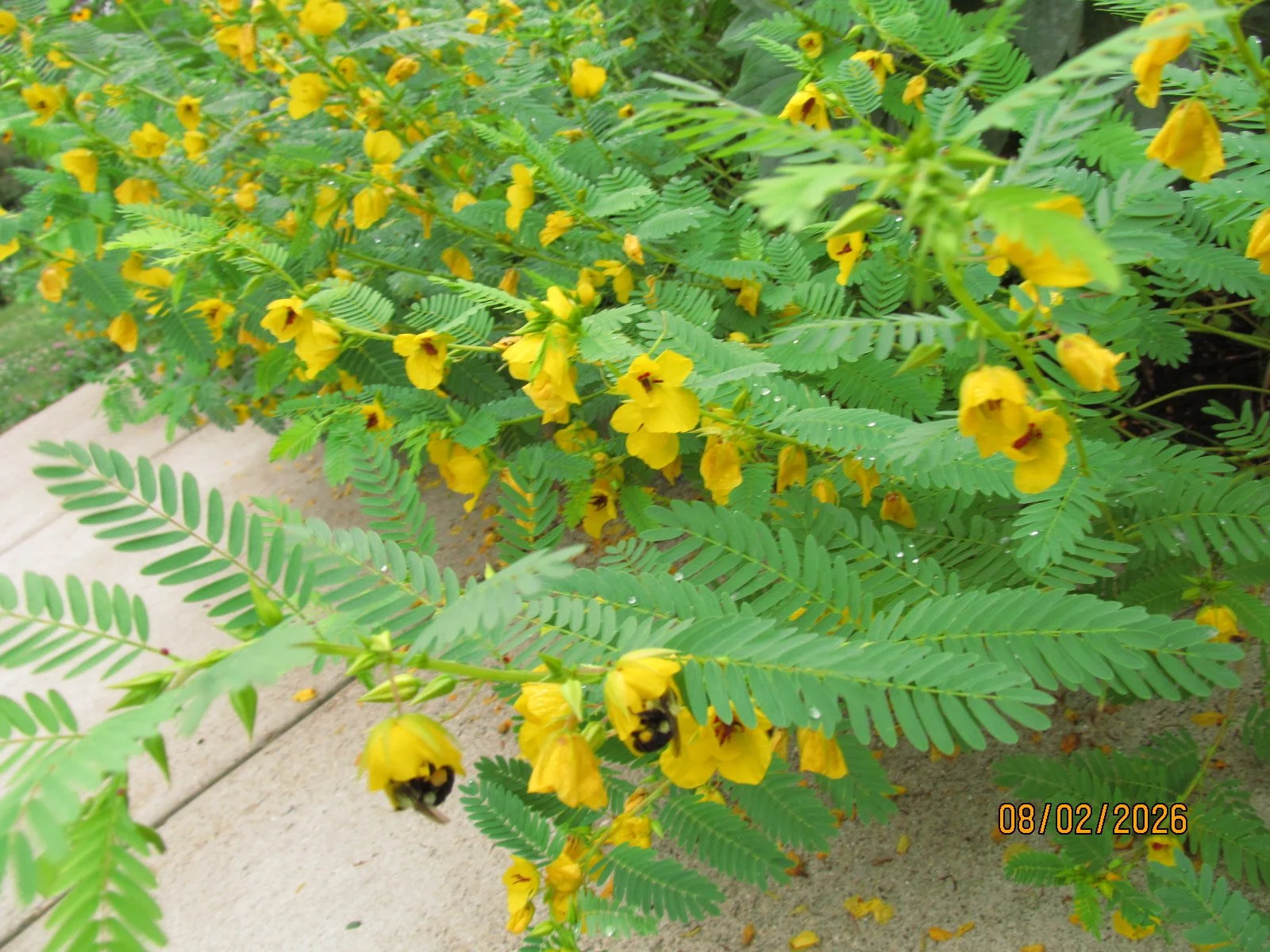
Partridge Peas - Two bees
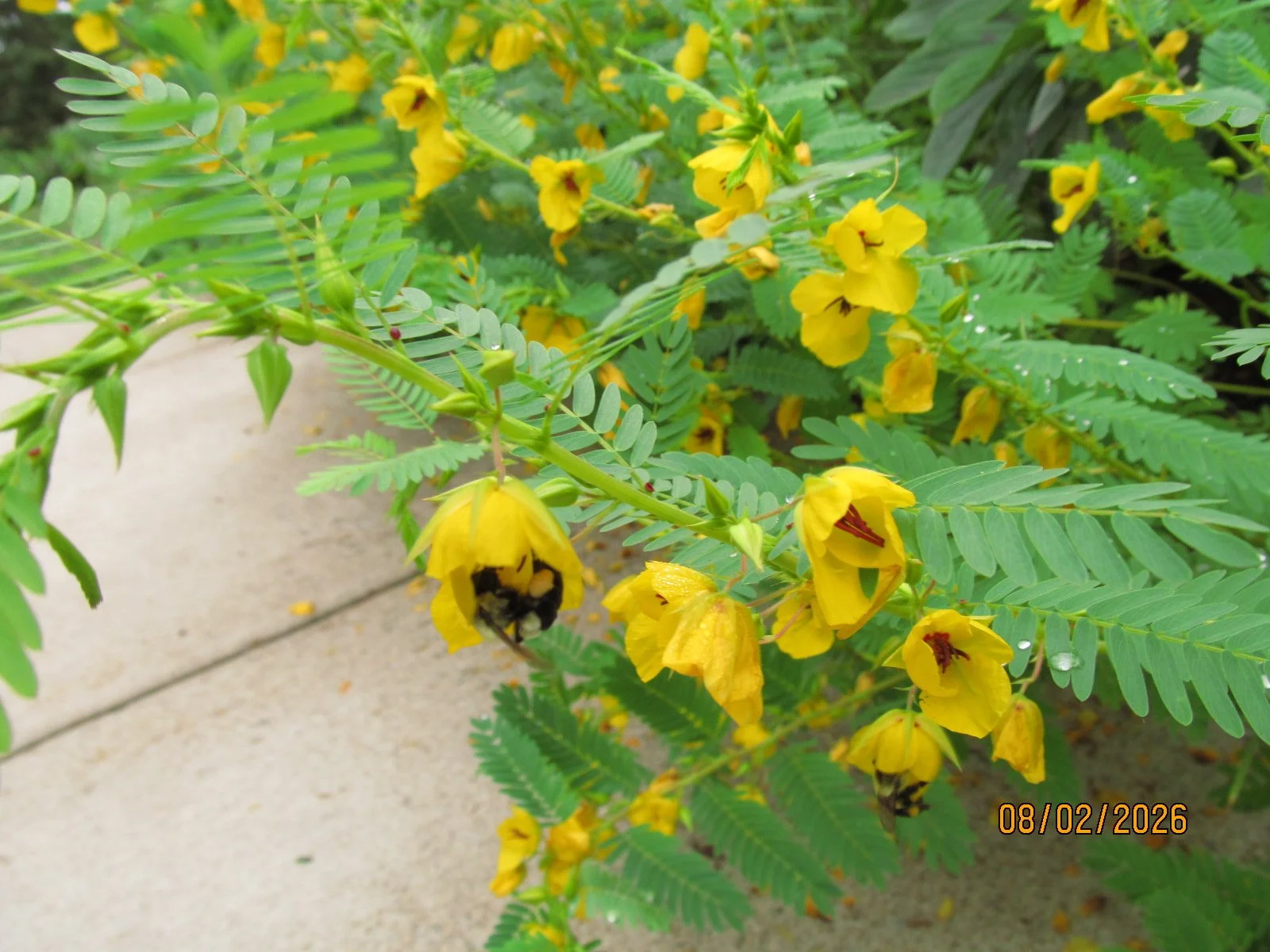
Partridge Peas - Two Bees
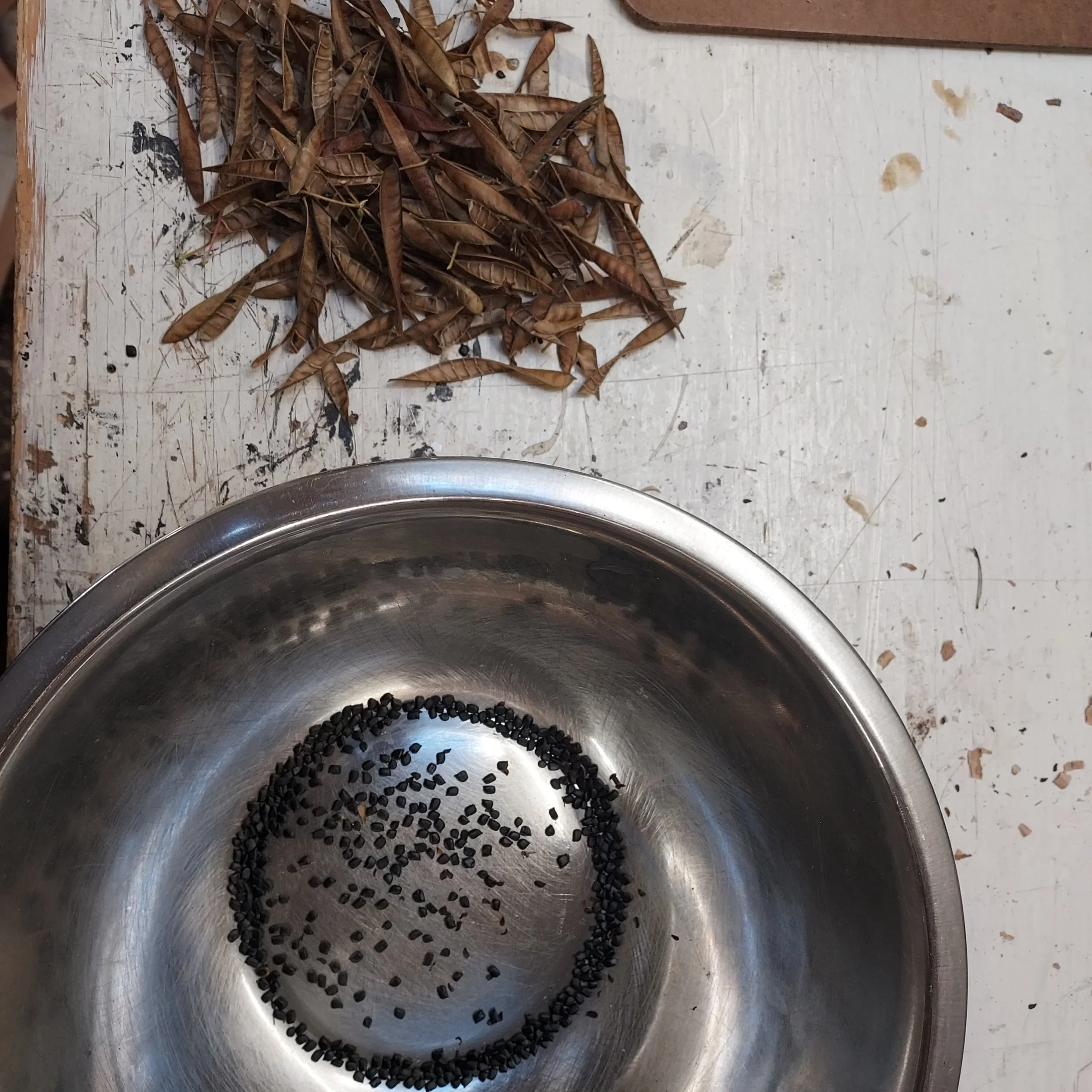
Popping seeds from their husks.
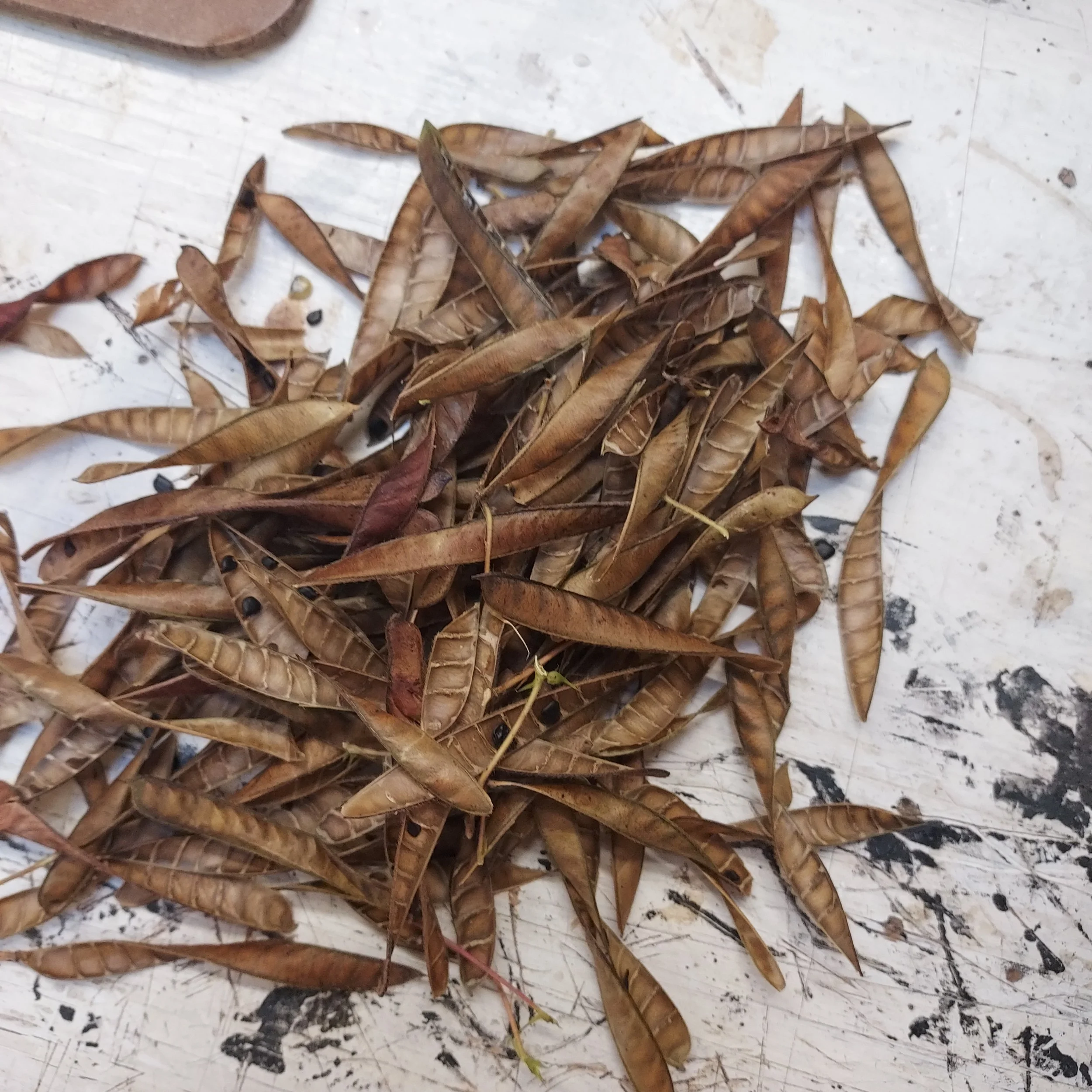
Empty husks.
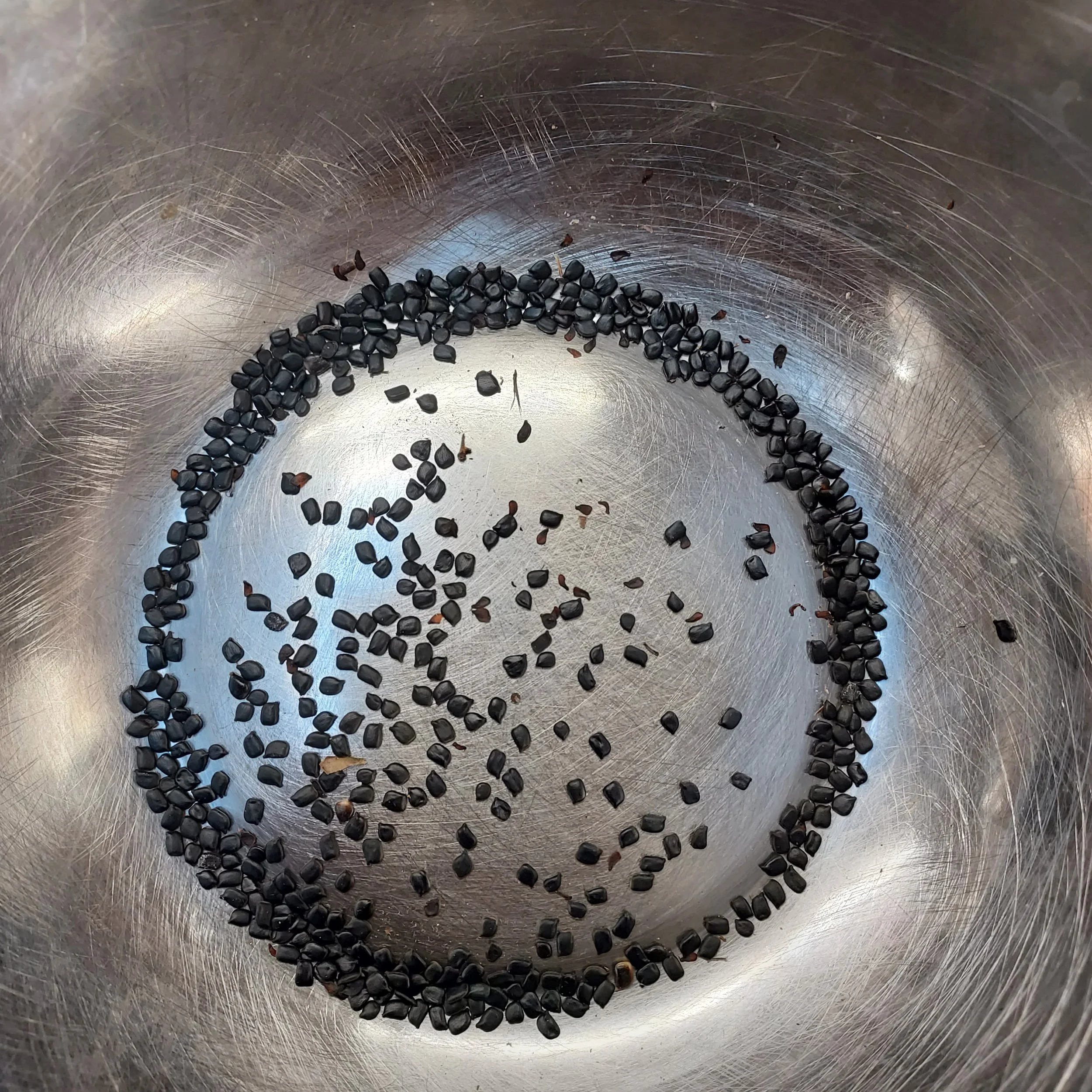
If you zoom in you can see the square Partridge Pea seeds, they look like tiny black Chiclets.
The scientific name for Partridge Peas, Chamaecrista fasciculata, comes from the word “fasciculata” come from the Latin meaning “bundled”. “clustered”. or “arranged in small bundles”. I assume it refers to the seed pods? I’ll try to find out.
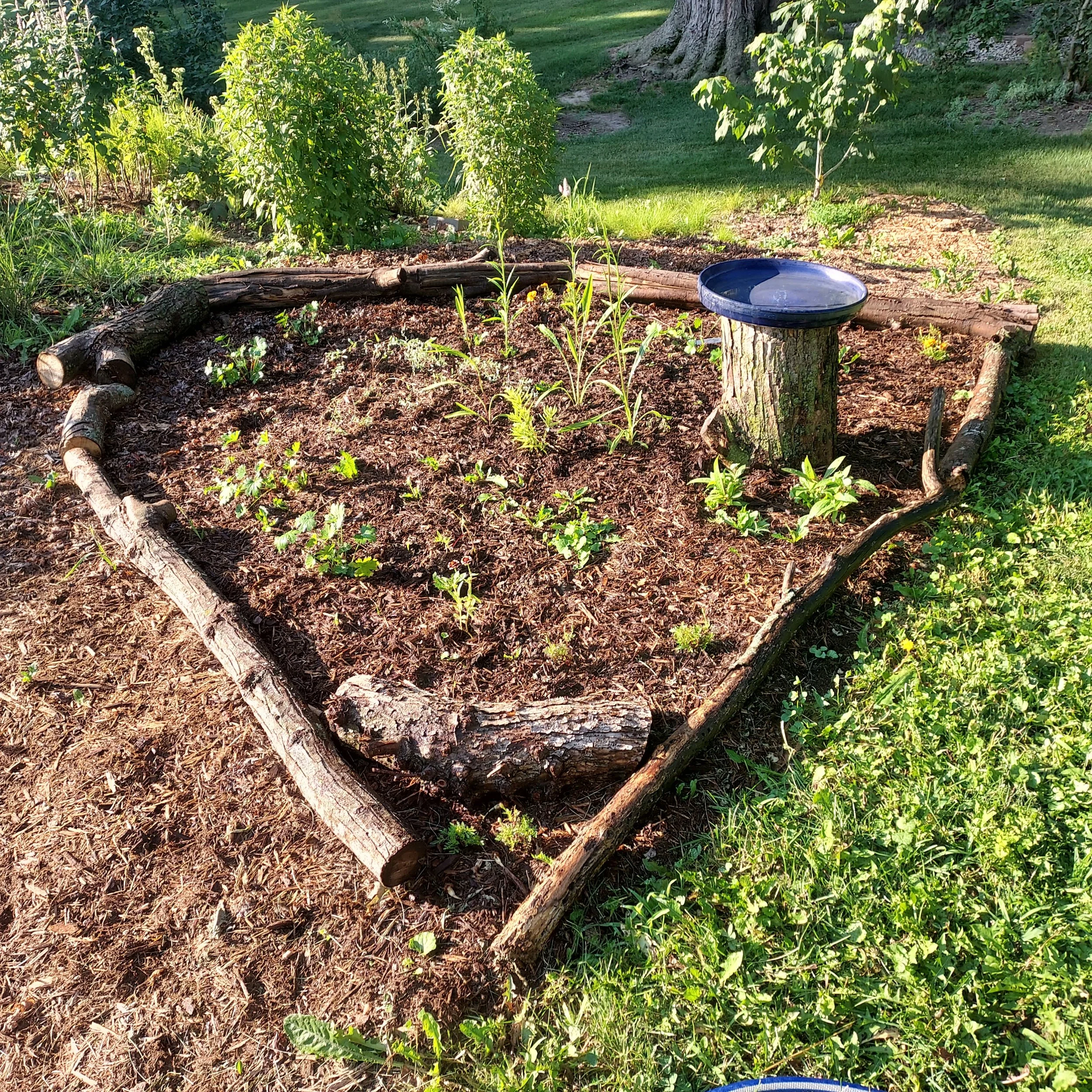
Pocket Garden
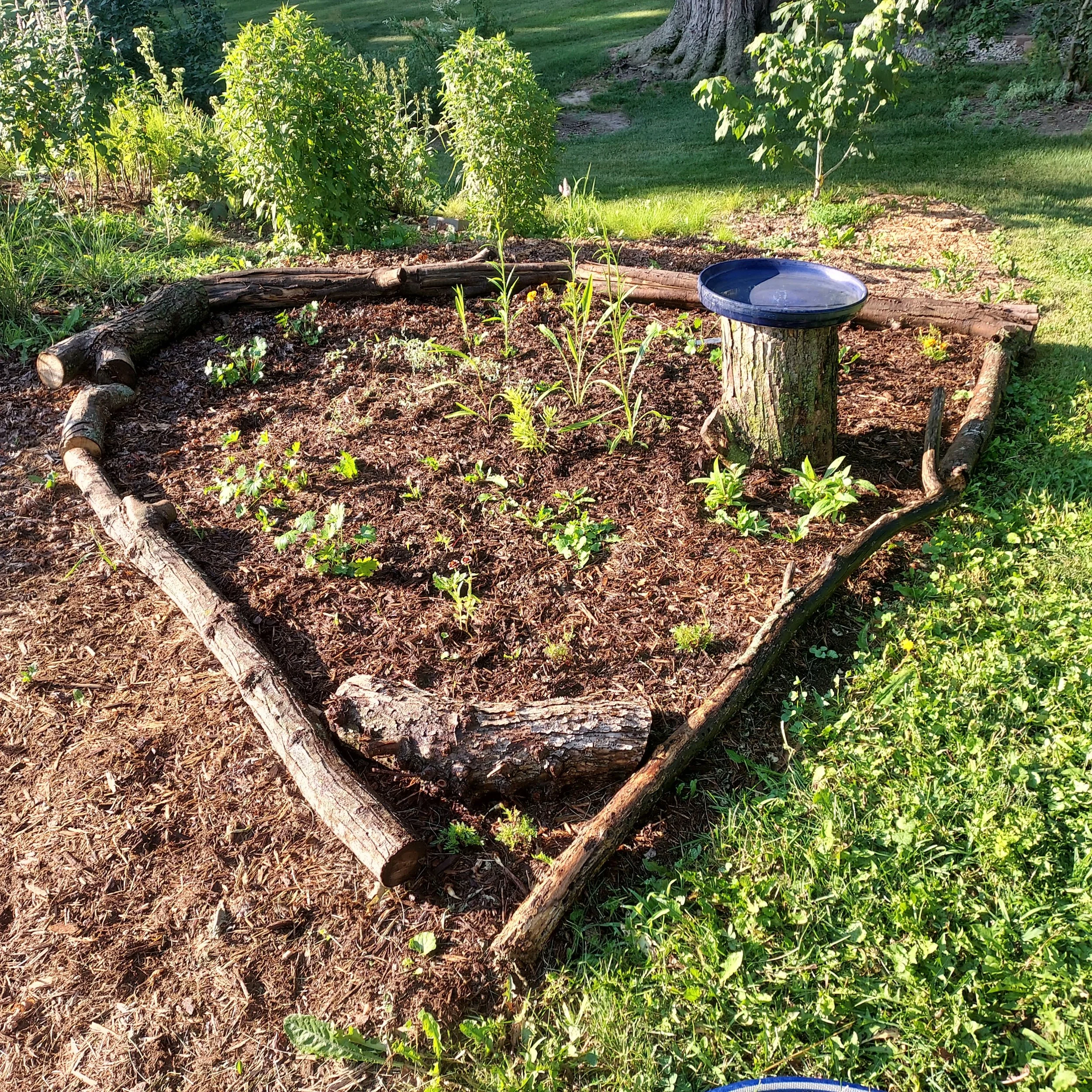
This small keyhole garden was appended to a much meadow which is on the left. To the right is turf lawn which we have been replacing over the years with native perennials. I say “turf lawn” but actually it is more likely Creeping Charlie and dandelions at this point.
Point in fact, this garden is on the septic mound in our back yard. We’ve made the effort to select plants that are appropriate for this, but it is difficult to find clear information about this. Many of the recommendations contradict each other.
Planted in this Keyhole Garden are Celosia; Silky Asters; Purple Poppy Mallow; Globe Amaranth; Ohio Goldenrod and Marigolds. Experimental as usual. They were planted in the high heat of July, so we are watering it daily until they get established. But the plan is that by next year, if they survive, we will no longer have to water this garden.
The bed was prepped by laying down a layer of carboard and then a few inches of mulch on the turf. A little grass and some weeds make their way through the cardboard barrier which we will weed as needed and as time permits. It’s been 7 or 8 years since any herbicide, insecticide, fertilizer or other chemicals have been applied.
The wood pieces used for edging are from a Silver Maple we had cut down.
We’ll take pictures next year for comparison.
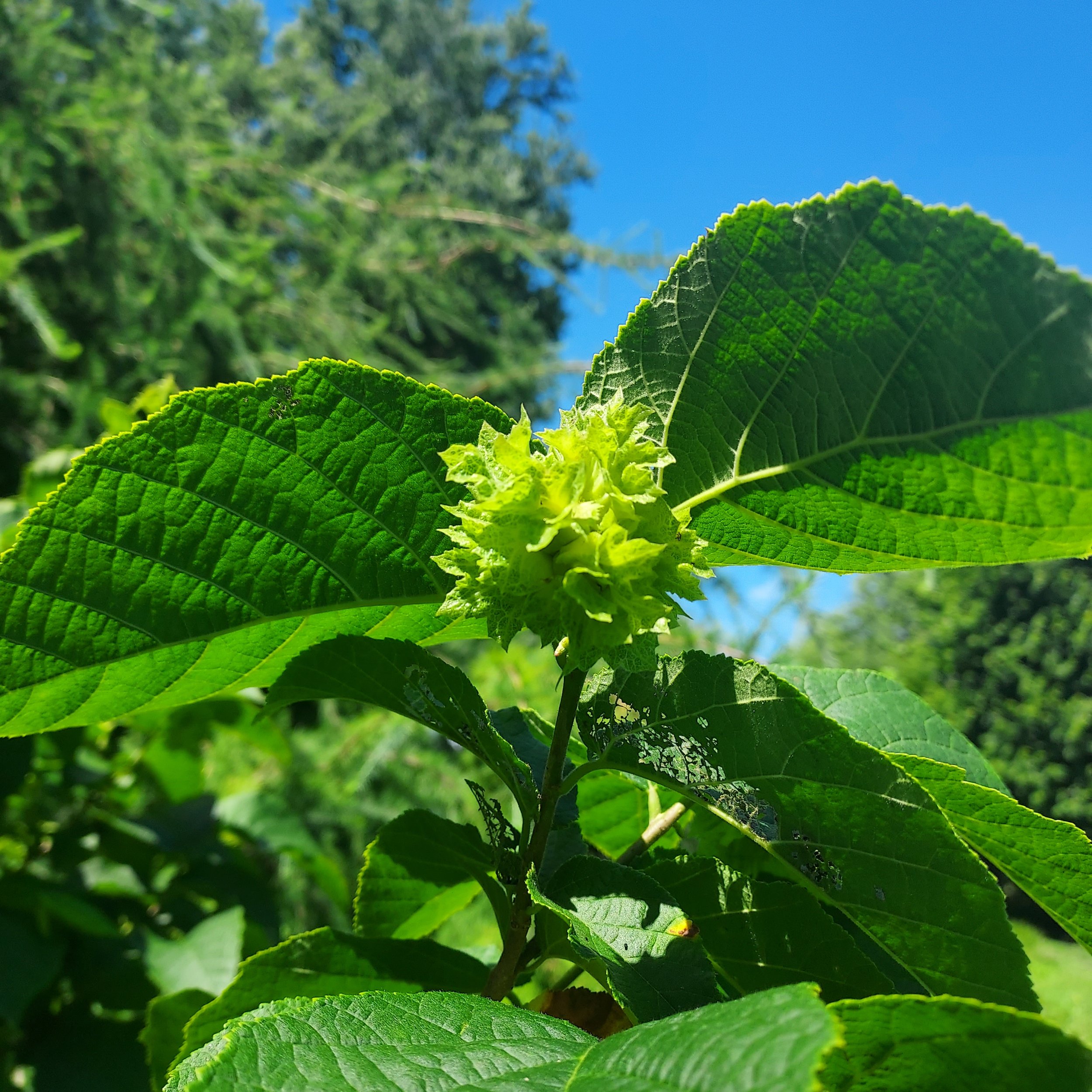
Hazlenut (Corylus americana)
The Hazlenut, also known as a Filbert. Squirrels like them so well that we have never been able to harvest any to eat. Some day, I hope, we get some.
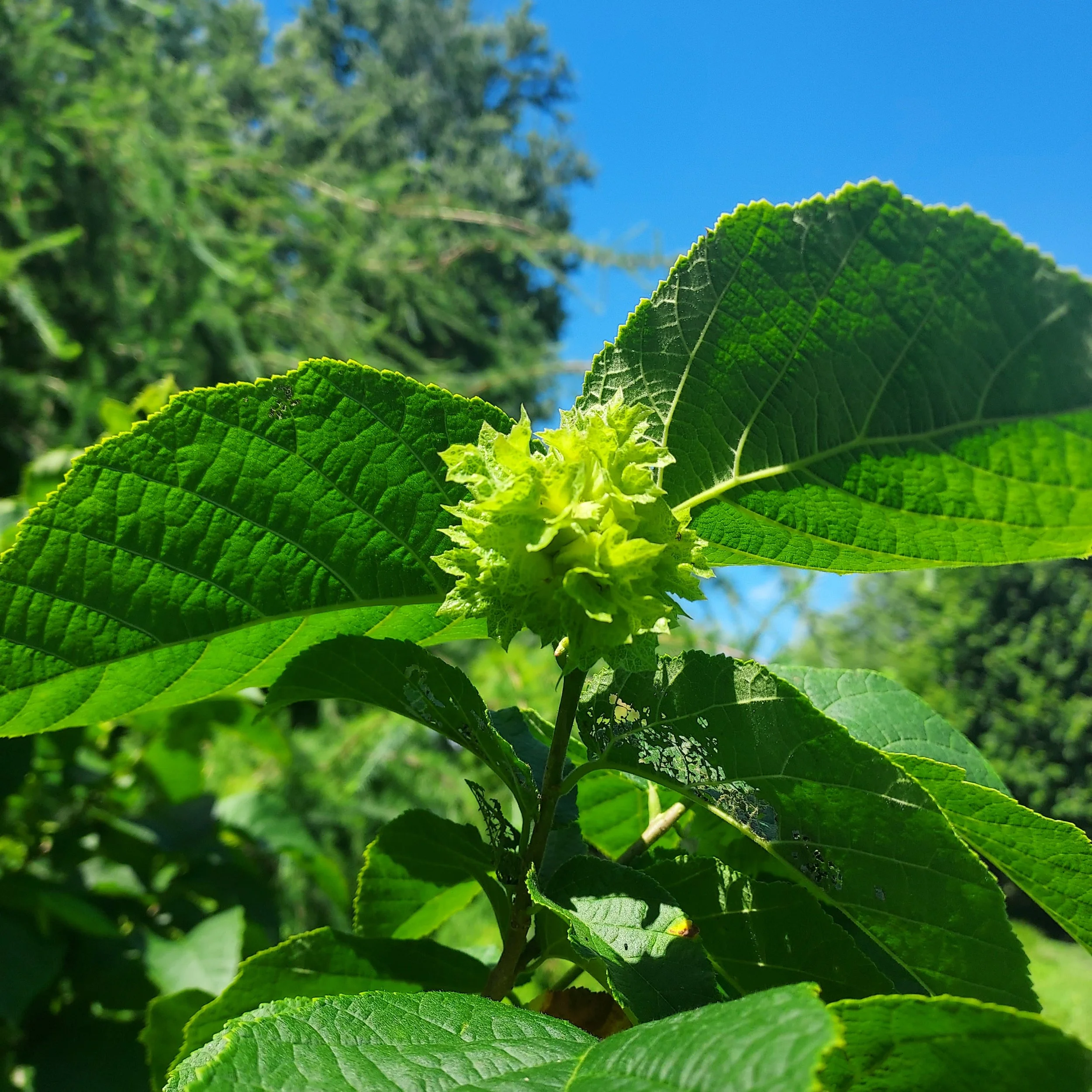
June 22, 2026
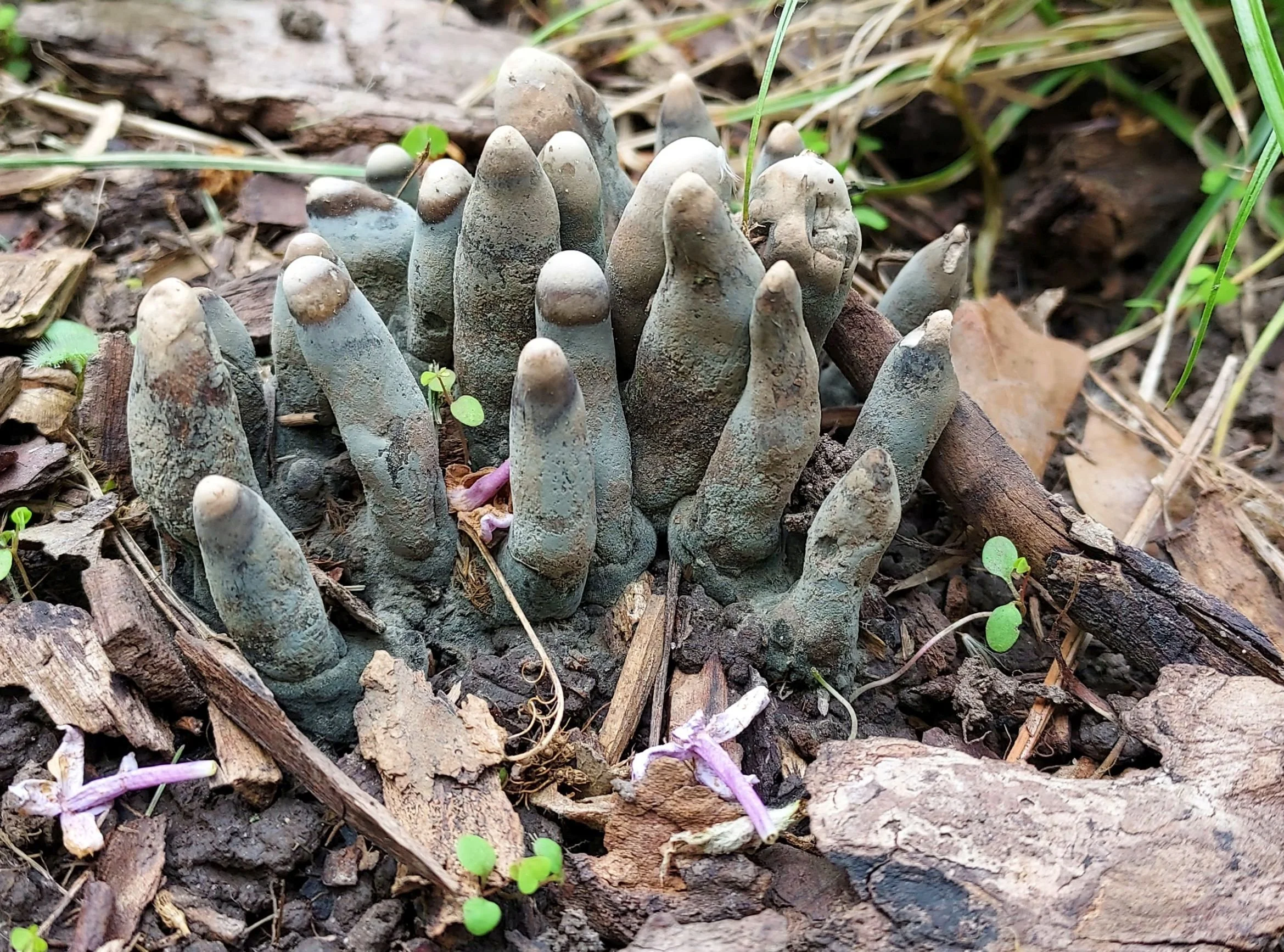
Dead Man’s Fingers!
The less startling scientific name for Dead Man’s Fingers is Xylaria polymorpha.
Some years ago we had to have a couple of large Silver Maple trees removed…in large part to get better sun for the vegetable beds. We had the stumps left in the ground and they have been decomposing nicely as evidenced by the fungal activity.
Notable among the fungi has been Dead Man’s Fingers.
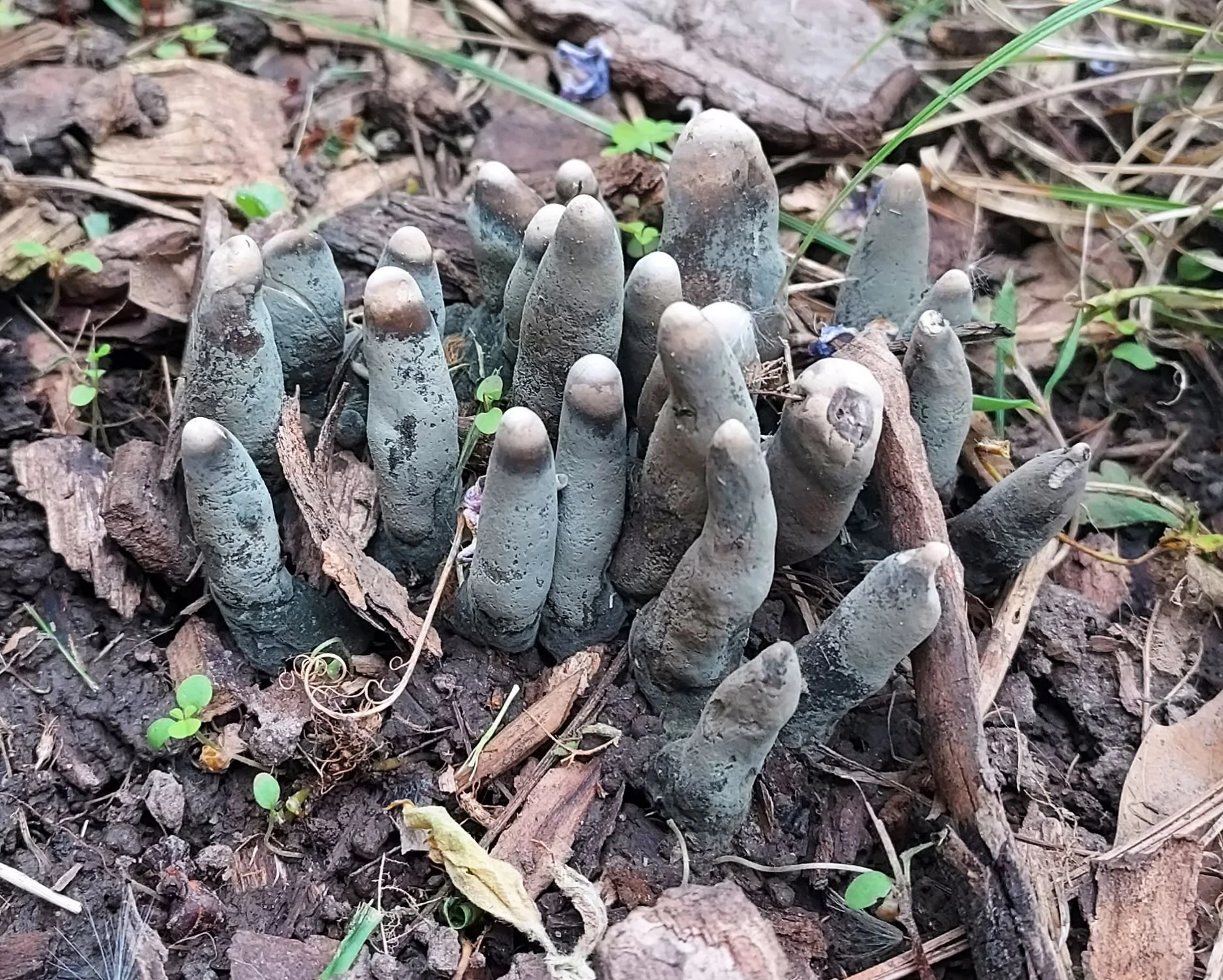
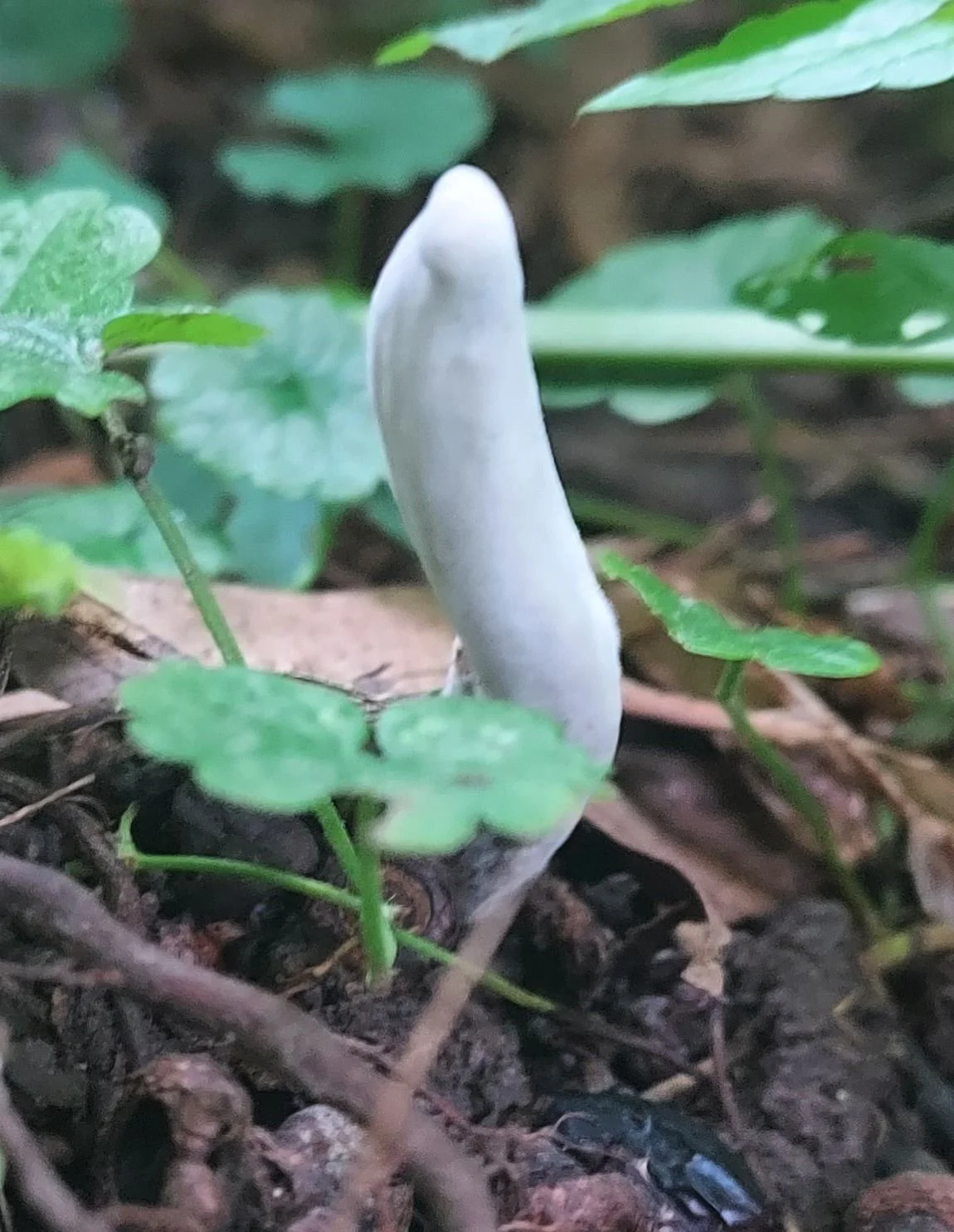
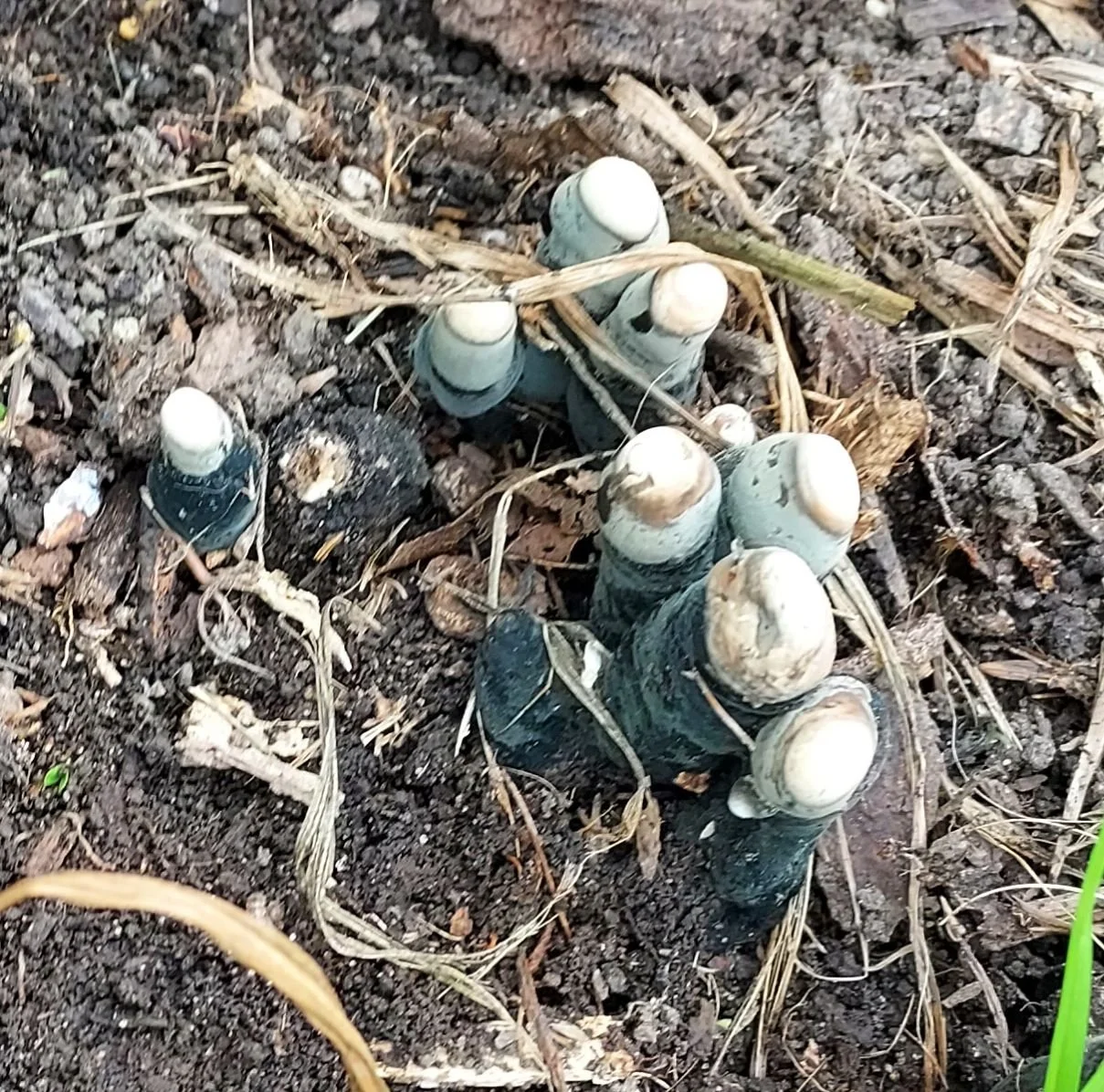
While this fungus can attack living trees, to their detriment, they are just one of the many fungi that have populated the dirt where the stumps and roots of the Silver Maple are.
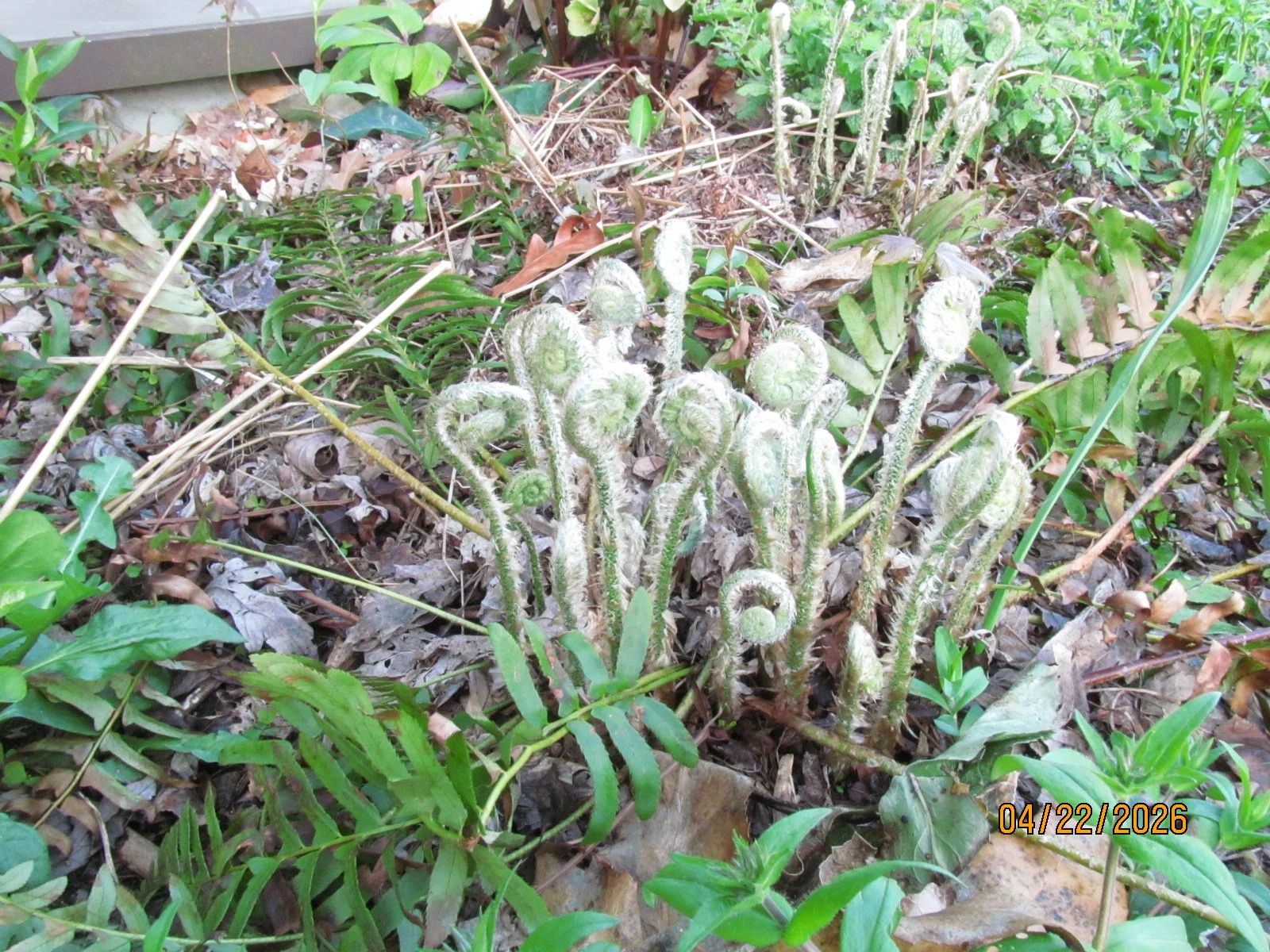
Christmas Fern
Christmas Fern - Polystichum acrostichoides
An evergreen fern, imagine that. These are right next to the driveway and consequentially they spent part of the winter under feet of snow piled on them from clearing the driveway. Come spring melt…they were flattened, but still green.
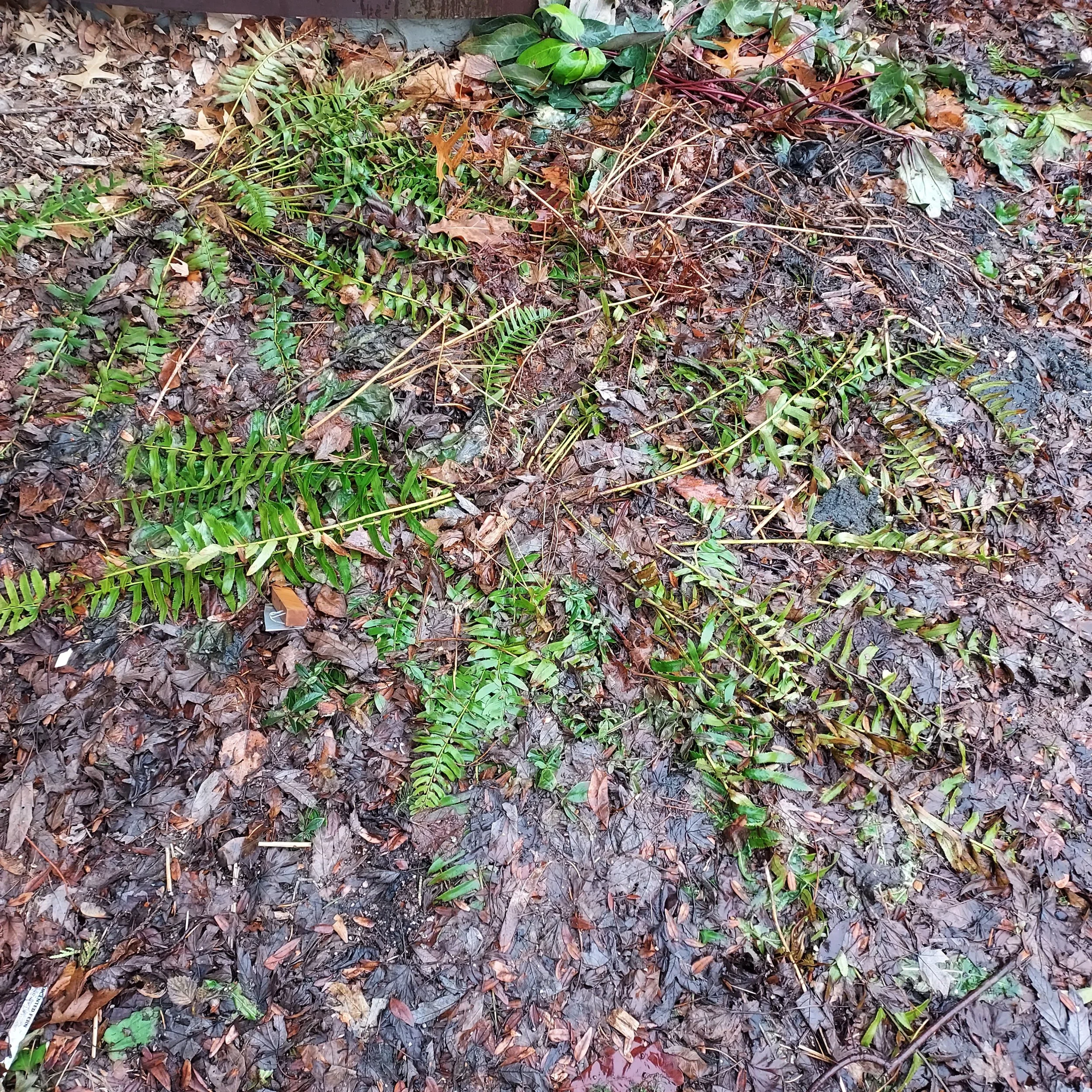
March 6, 2026 - Fern flattened by snow
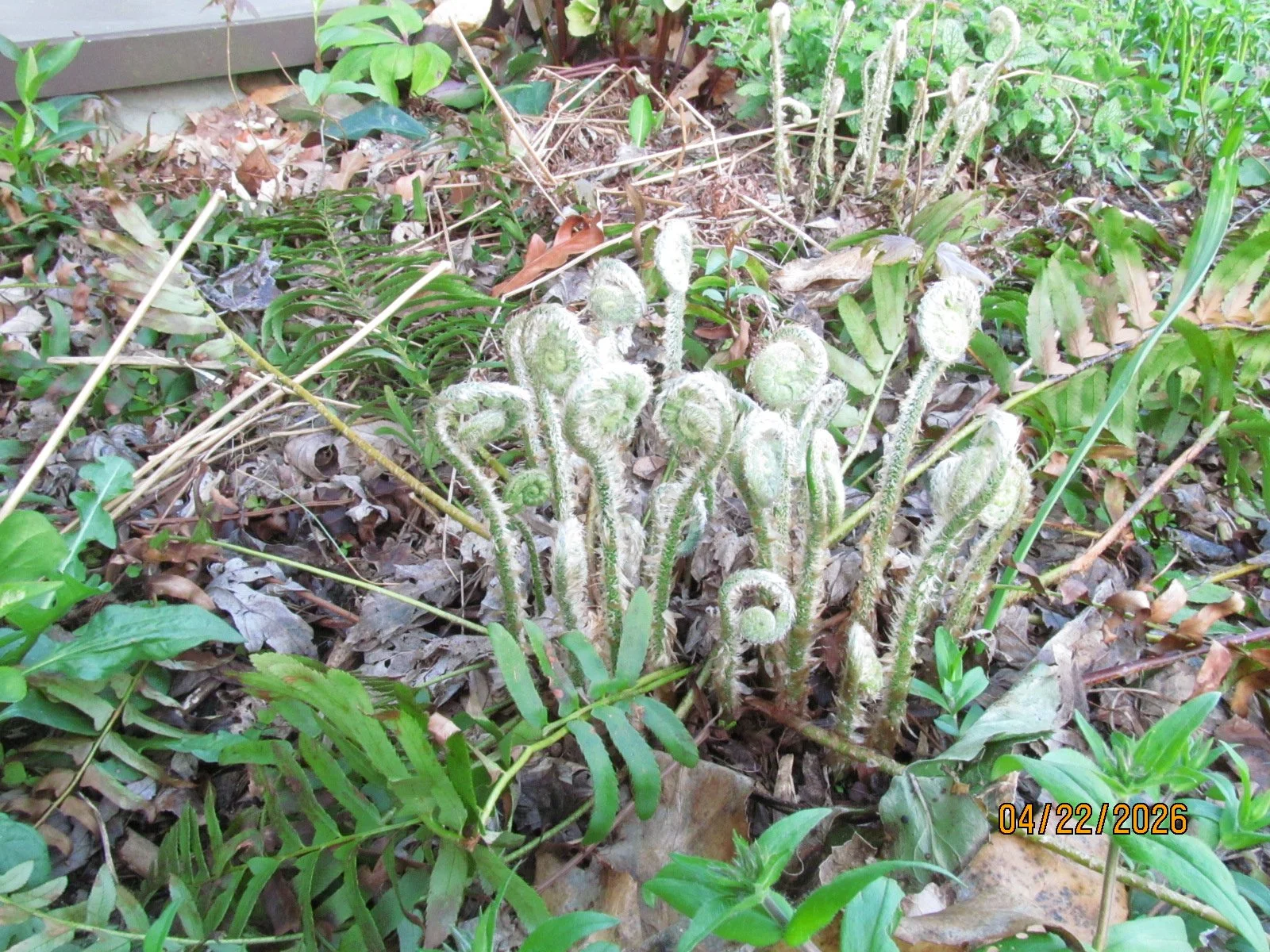
Christmas Fern fiddleheads. April 22, 2026, How cute are they?
Lingonberries
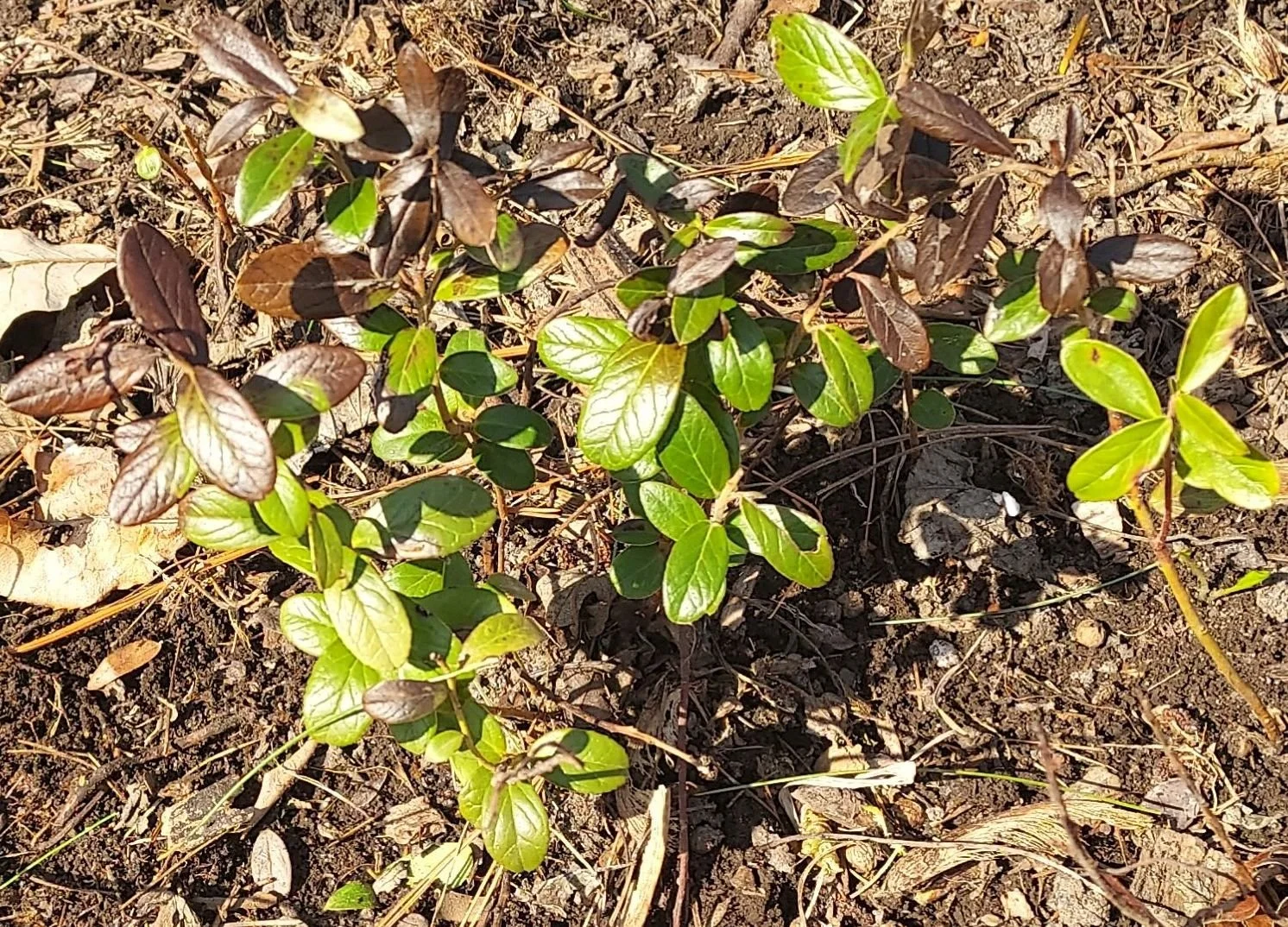
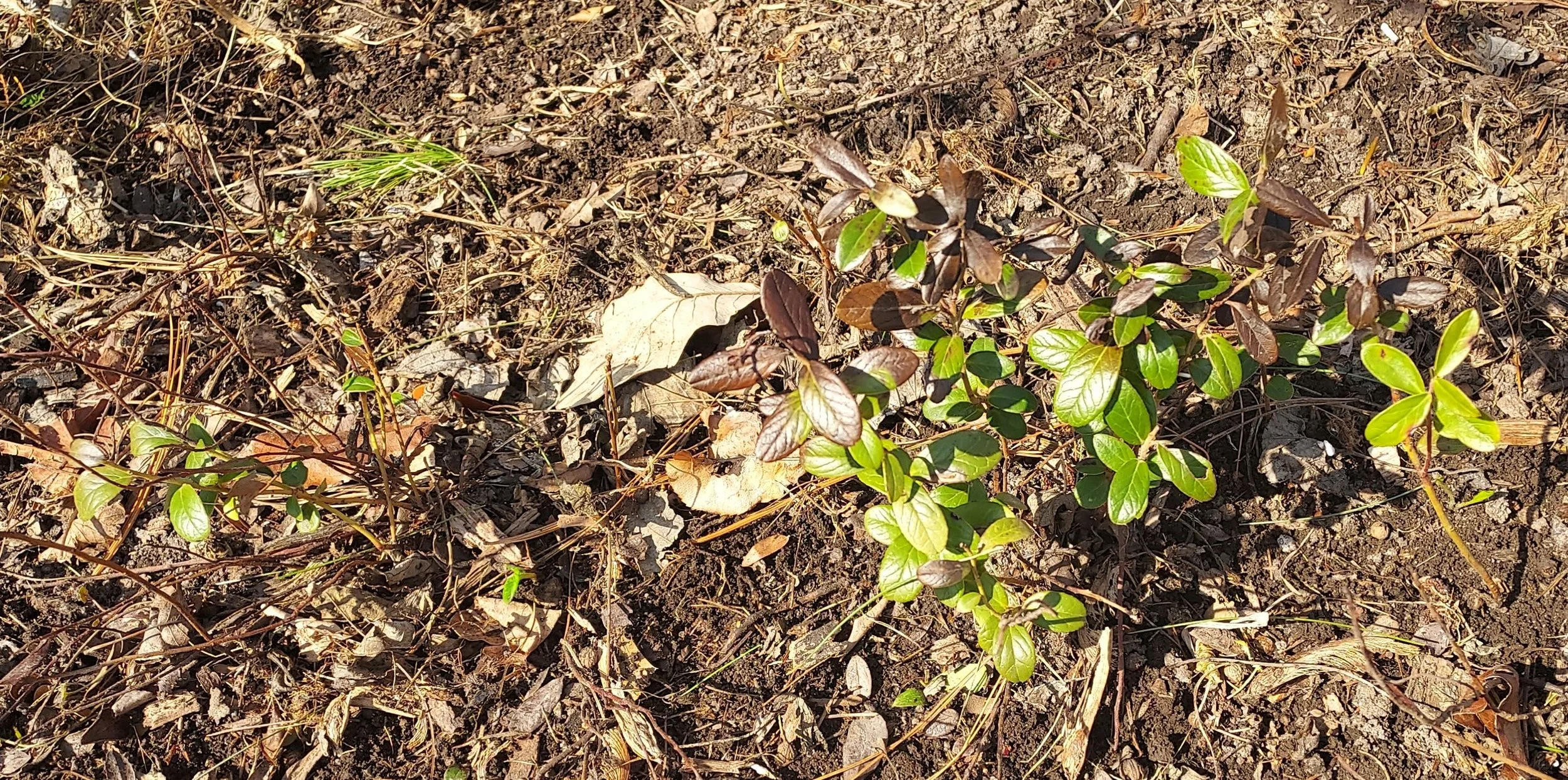
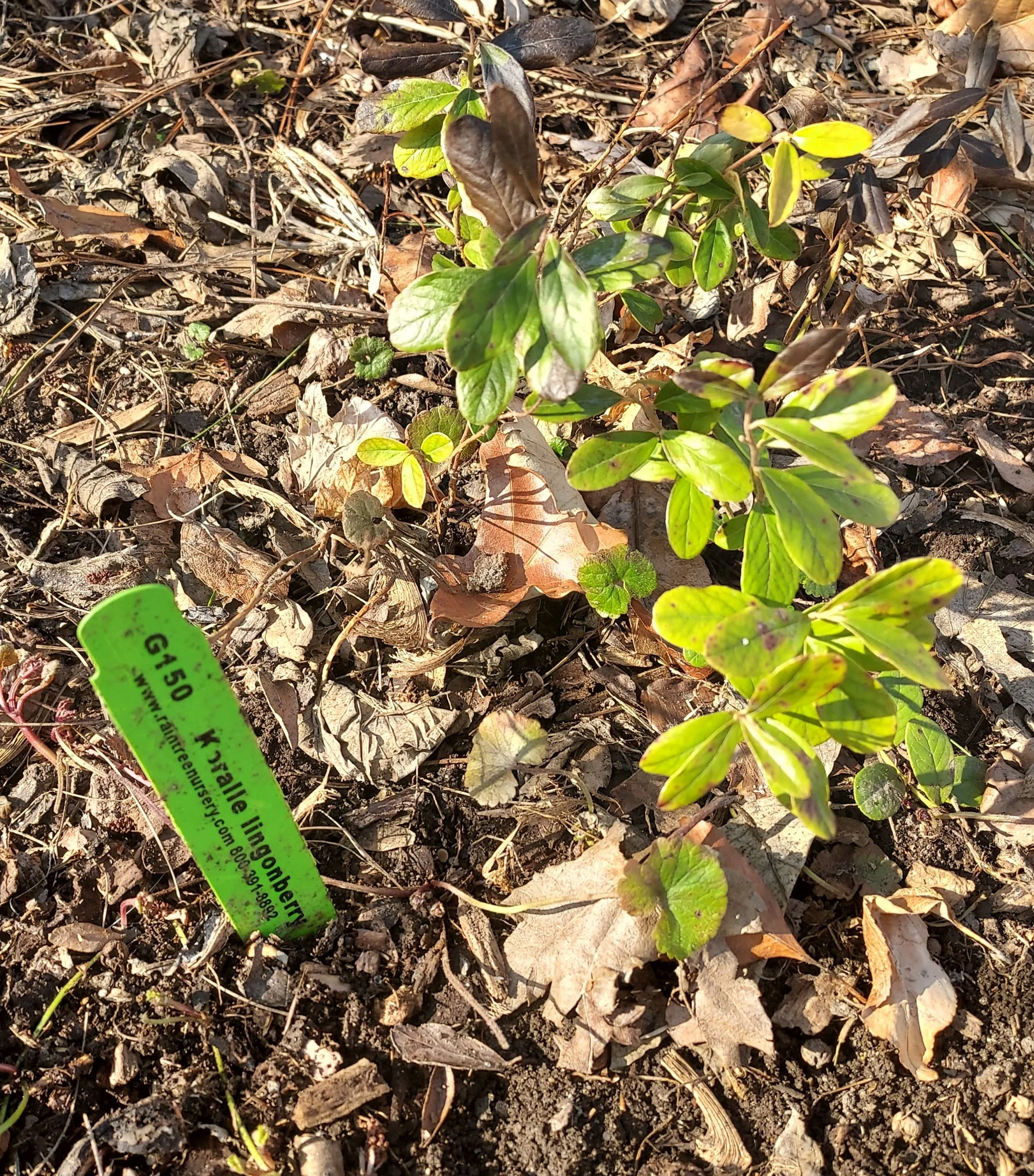
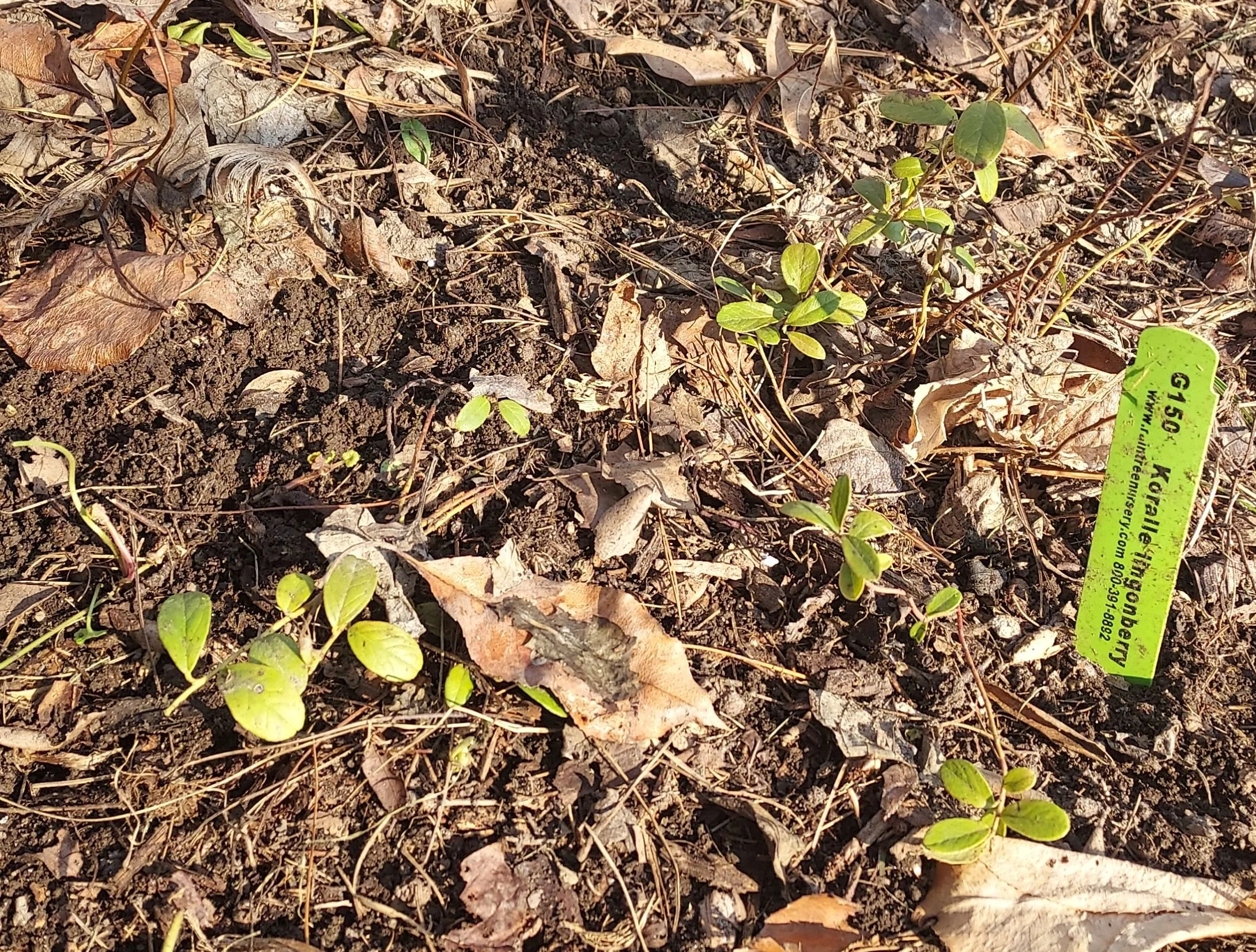
Lingonberries (Vaccinium vitis-idaea) - “Vaccinium” puts them in the same family as blueberries and cranberries.
We bought four lingonberry starts…what?…maybe 4 years ago and planted them under a pagoda dogwood tree. One of the starts died while the other three have been hanging on, but only just…they haven’t grown much at all. It’s late March (2026) and I cleared some of the leaf litter away to take these photos. While doing so I found two of the plant tags and stuck them back in the ground for the photo. As you see, the variety is “Koralie”. During the growing season I periodically clear out the creeping Charlie so it doesn’t overwhelm the lingonberries. After 4 years of little or no growth I doubt that they will ever thrive and produce berries. Oh well…so be it. I believe they need acidic soil, perhaps we’ll try some acidic fertilizer?
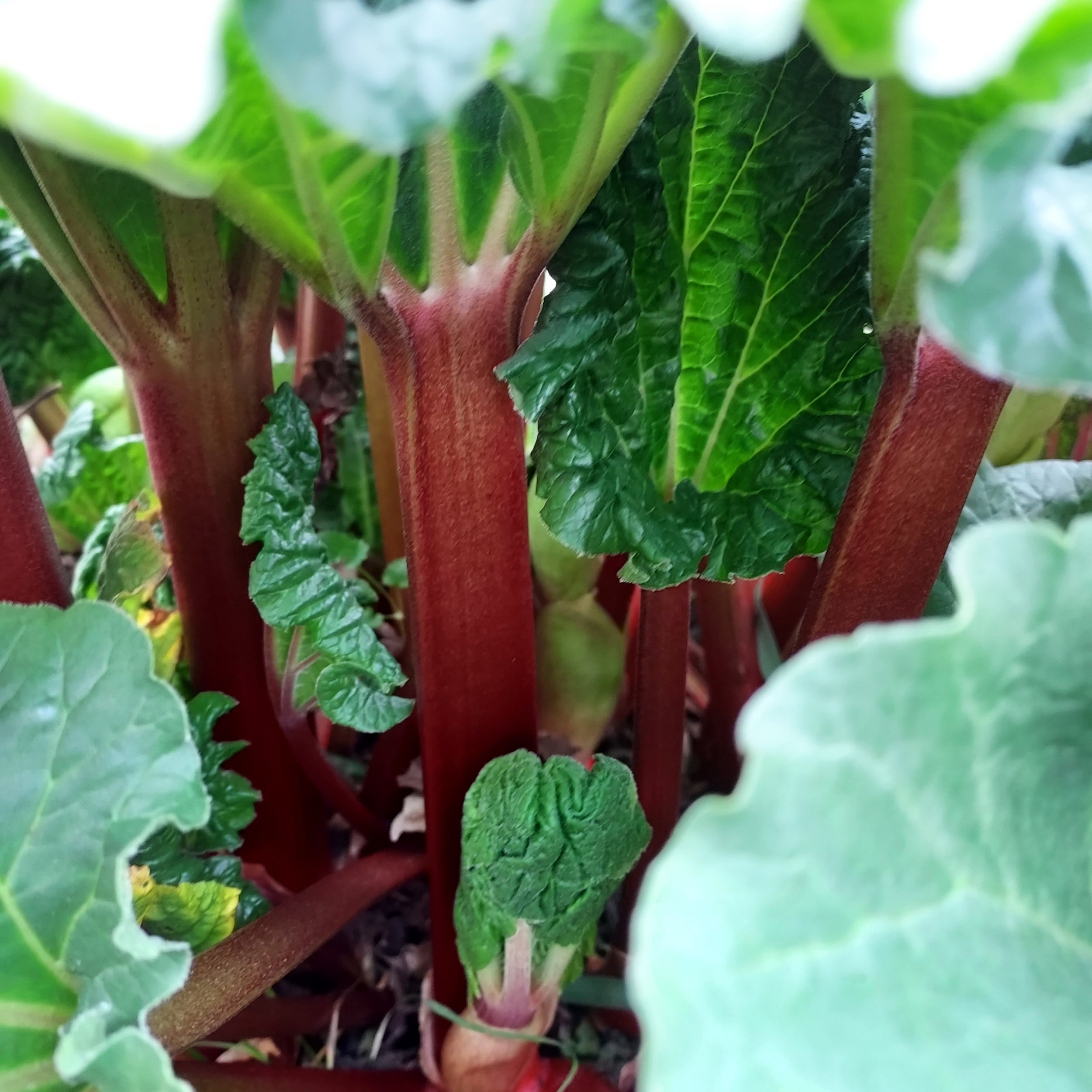
Rhubarb
Rhubarb (Rheum Rhubarbarum) - One of the earliest harbingers of spring…first the Snowdrops and Crocuses, but the Rhubarb starts peeping out of its “nest” before the daffodils and tulips.
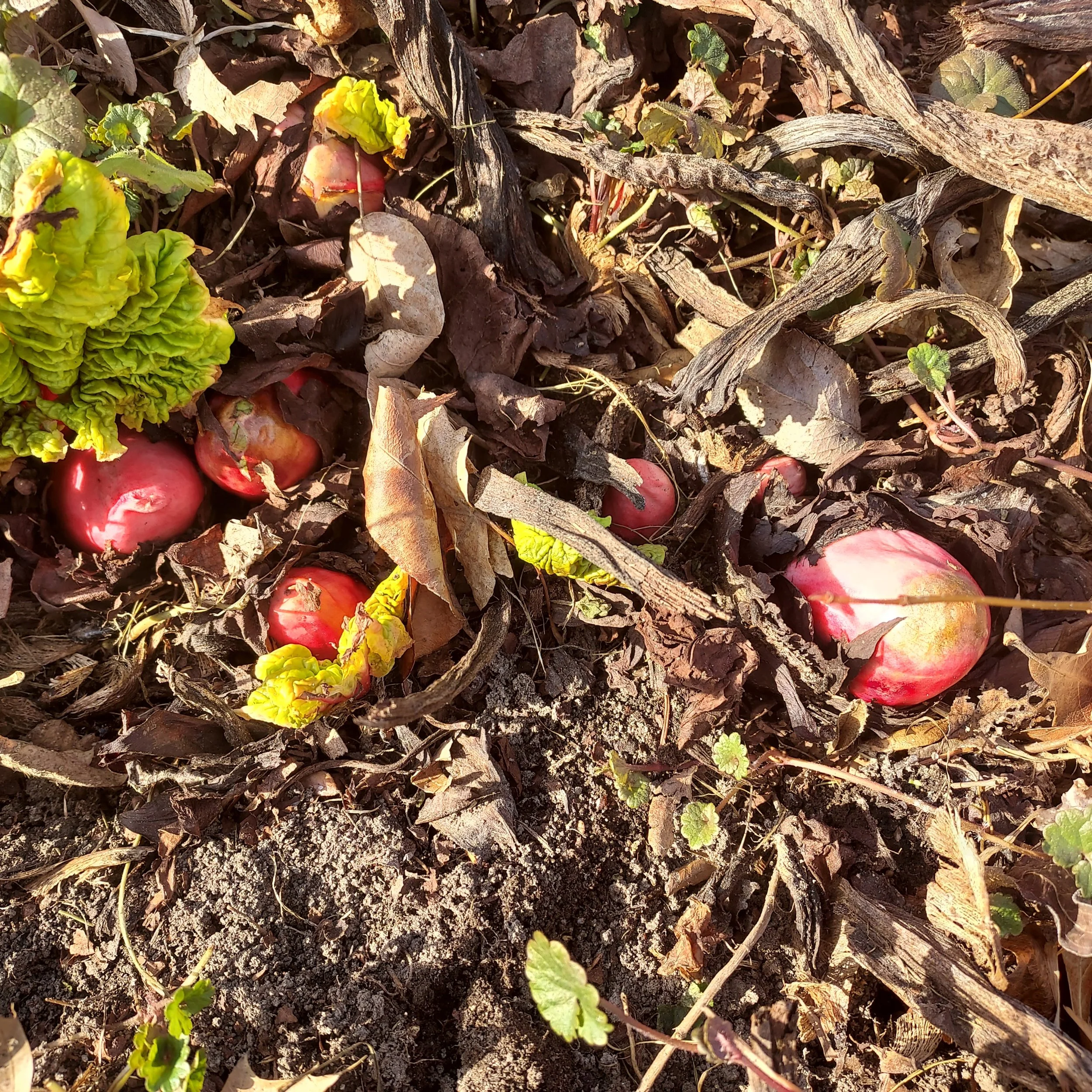
March 26, 2026 - Ruby red sprouts swelling up from under the leaf litter.
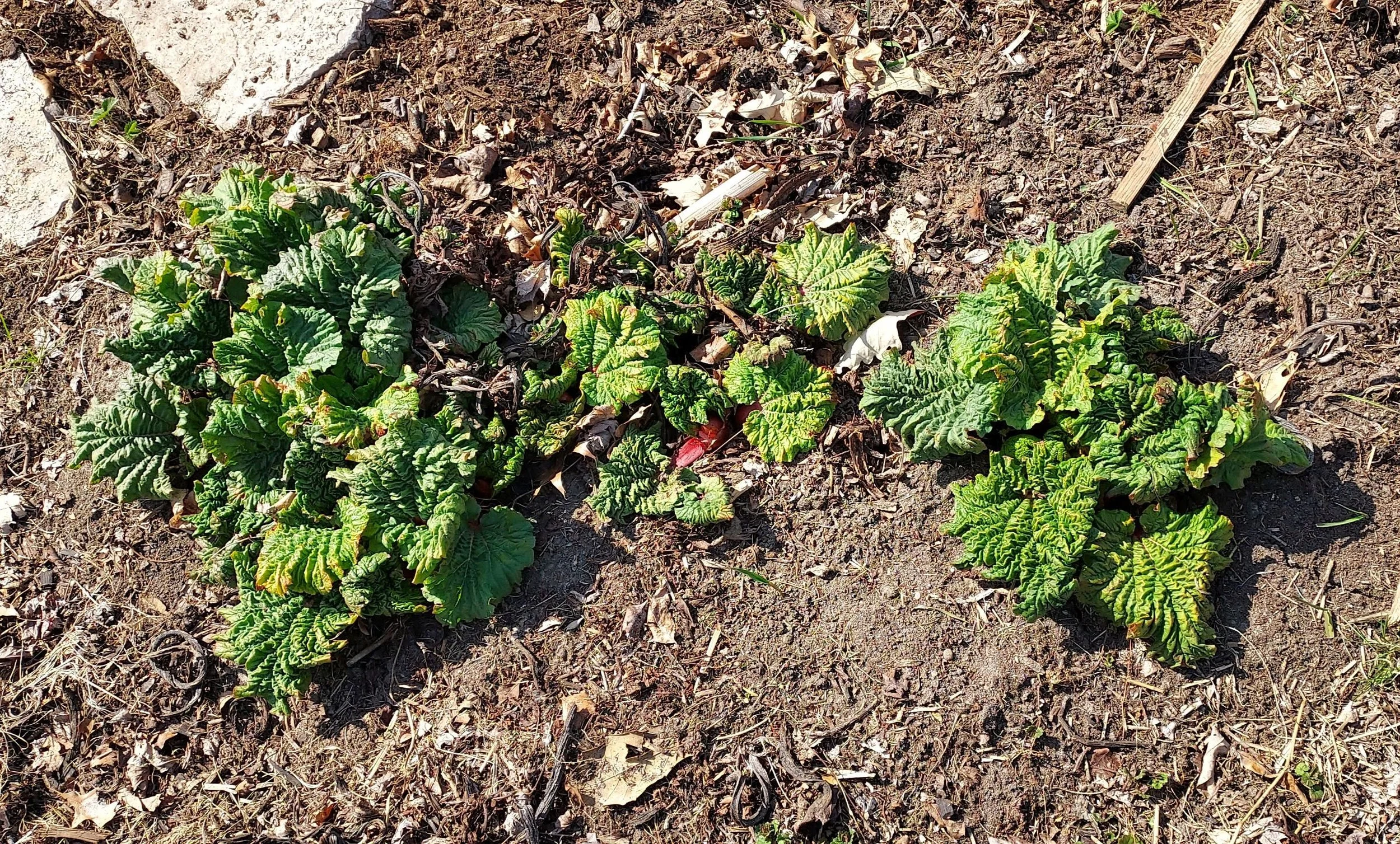
April 12, 2025
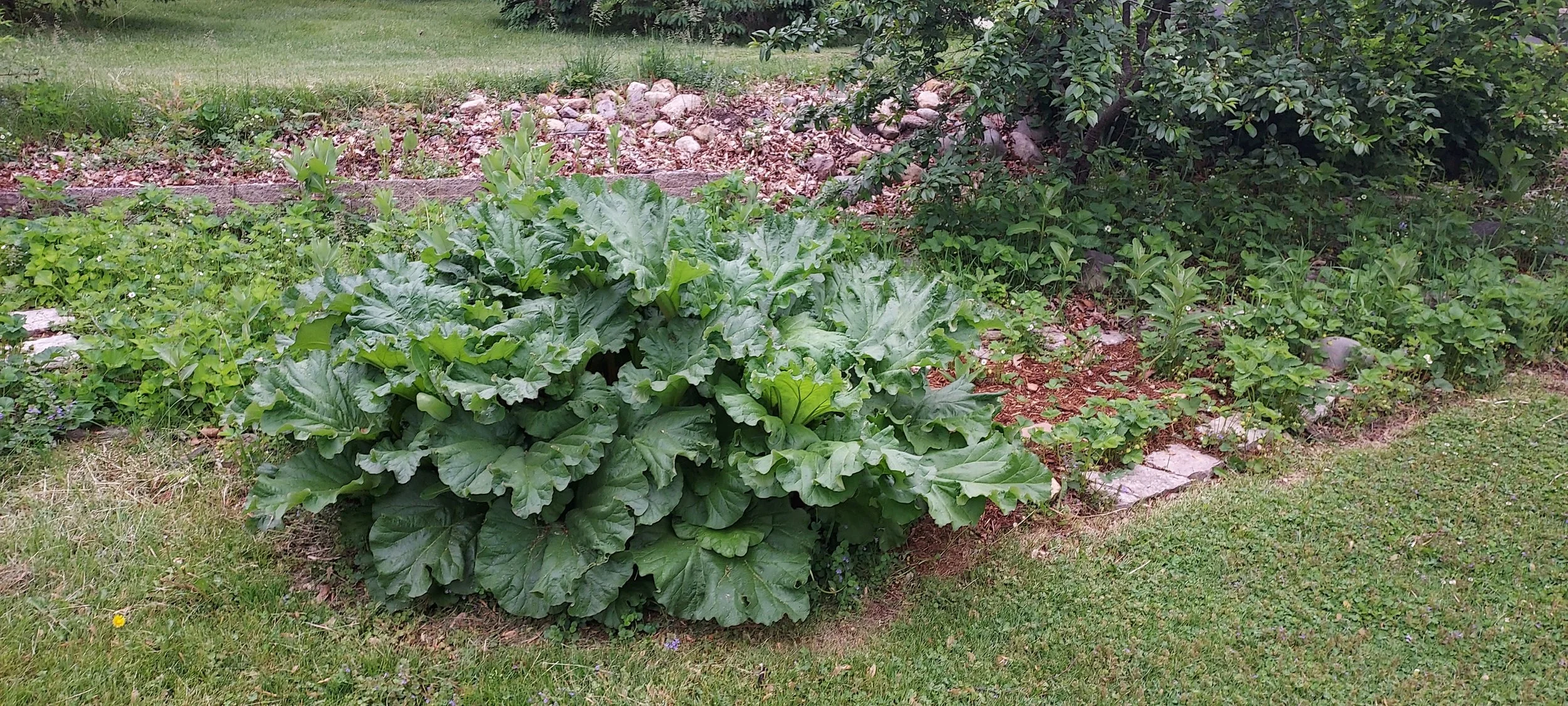
May 28, 2025
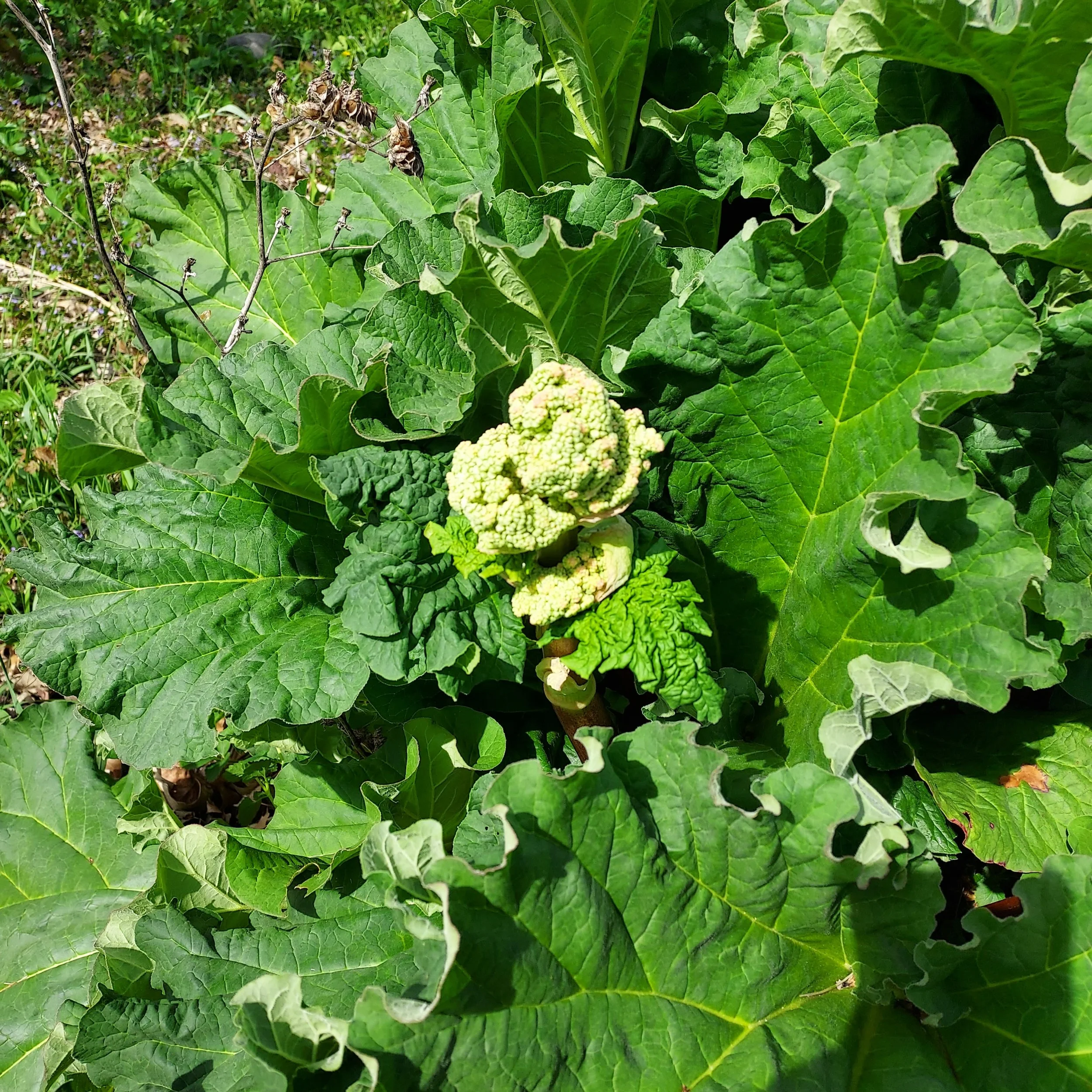
May 4, 2026 - The rhubarb “bolted” early this year. I pruned off the flowers as they showed up.
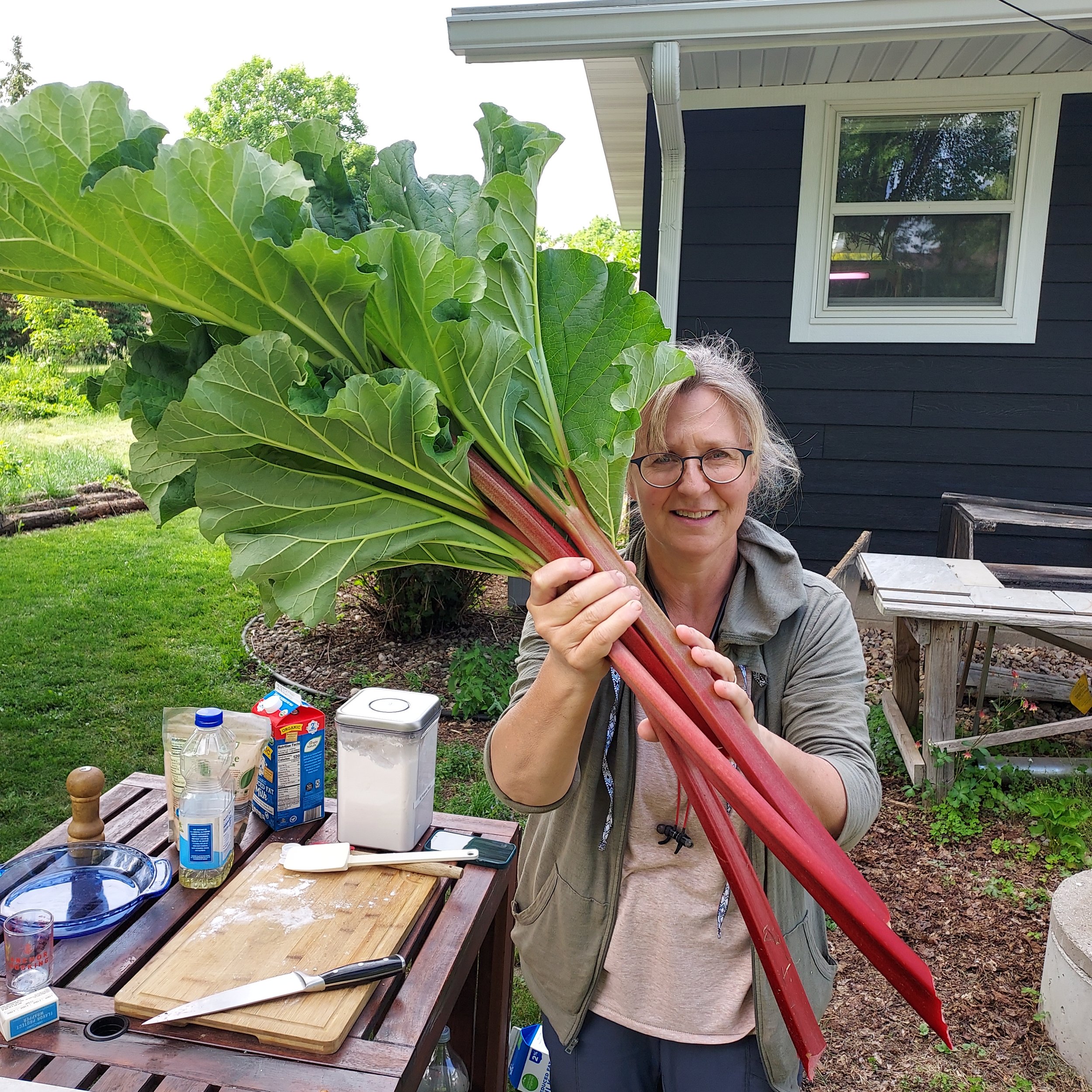
Harvest - May 29, 2023

Rhubarb Pie - July 2, 2022
May 27, 2026 - The current plan is to make…wait for it…Rhubarb Jelly! Yep, that’s right. Pucker up and spread that on your toast.
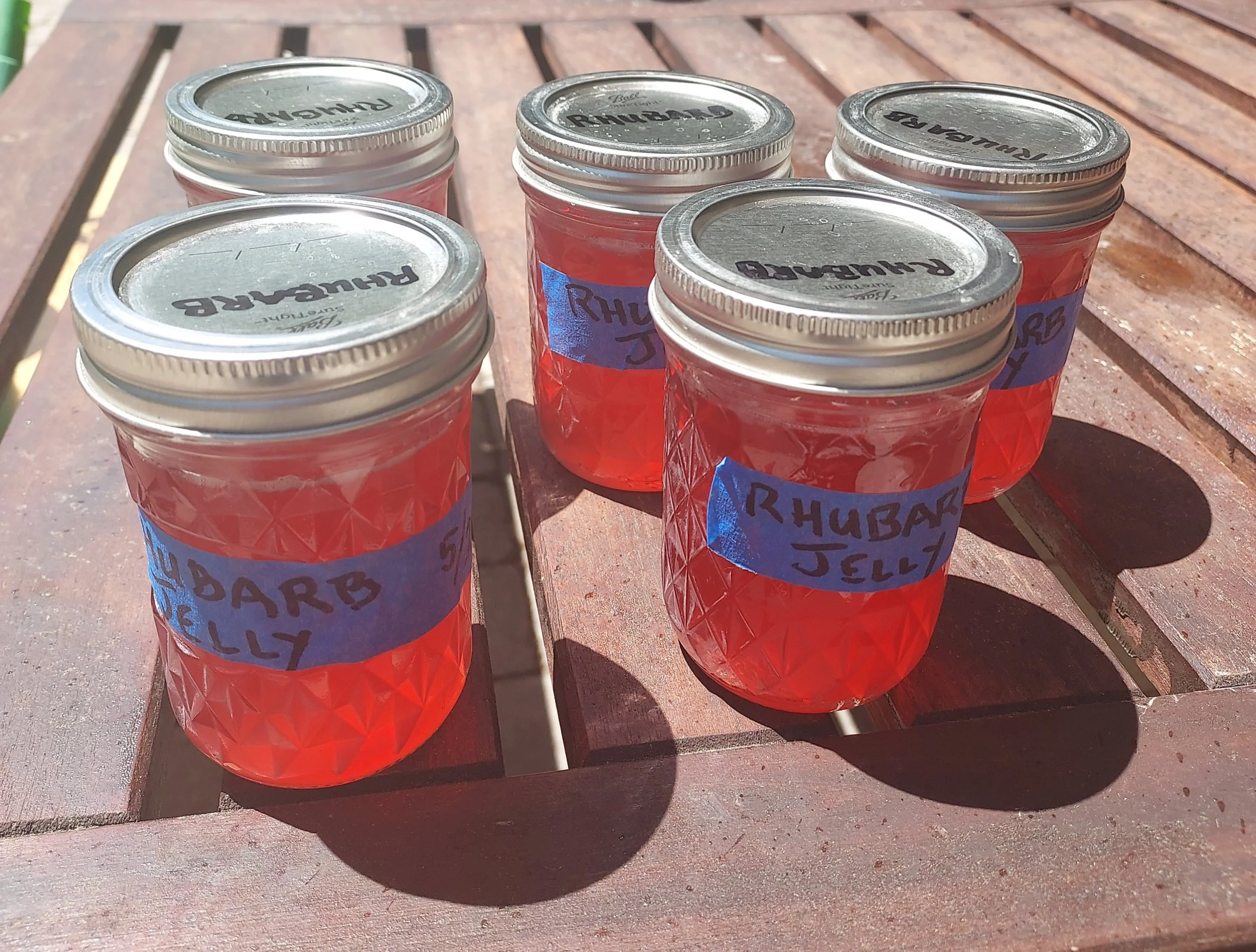
June 9, 2026 - Well, here it is…Rhubarb Jelly. Beautiful. Next year I’ll try Rhubarb Jam!
High Bush Cranberry
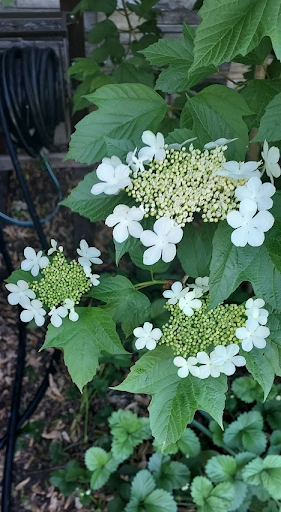
High Bush Cranberry - (Viburnum trilobum) As you might expect from the name, the leaves generally have three lobes.
Not really a cranberry, though the fruit sort of looks like cranberry. It is native to North America - the upper Northeast and the Great Lakes region of the U.S. (probably Canada too).
While self-pollinating (has both male and female parts), it can be wind pollinated, but it mainly relies on the help of insects like bumble bees to aid in pollination.
I am told that the fruit is eaten by birds like cedar waxwings (2020 bird of the year), robins, ruffed grouse, and pheasants, as well as mammals such as deer, moose, foxes, raccoons, and beaver.
Initially we thought the berries were not edible for humans, but it turns out that …“the tart berries are a good source of Vitamin C and are often processed into jams, jellies, and sauces.”
Even growing here on the north side of our house here in Wisconsin, under the roof eaves, where it gets 75% or more shade during the day, it grows rapidly and will need to be pruned down every year to keep it lower than the eaves of the house. It does lean towards the light and away from the house.
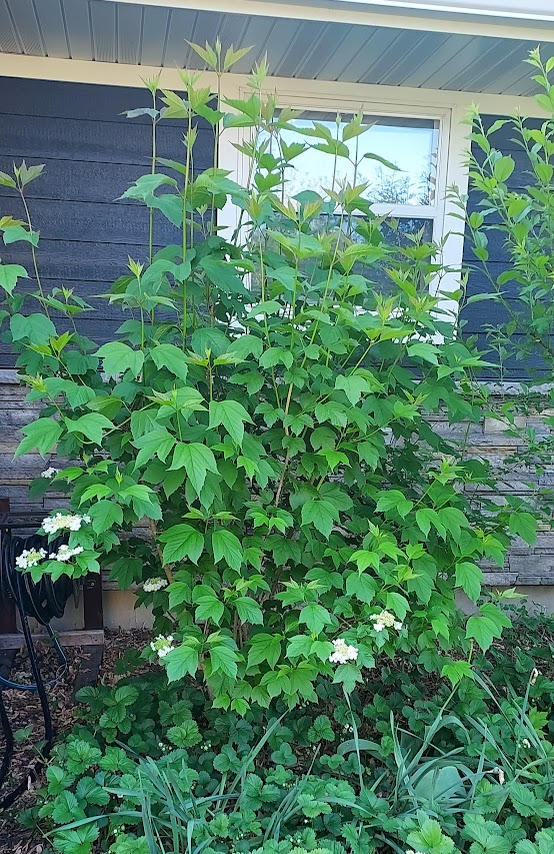
May 2025 - By autumn the branches will have grown tall enough to press against the soffits (underside of the eaves) and extend up higher than the gutter.
May 2025 - Early Flowers
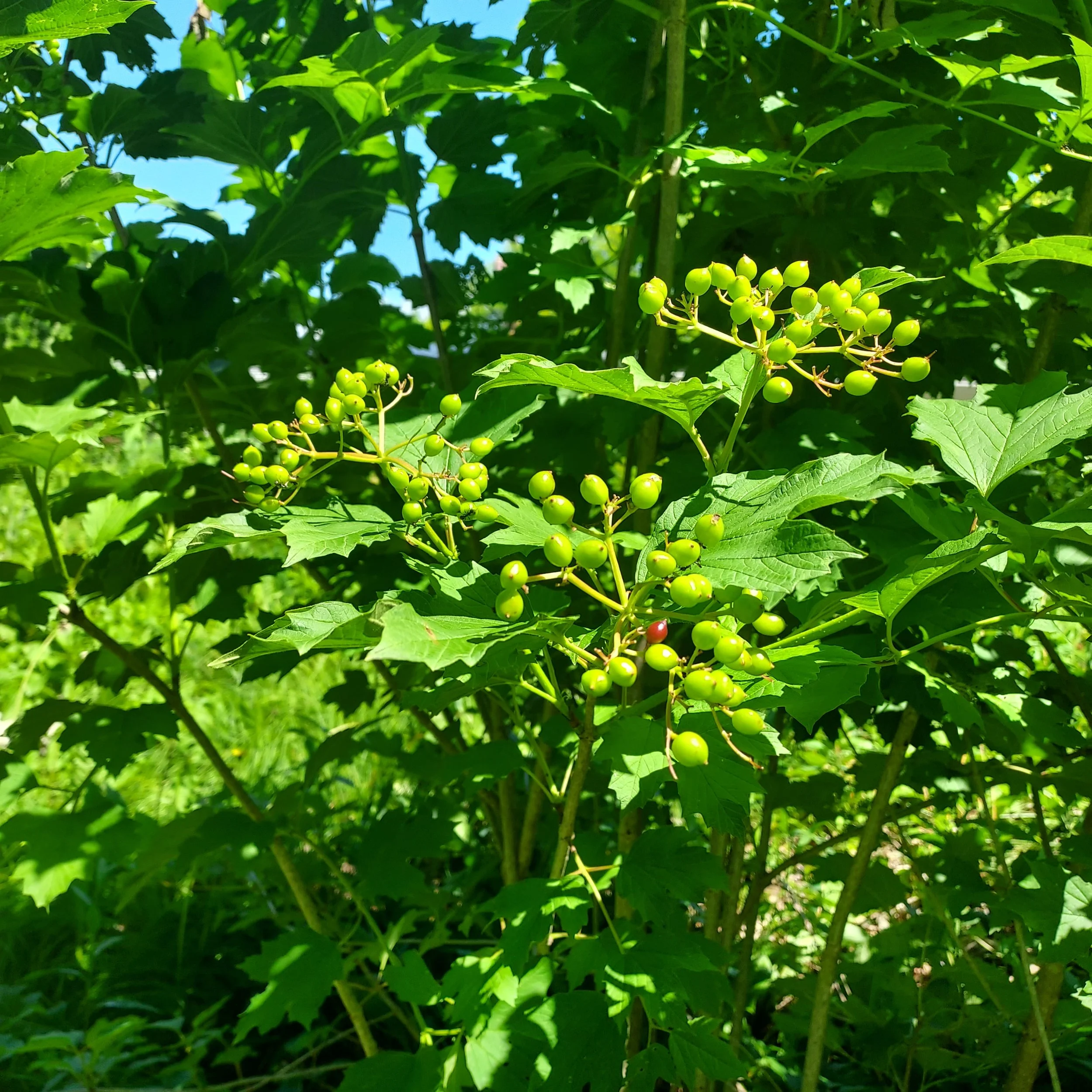
June 24, 2026
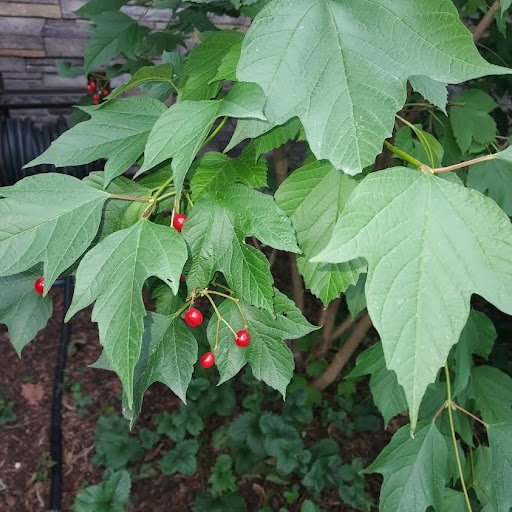
September 2025 - High Bush Cranberry fruit
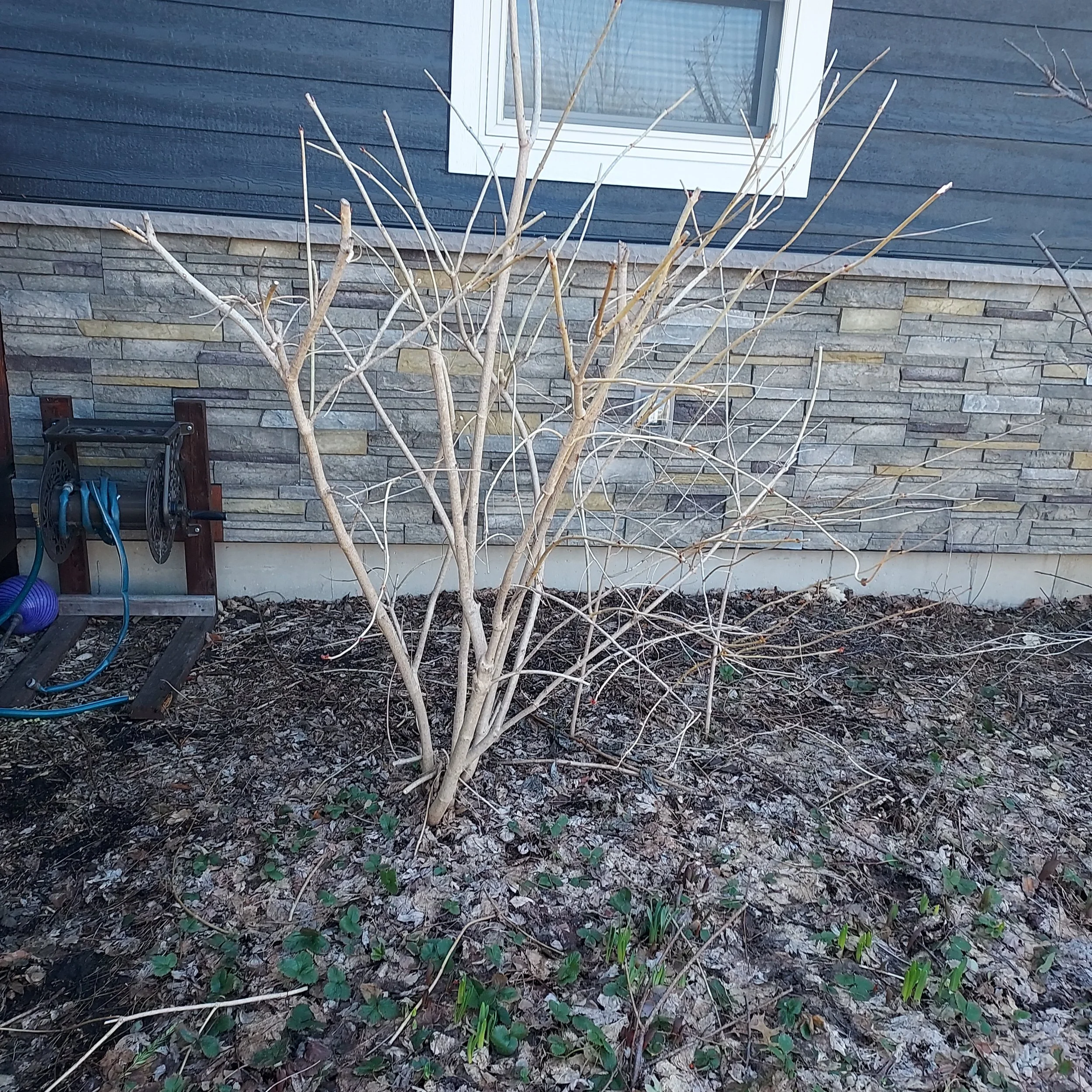
March 21, 2026 - Having made it through winter, pruned in February and ready for spring.

Purple Lovegrass
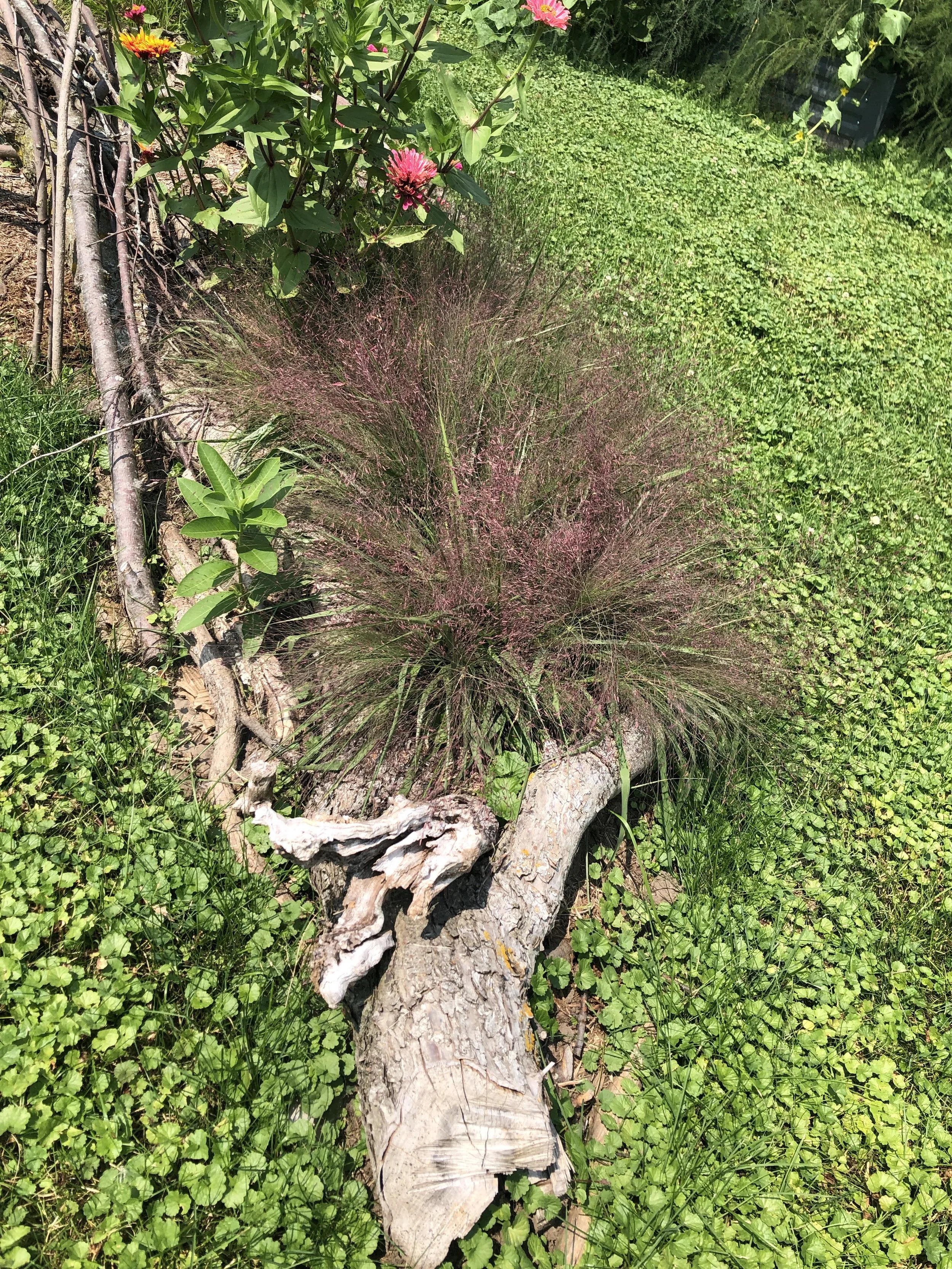
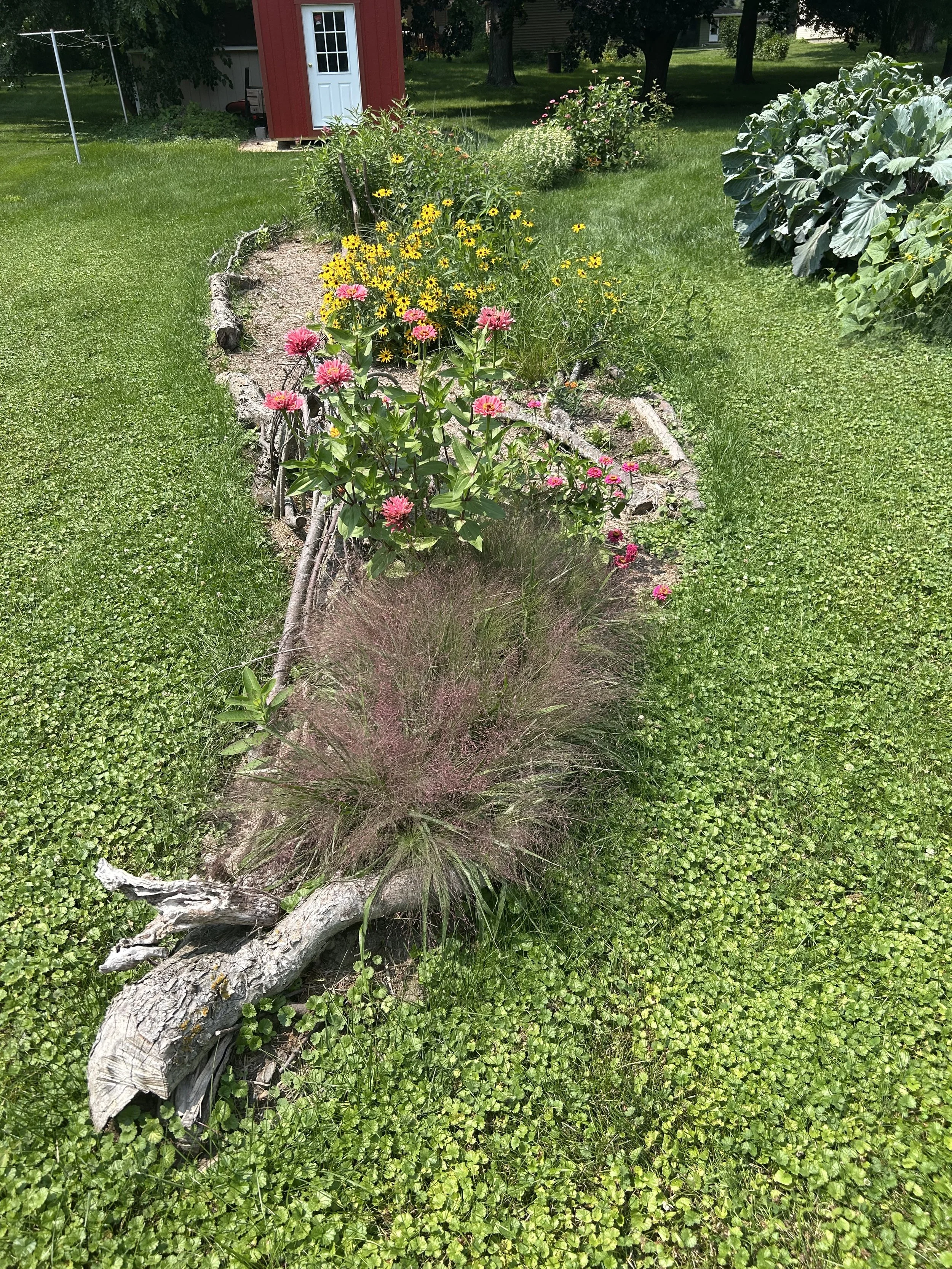
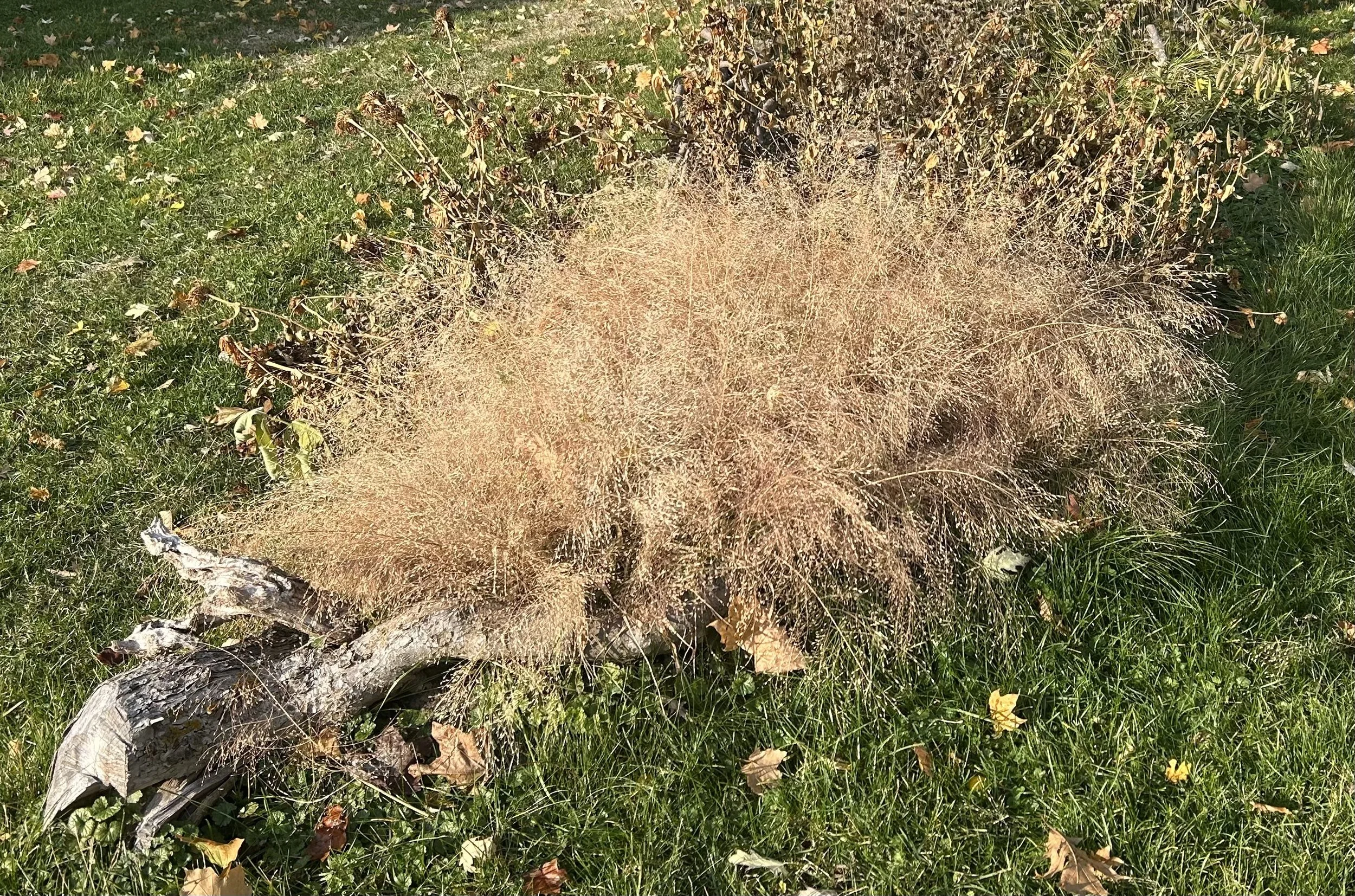
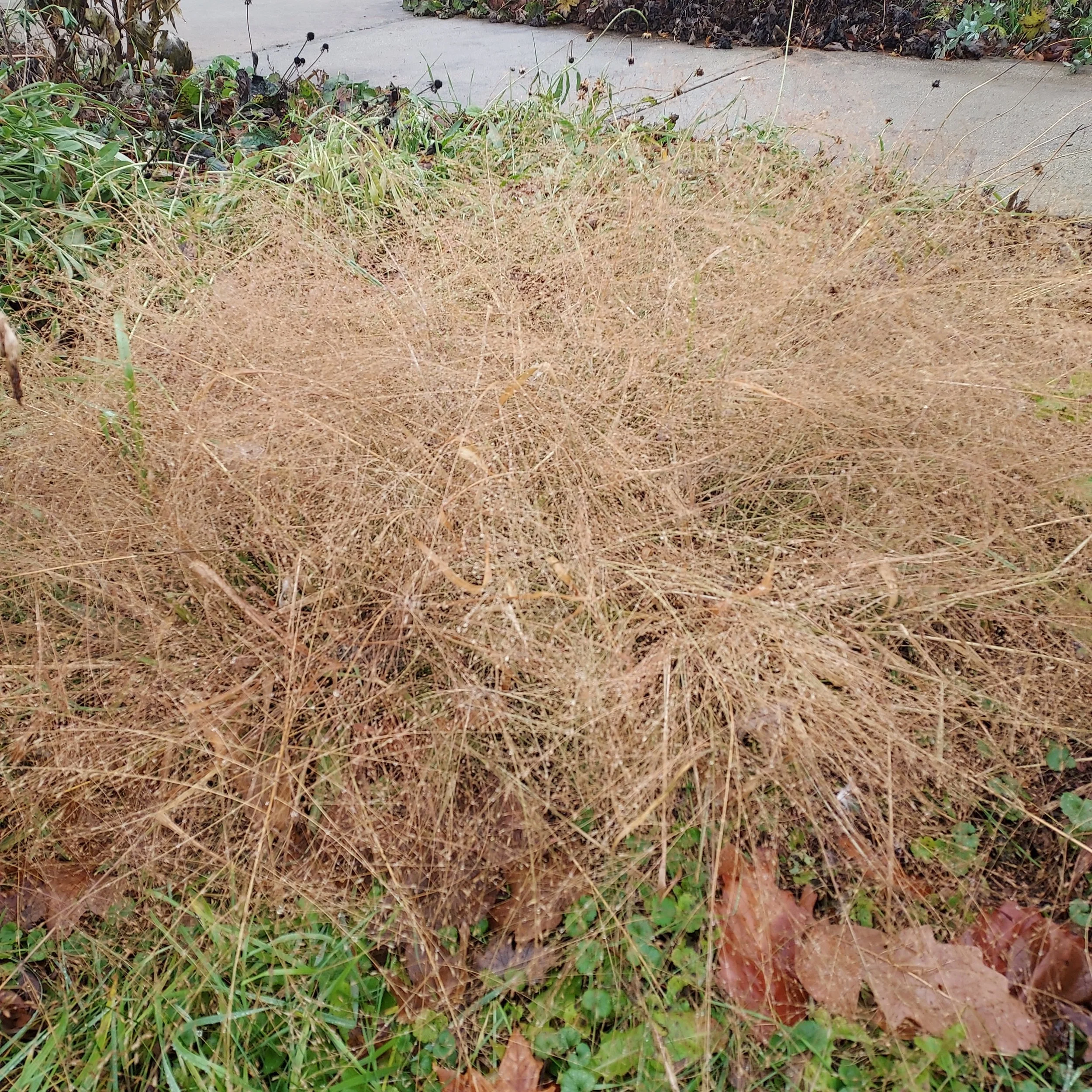
Purple Lovegrass….not sure I love the name, but it is easier to say (and remember) than “Eragrostis spectabilis.” And it is descriptive…it is purple and most everybody loves it. And there’s much to love about it.
Showy and low-growing, Purple Lovegrass is an excellent native grass for dry sandy or gravelly soils where few other plants can survive. Eragrostis spectabilis makes a stunning statement in the late season landscape, turning a brilliant purplish-pink at summer's end. If you have sandy soil that is too dry to support a lawn, plant a field of Purple Love Grass for a late summer show.
Host plant for the Zabulon Skipper butterfly.
Purple frothy mound, 1-2 feet high.
Here’s a couple of summer photos:
A couple Autumn photos:
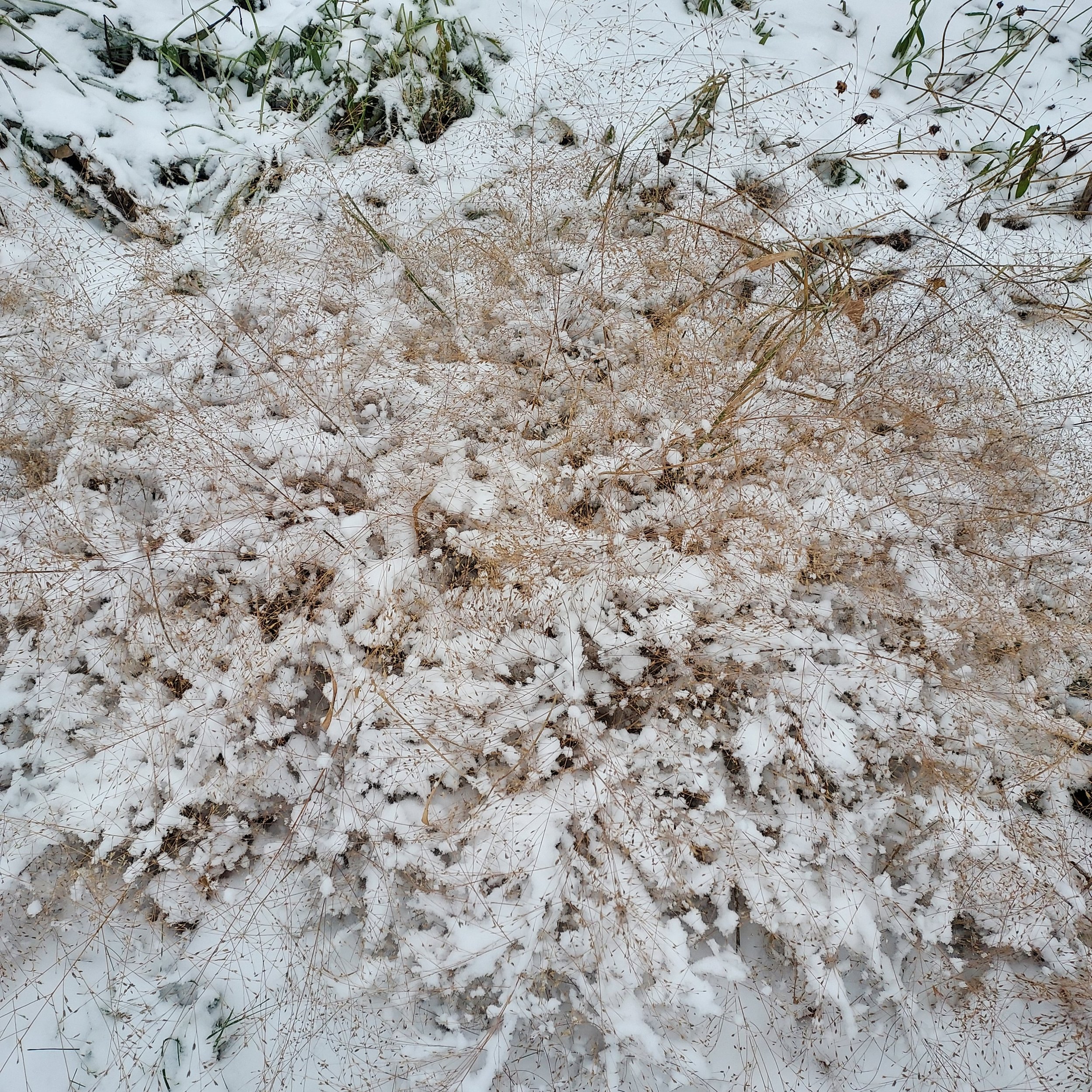
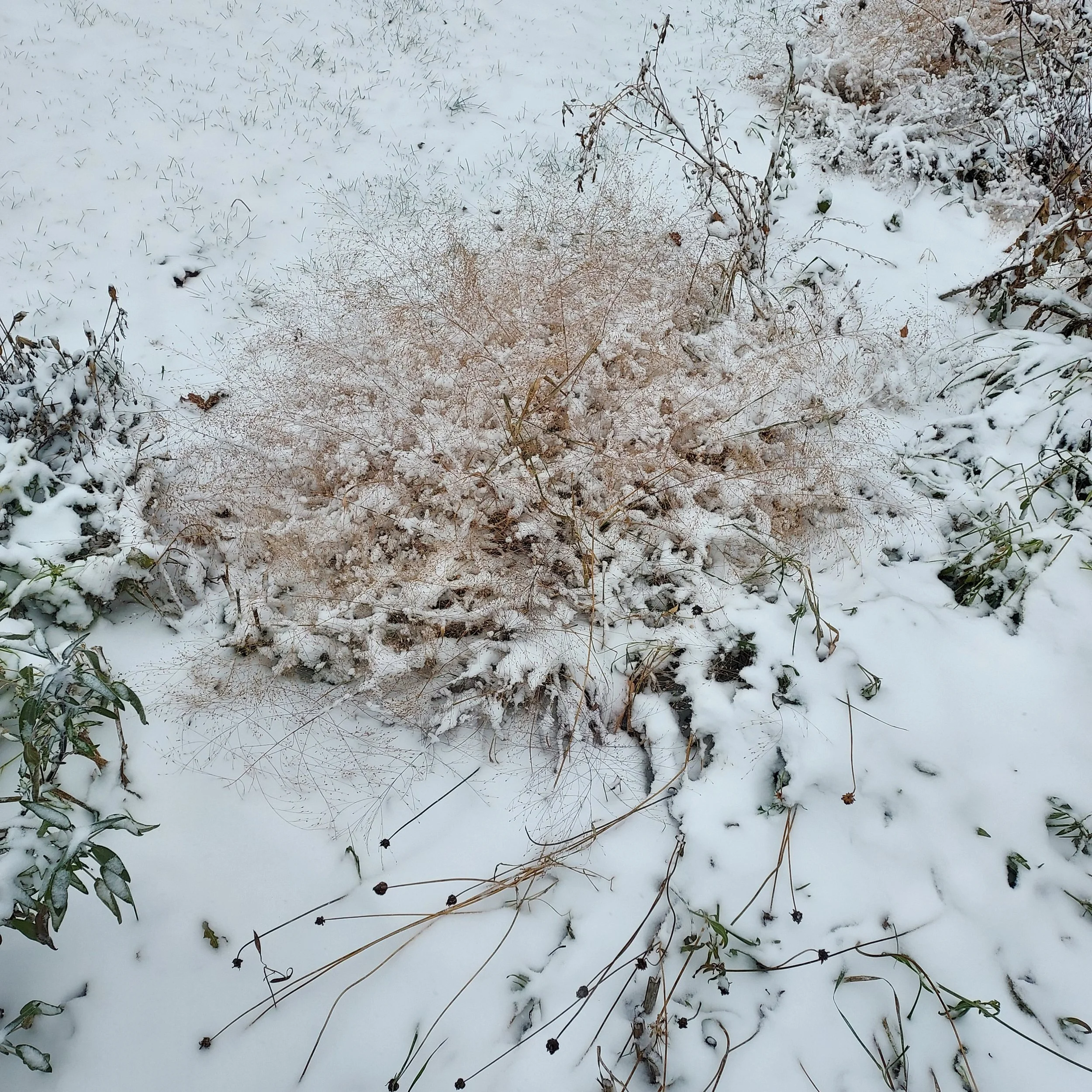
And finally, winter:
Horseradish
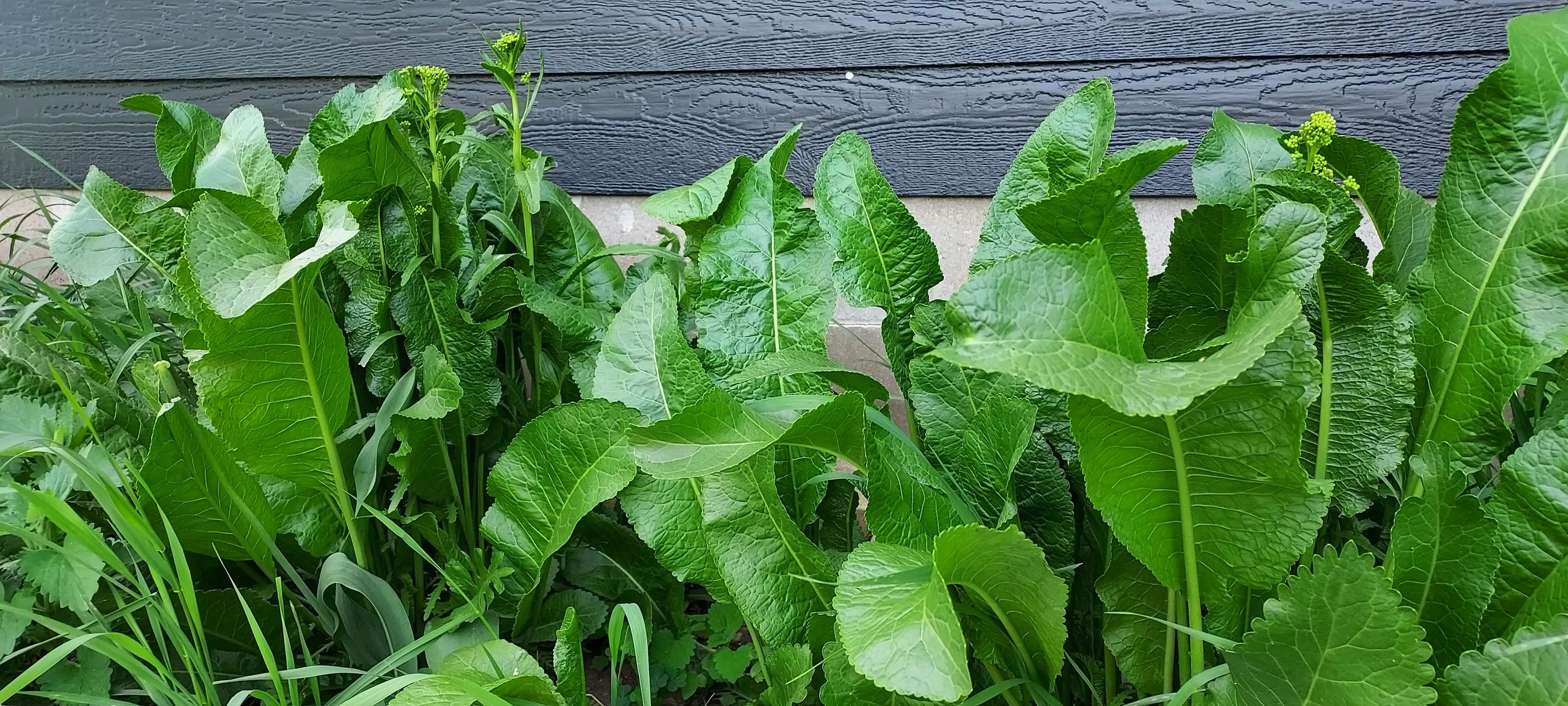
Horseradish (Armoracia rusticana)-
Not many vegetables are perennials…the only two that come to mind are horseradish and asparagus (not including fruit). And while horseradish is not native, it is a hardy perennial.
To save you the trouble of looking it up in Wikipedia, horseradish is described thus:
“Horseradish (Armoracia rusticana, syn. Cochlearia armoracia) is a perennial plant of the family Brassicaceae (which also includes mustard, wasabi, broccoli, cabbage, and radish). It is a root vegetable, cultivated and used worldwide as a spice and as a condiment.
“Horseradish grows up to 1.5 meters (5 feet) tall, with hairless bright green unlobed leaves up to 1 m (3 ft 3 in) long that may be mistaken for docks (Rumex). It is cultivated primarily for its large, white, tapered root.The white four-petalled flowers are scented and are borne in dense panicles. Established plants may form extensive patches and may become invasive unless carefully managed.
“Intact horseradish root has little aroma. When cut or grated, enzymes from within the plant cells digest sinigrin (a glucosinolate) to produce allyl isothiocyanate (mustard oil), which irritates the mucus membranes of the sinuses and eyes. Once exposed to air or heat, horseradish loses its pungency, darkens in color, and develops a bitter flavor.”
And this is interesting:
“Allyl isothiocyanate serves the plant as a defense against herbivores. Since it is harmful to the plant, it is stored in the harmless form of a glucosinolate, separate from the enzyme myrosinase. Once the herbivore chews the plant, the noxious allyl isothiocyanate is produced. Allyl isothiocyanate is also responsible for the pungent taste of horseradish and wasabi. It can be produced synthetically, sometimes known as synthetic mustard oil.”
I assume this is why when you grate fresh, raw horseradish root you can only wait a few minutes before you add vinegar. The longer it sits before you add vinegar, the stronger it gets. Bonus points if you know what a panicle is. I sure didn’t.
Horseradish might be the first of this blog’s “Plants That Seem Alien to this Planet”
We planted the horseradish in 2018. I don’t have a photo from then, but here it is in April 2019
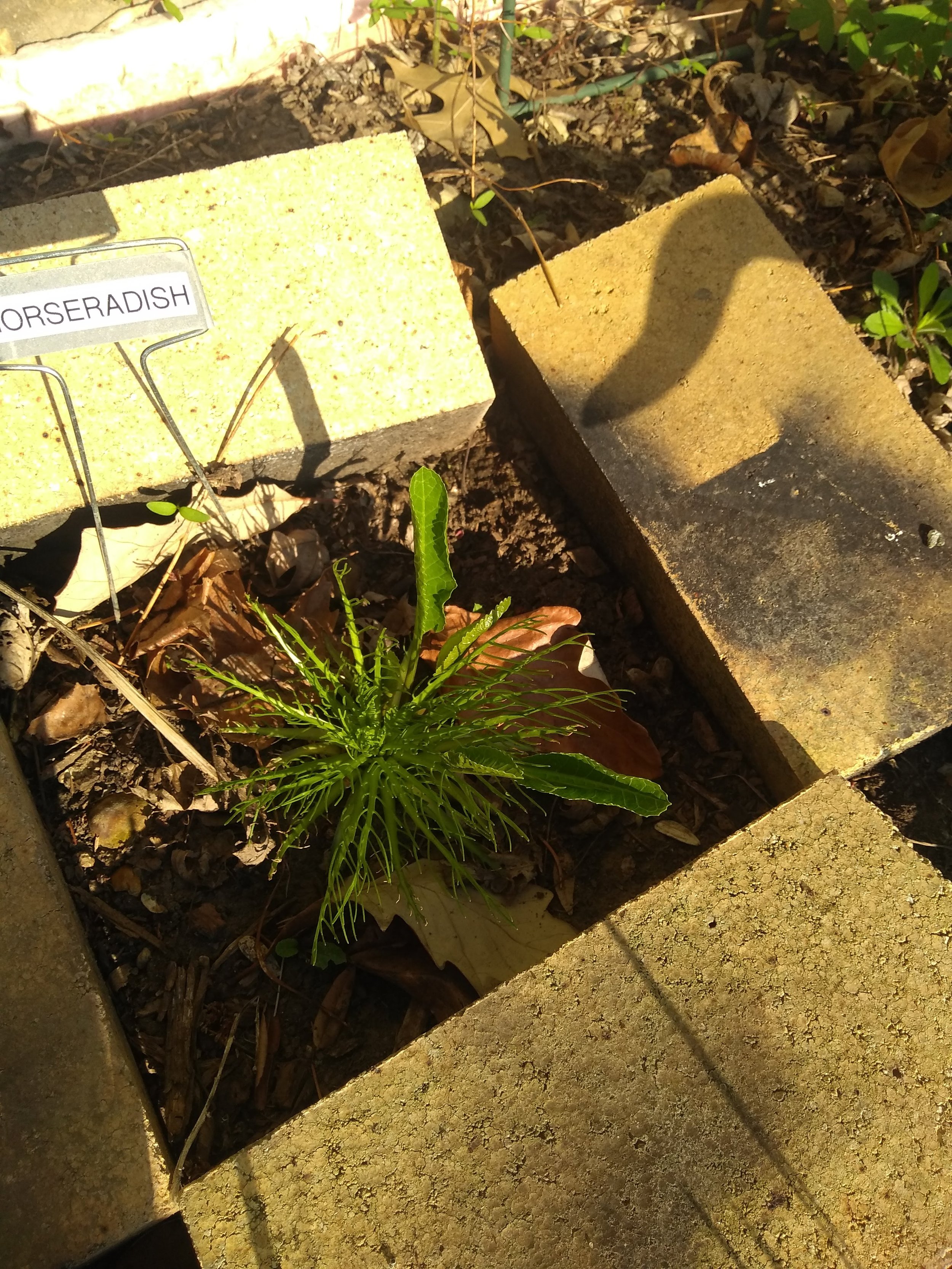
April 2019
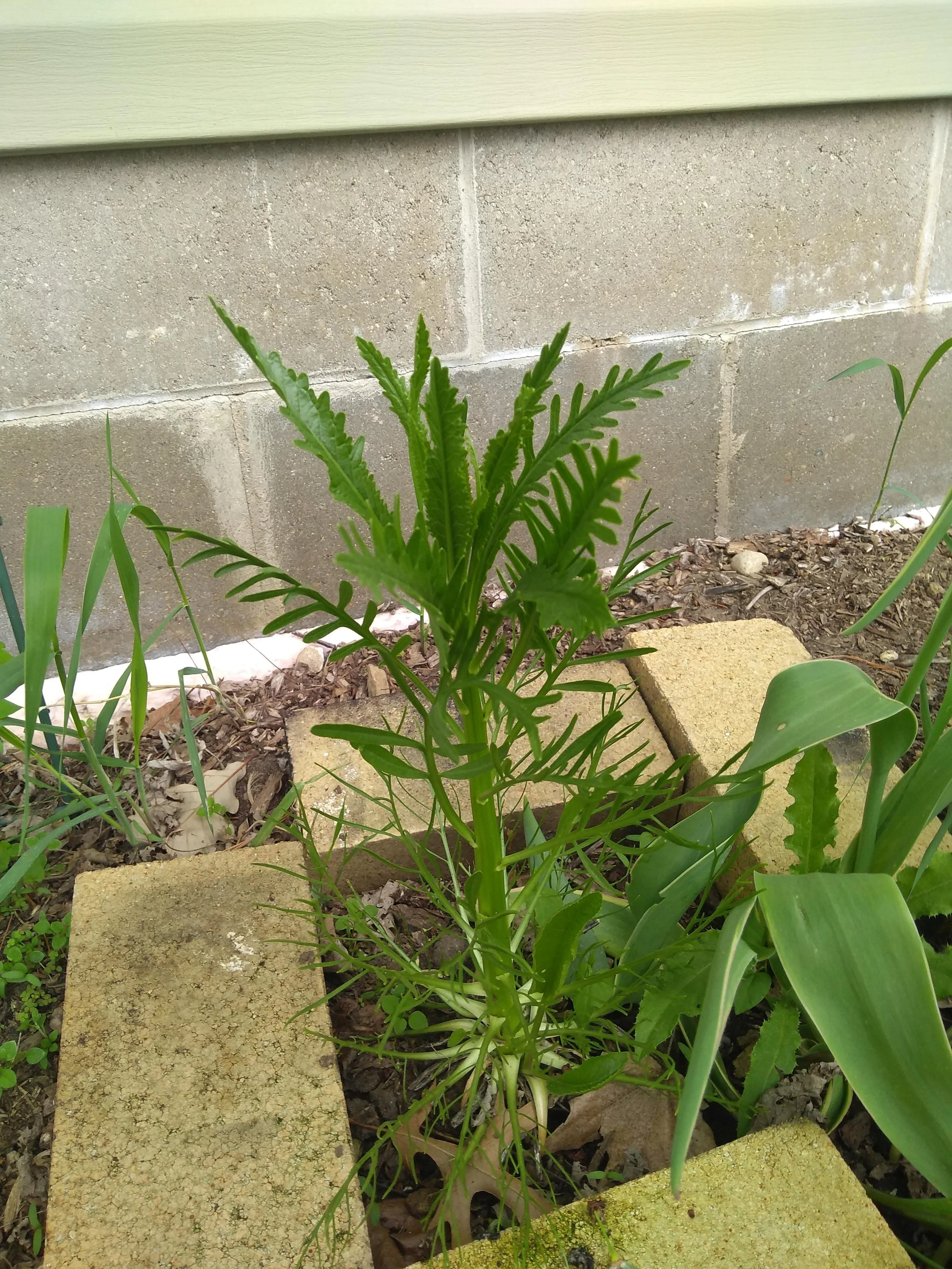
May 12, 2019
And below, here it is a year later, May 1, 2020
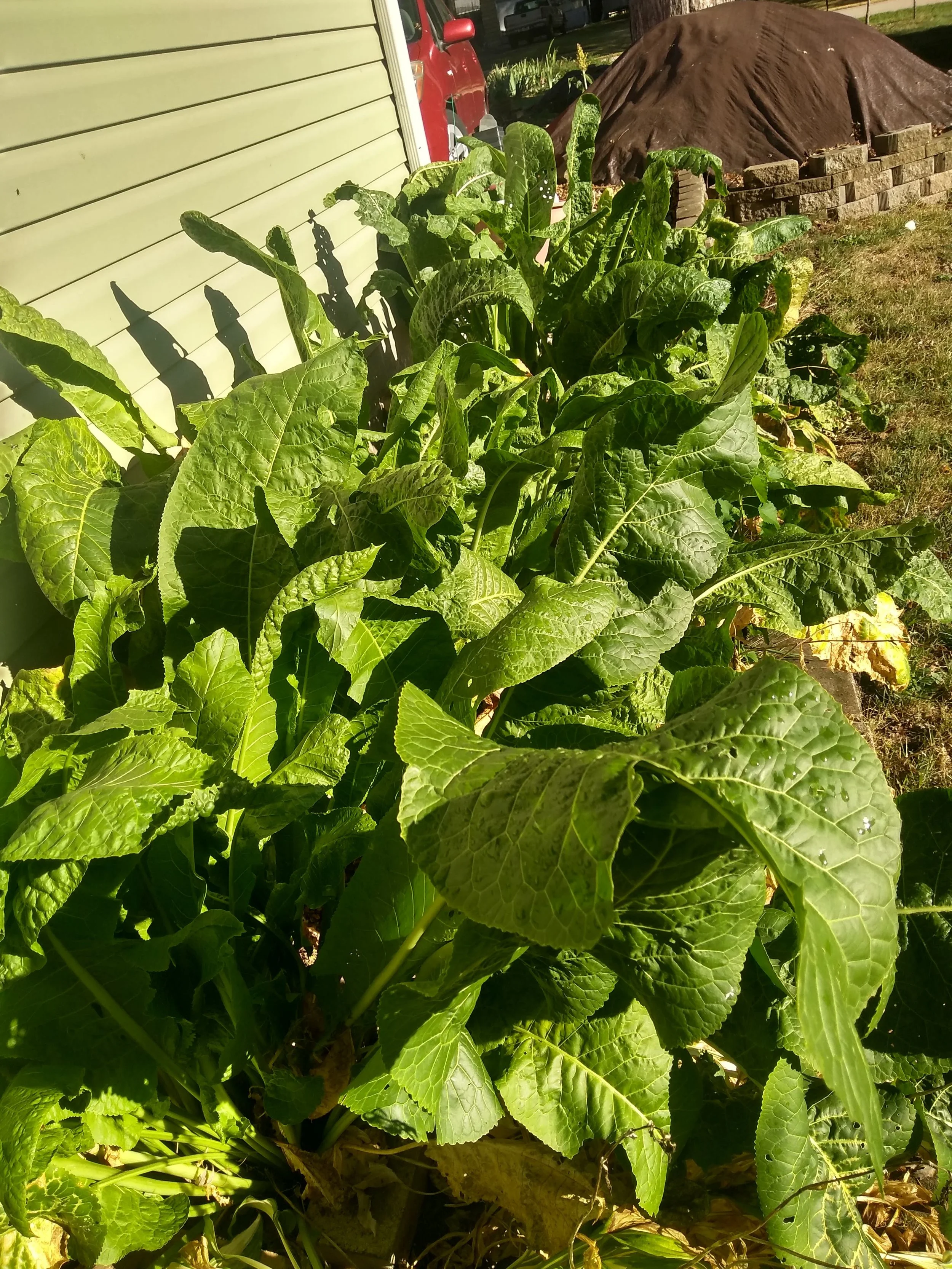
May 1,2020
On a hot summer day, when it is blooming and the sun hits it square on, it releases some of its volatile mustard oil… you walk by and think, what is that smell!? Yes, it’s horseradish.
A friend of ours asked me what is the right type of soil in which to plant the mighty horseradish. Below is what we planted it in:
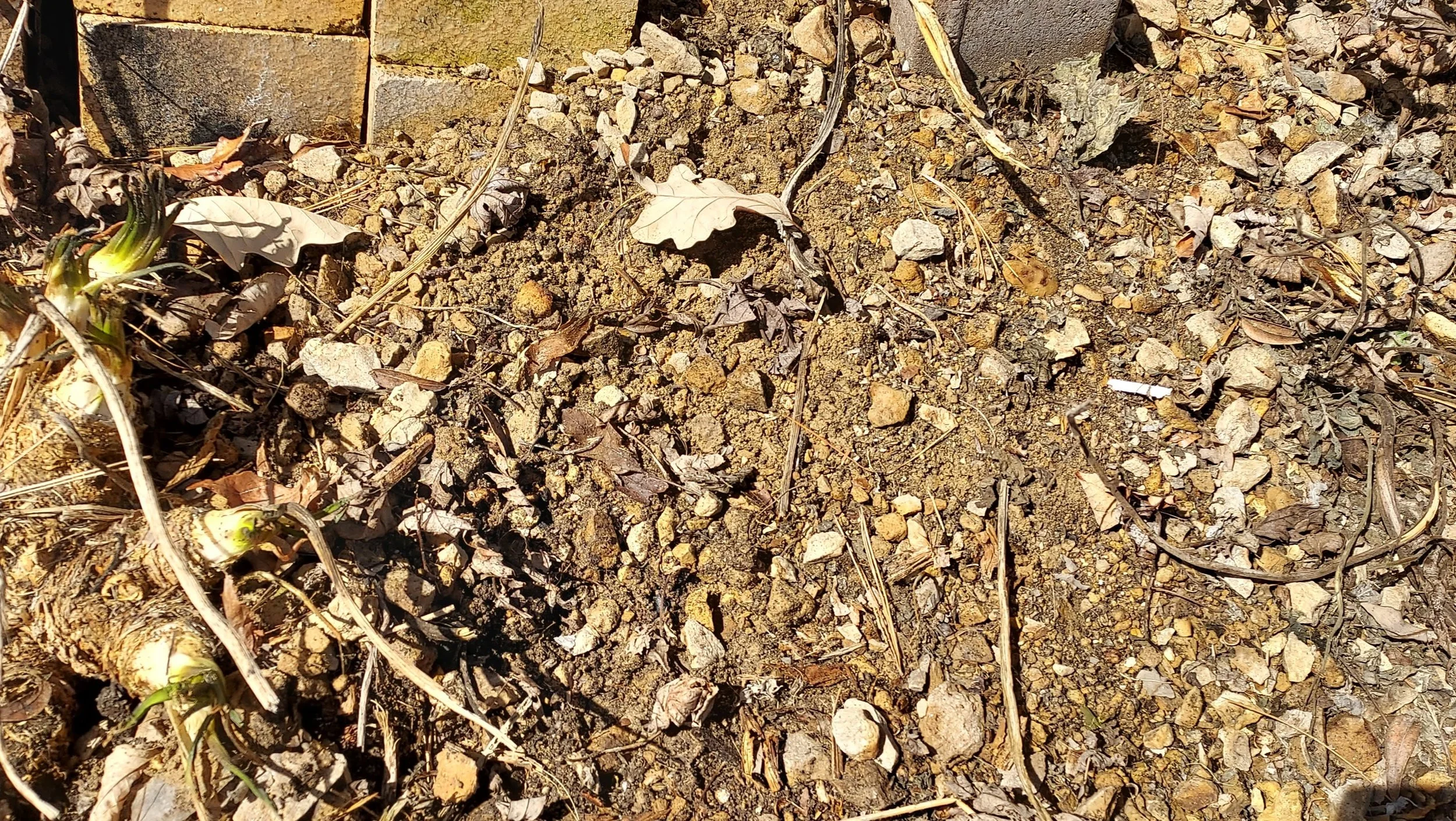
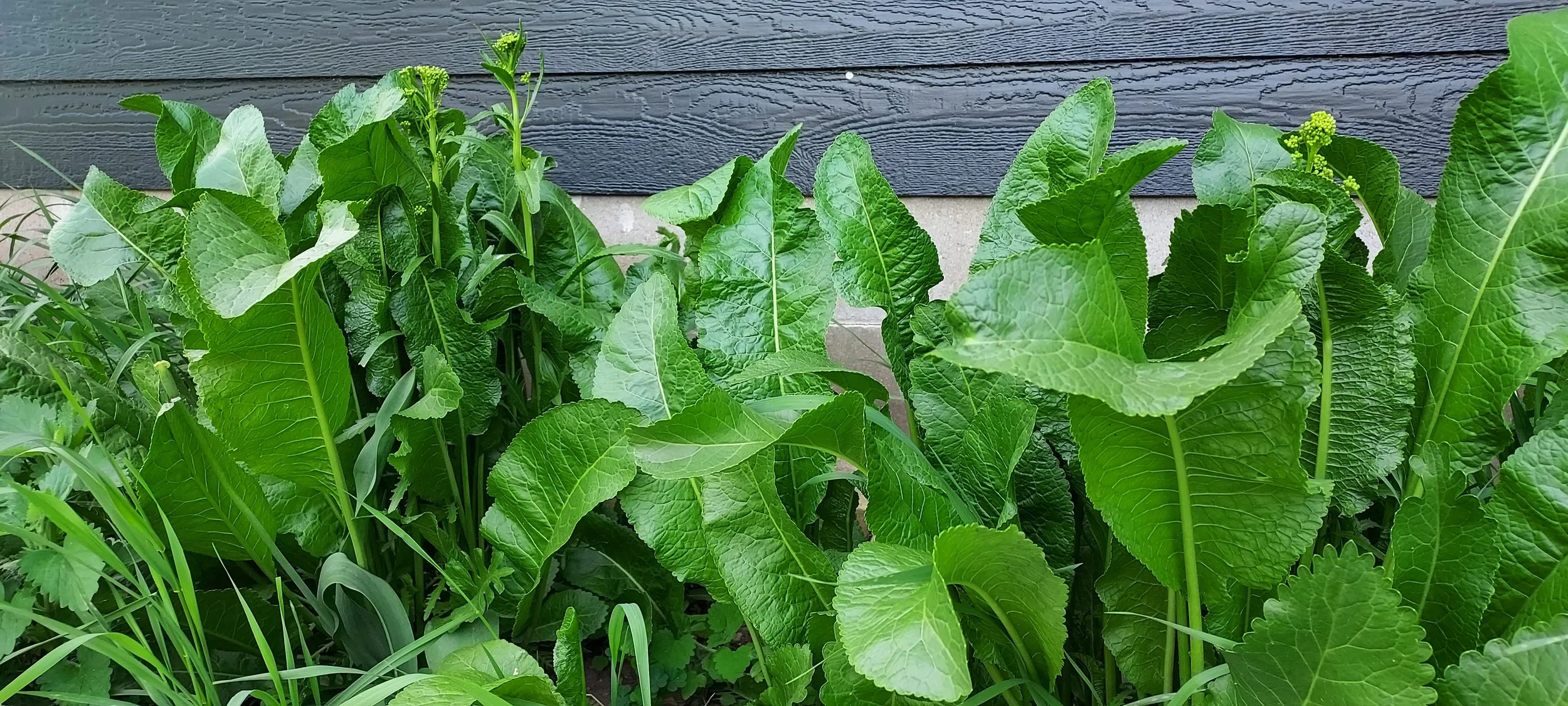
It is nothing but backfill that was unceremoniously dumped there when the house’s foundation was poured…about 50% gravel and 50% sandy dirt. It’s porous enough…it has that in its favor. But it don’t make no nevermind to the horseradish which seems happy enough right where it is. It has eastern exposure to the morning sun, but it’s right up tight to the house so it gets shade half the day and doesn’t get much rain. Despite all that the leaves do grow almost tropically large.
And below, a photo showing horseradish “bolting” or flowering.
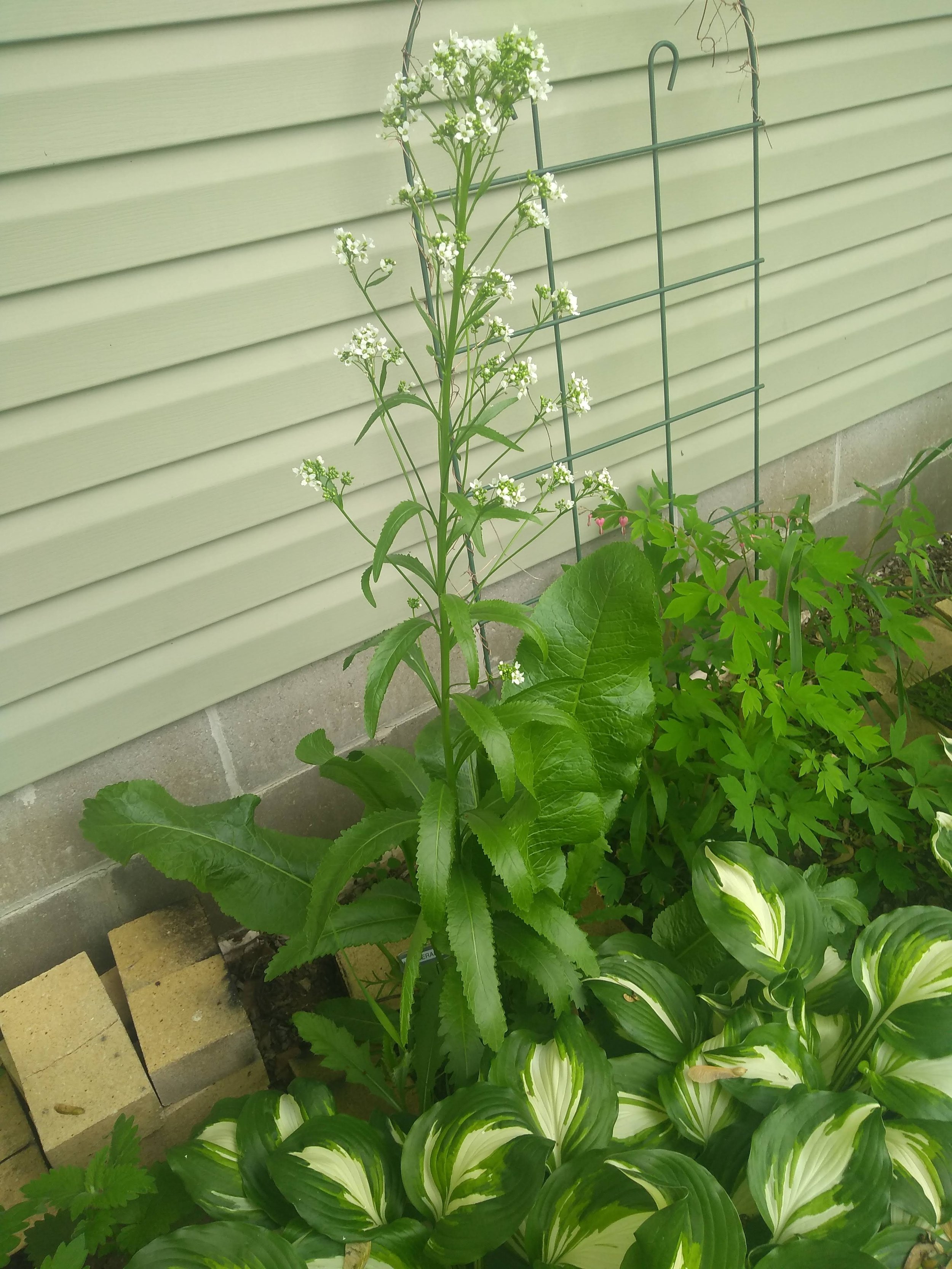
It originally shared a bed with hostas and Bleeding Heart (Dicentra). The horseradish has taken over the bed.
Here it is in full leaf from last year, May 12, 2025
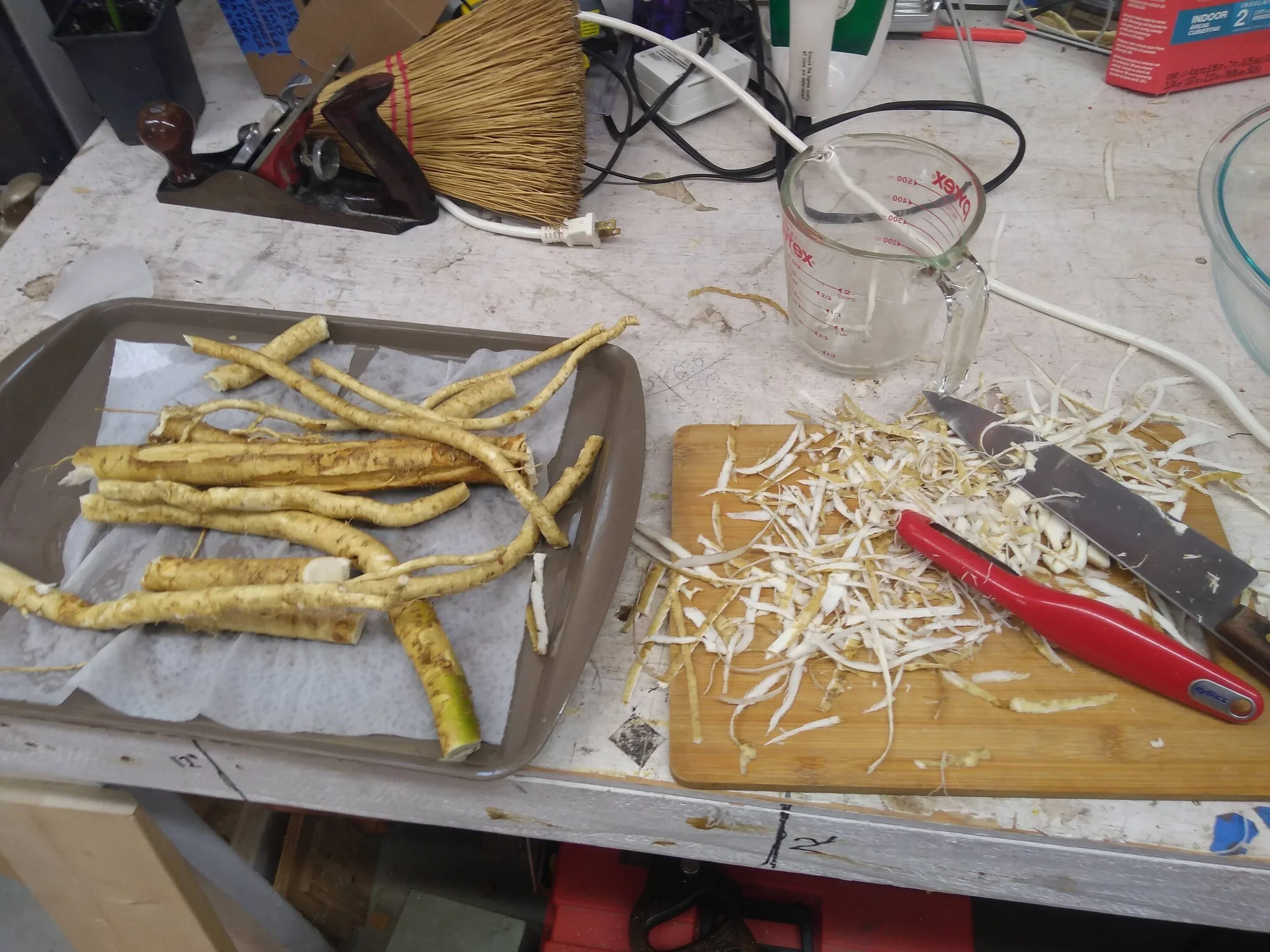
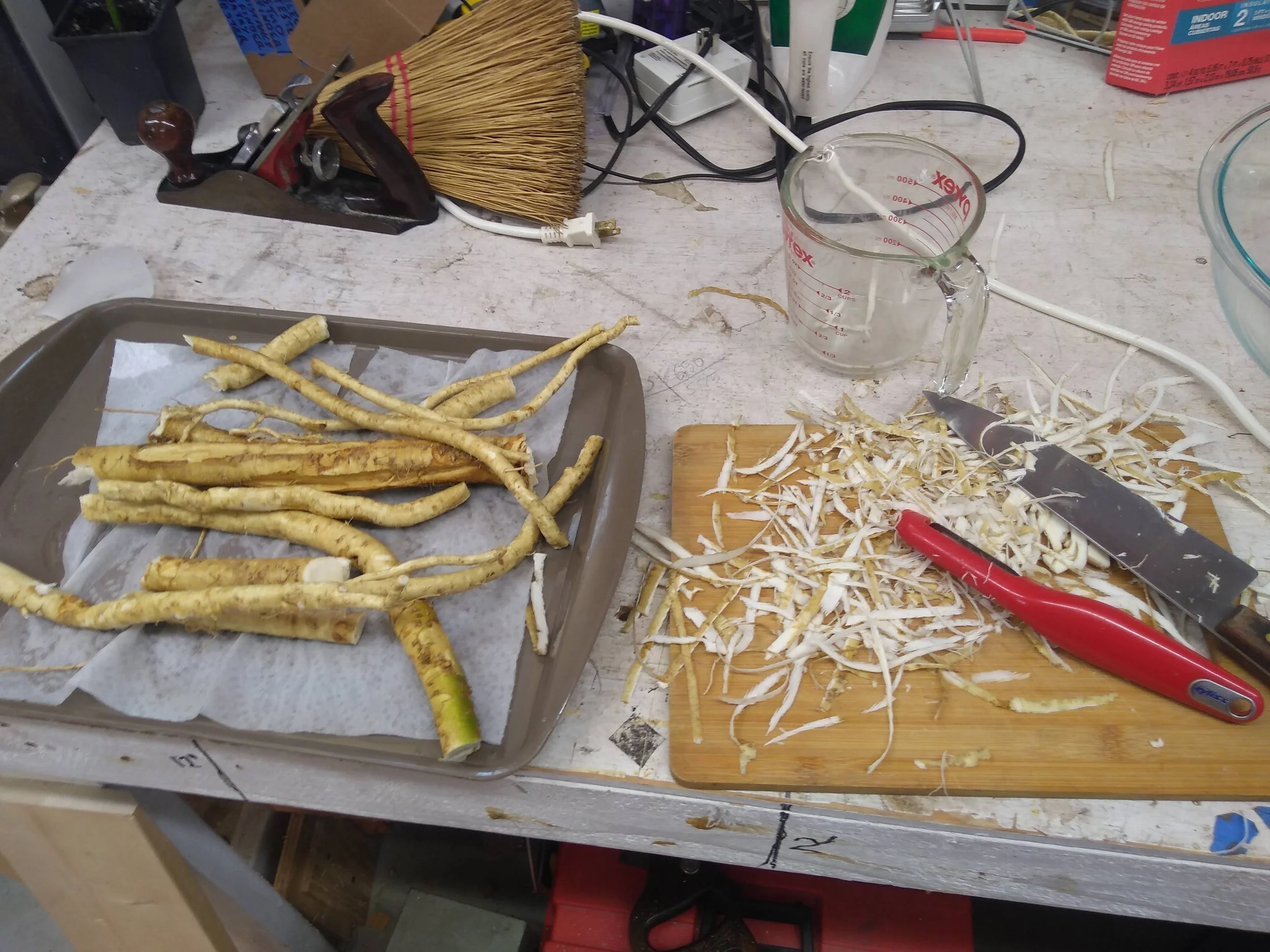
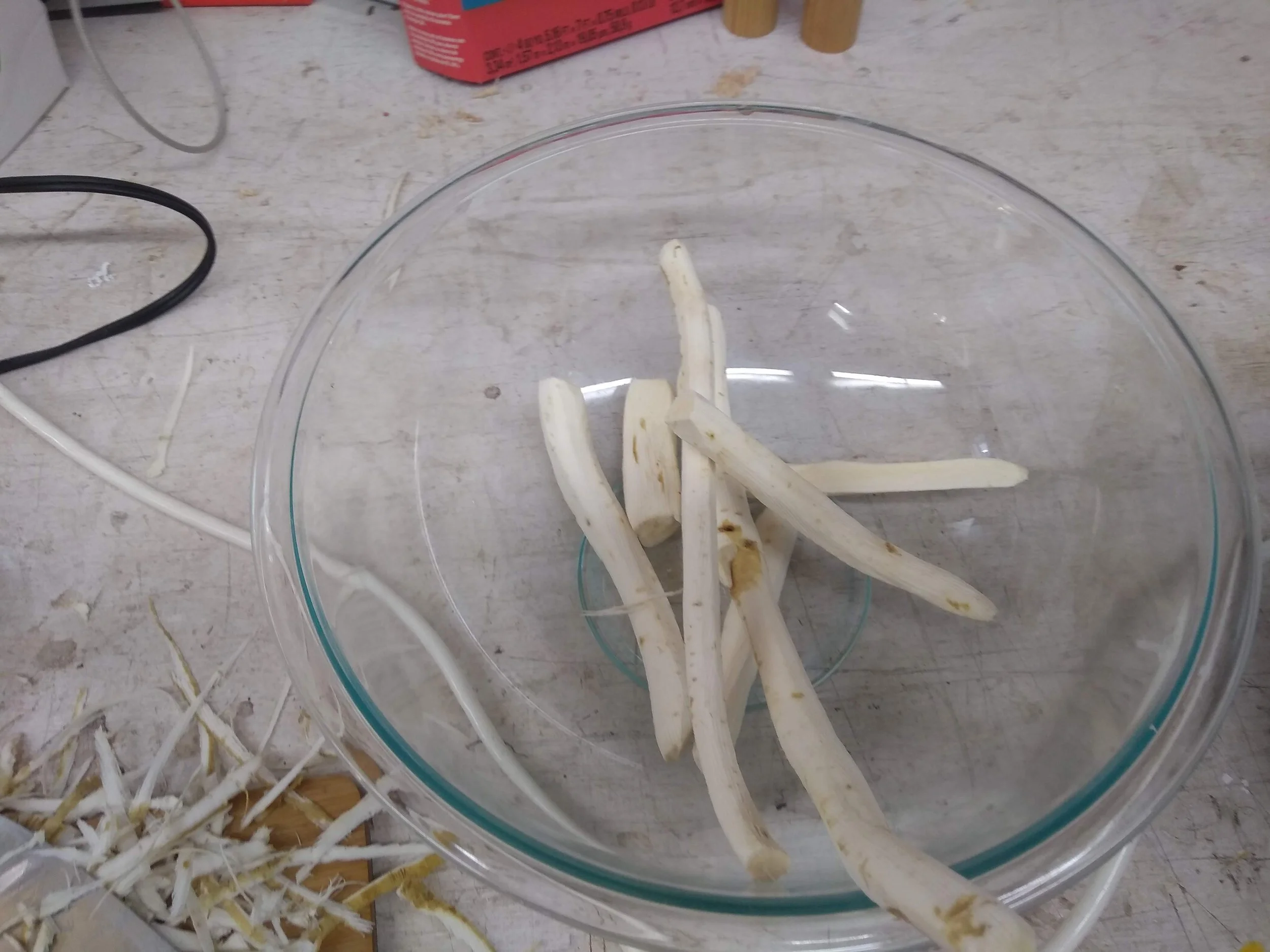
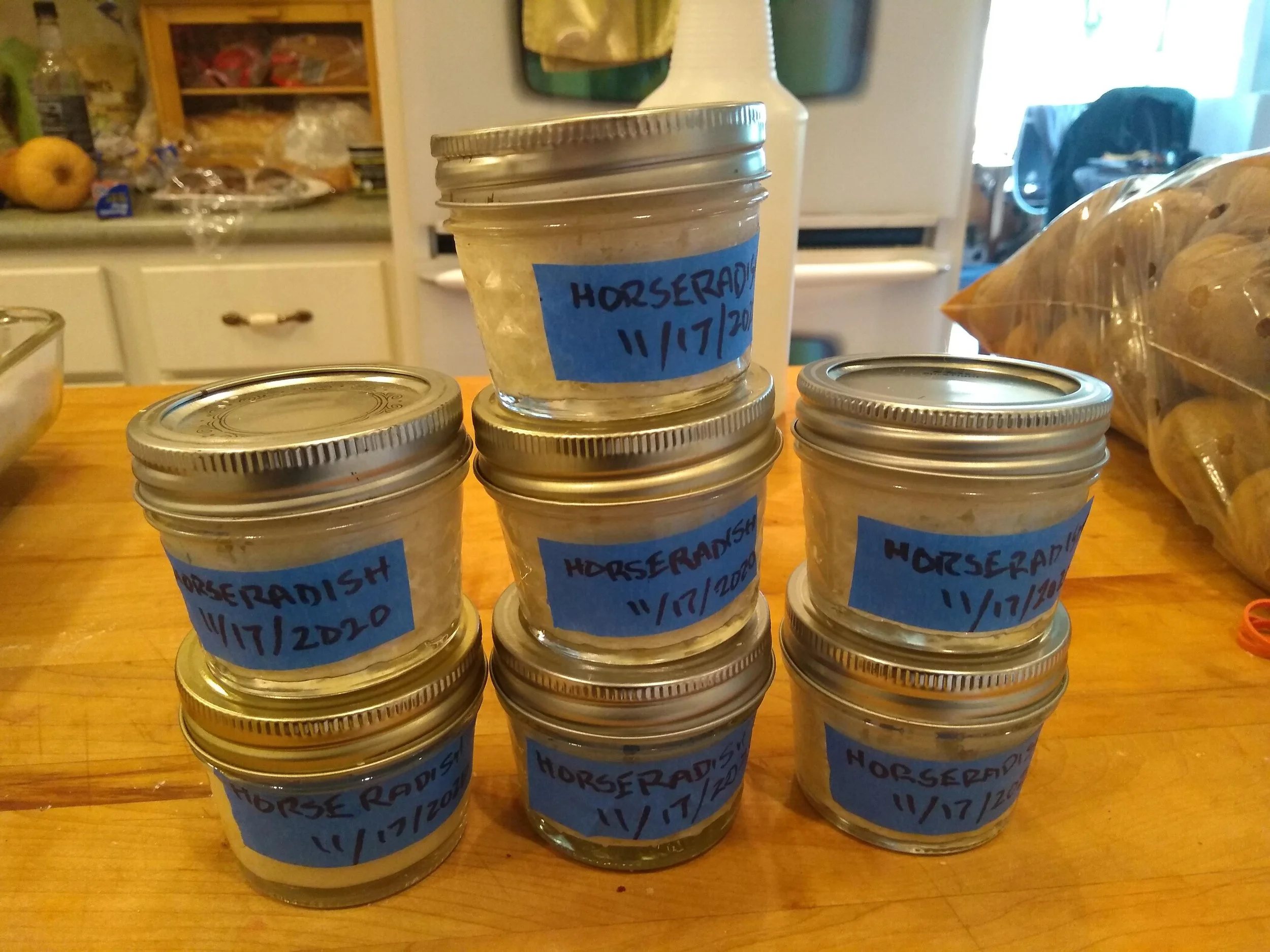
Below are a few photos while I was processing some horseradish root out in the workshop instead of in the kitchen so the fumes wouldn’t force the evacuation of the house:
It’s great with beef. This is “prepared” horseradish which is pretty much straight up horseradish with vinegar and salt. Don’t confuse it with “horseradish sauce” which has sour cream or mayonnaise or some other creamy stuff added. In case you haven’t tried horseradish, it has the same sort of zingy, hot, sharpness as Japanese Wasabi (which is a different type of horseradish?) If you haven’t tried either…well, it might be time to expand your culinary horizons. It’s pretty potent…a little dab’ll do ya.
The recipe I used for “prepared” horseradish is missing/misfiled? Next time I make horseradish I will go back to this blog entry and append the recipe. If you care to send us your favorite recipe please do so [SedgesandCelery email link here]. And take it easy on me…the simpler the better. And I’m not looking for “creamy” horseradish sauce (though I do like that too 🙂 ).
Jack-in-the-Pulpit
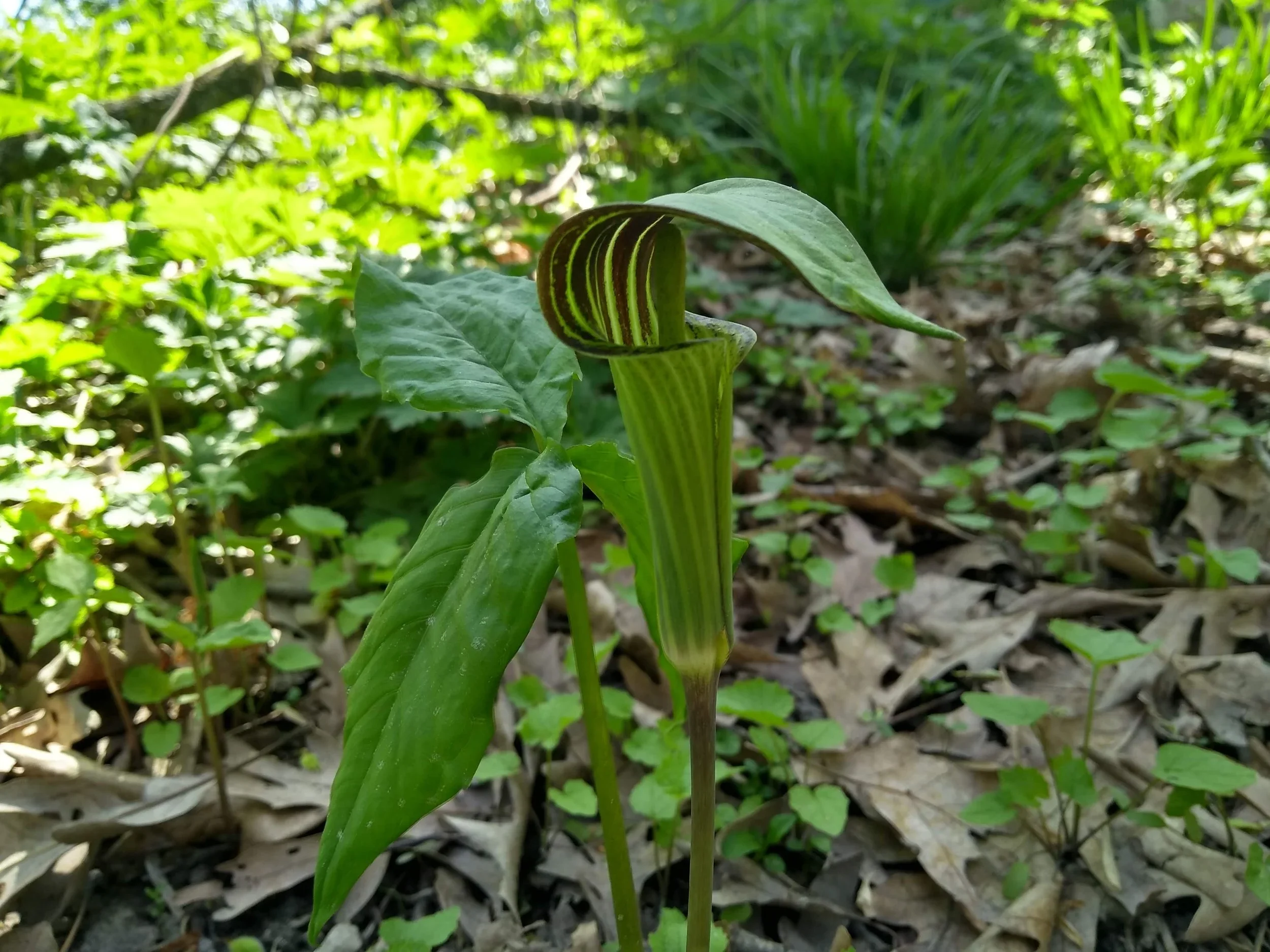
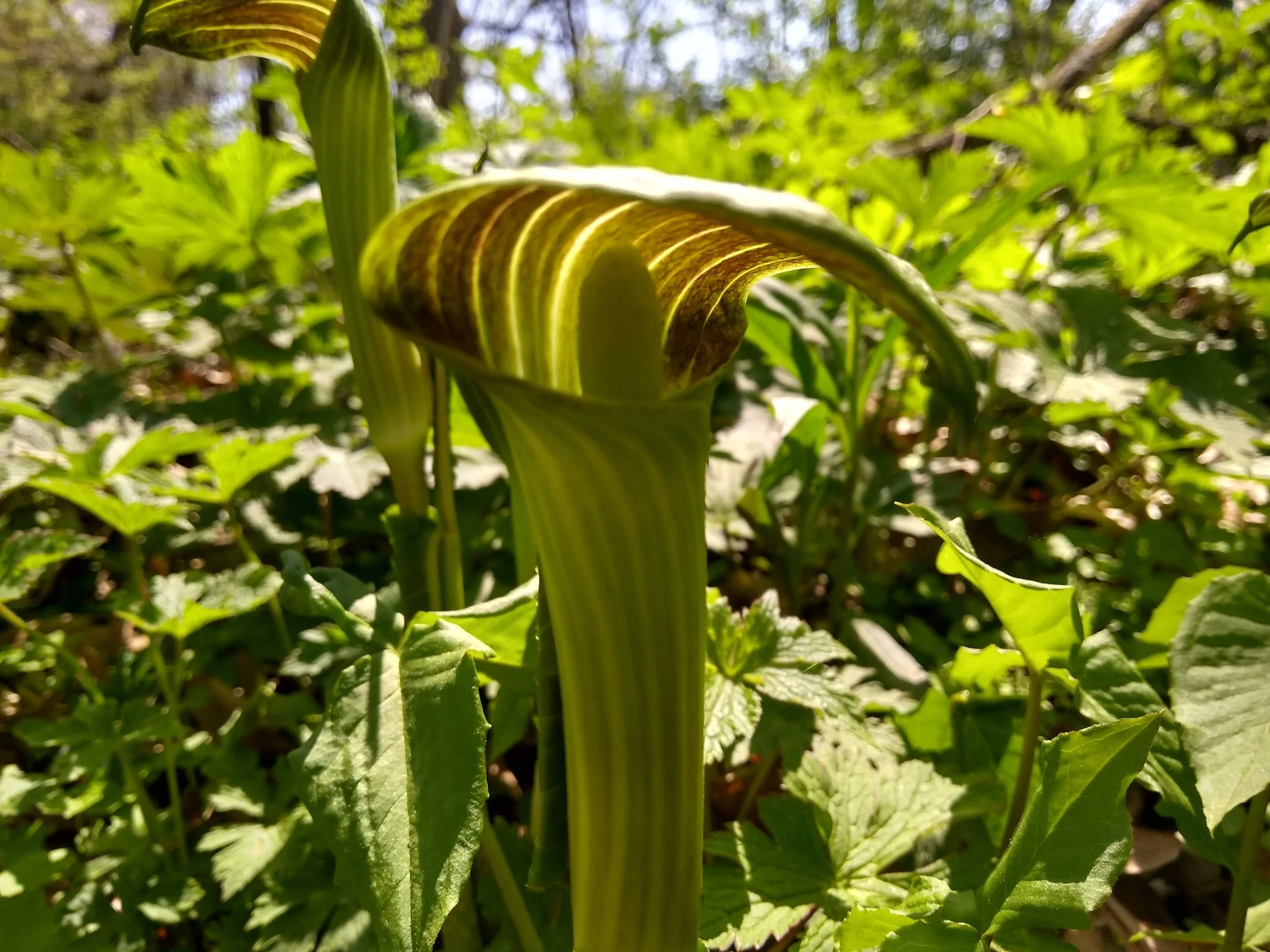
Jack-in-the-Pulpit (Arisaema triphyllum)
I have a particular affection towards Jack-in-the-pulpits (Jacks-in-the-pulpit?) in general and this one in particular which grows in our back yard. I first saw this plant growing wild on my grandparents’ farm in Central Illinois 60 years ago. Much of the property was in corn, but a good portion was wooded with fairly old, established trees. In addition there was a creek that ran through the property, and also a spring that welled up from the ground. That was 60 years ago, but just six years ago a Jack-in-the-pulpit mysteriously appeared in one of our raised vegetable beds, sharing space with tomatoes and cucumbers. I didn’t think it would reappear after the first year, but it made it through the winter and re-emerged. So, with some trepidation, I replanted it under the shelter of the Larch tree (aka Tamarack) we planted in the back yard. That spot must have suited it because it has returned every spring for the past 6 years
May 2, 2021
May 2, 2021
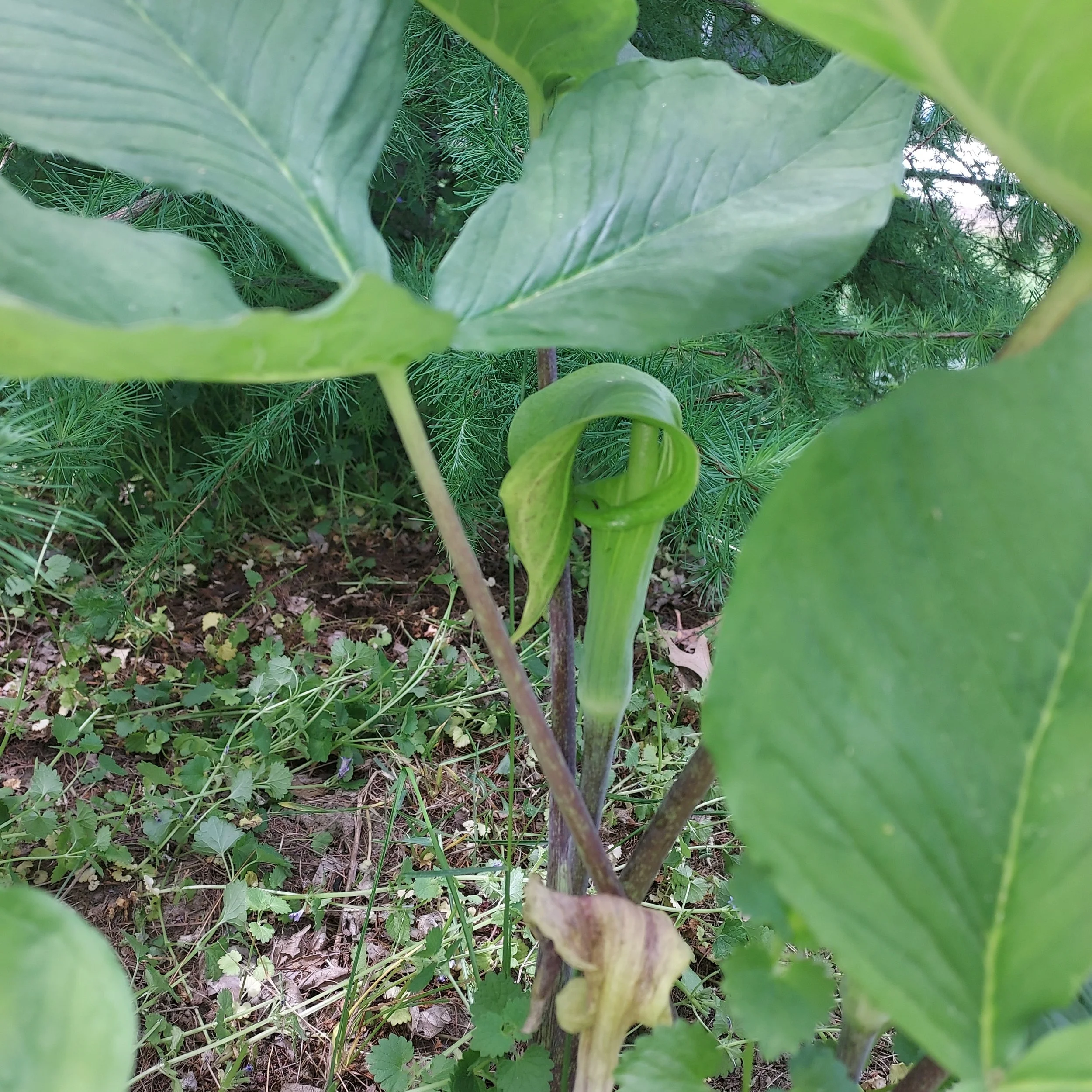
May 29, 2023
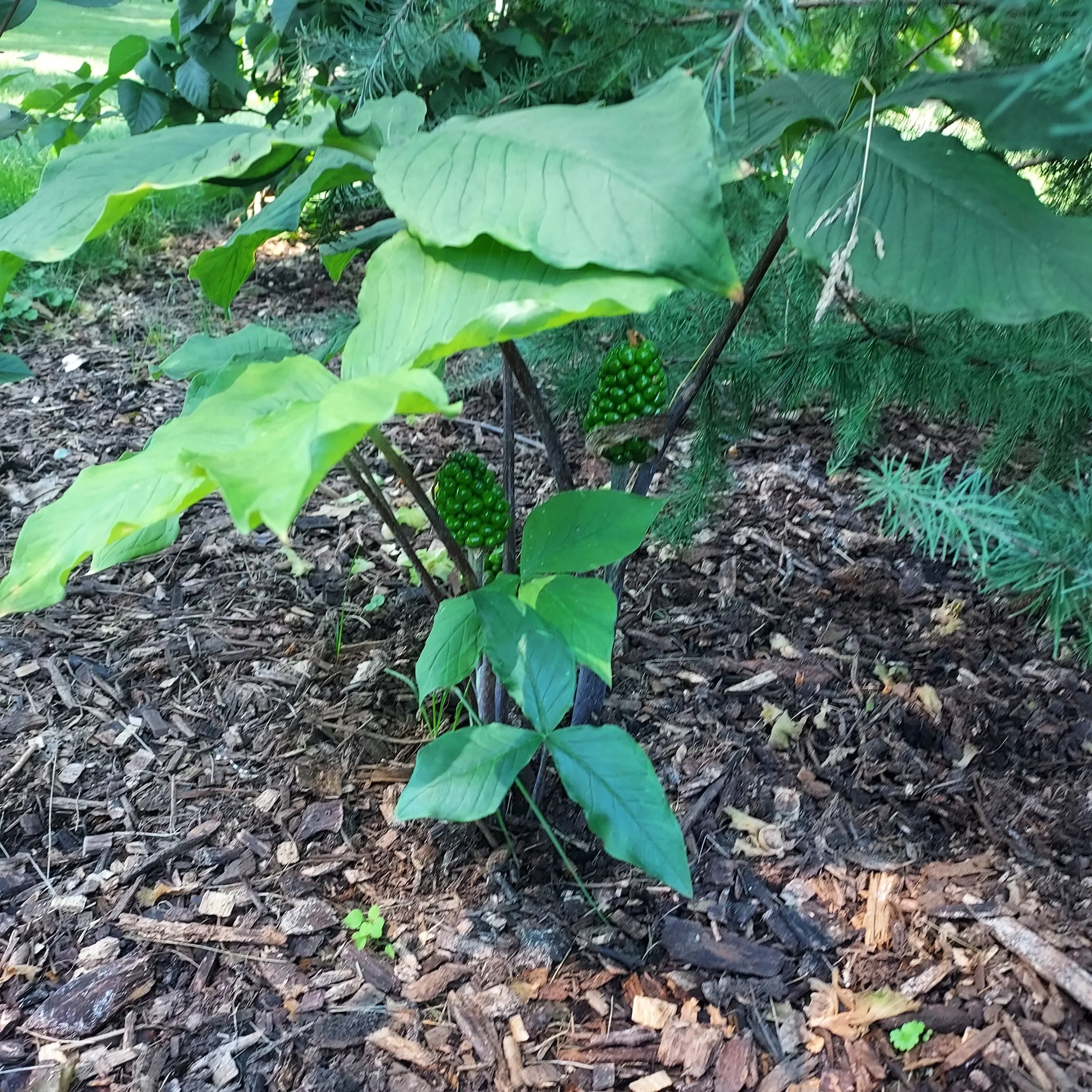
July 27, 2023 - Berries have formed
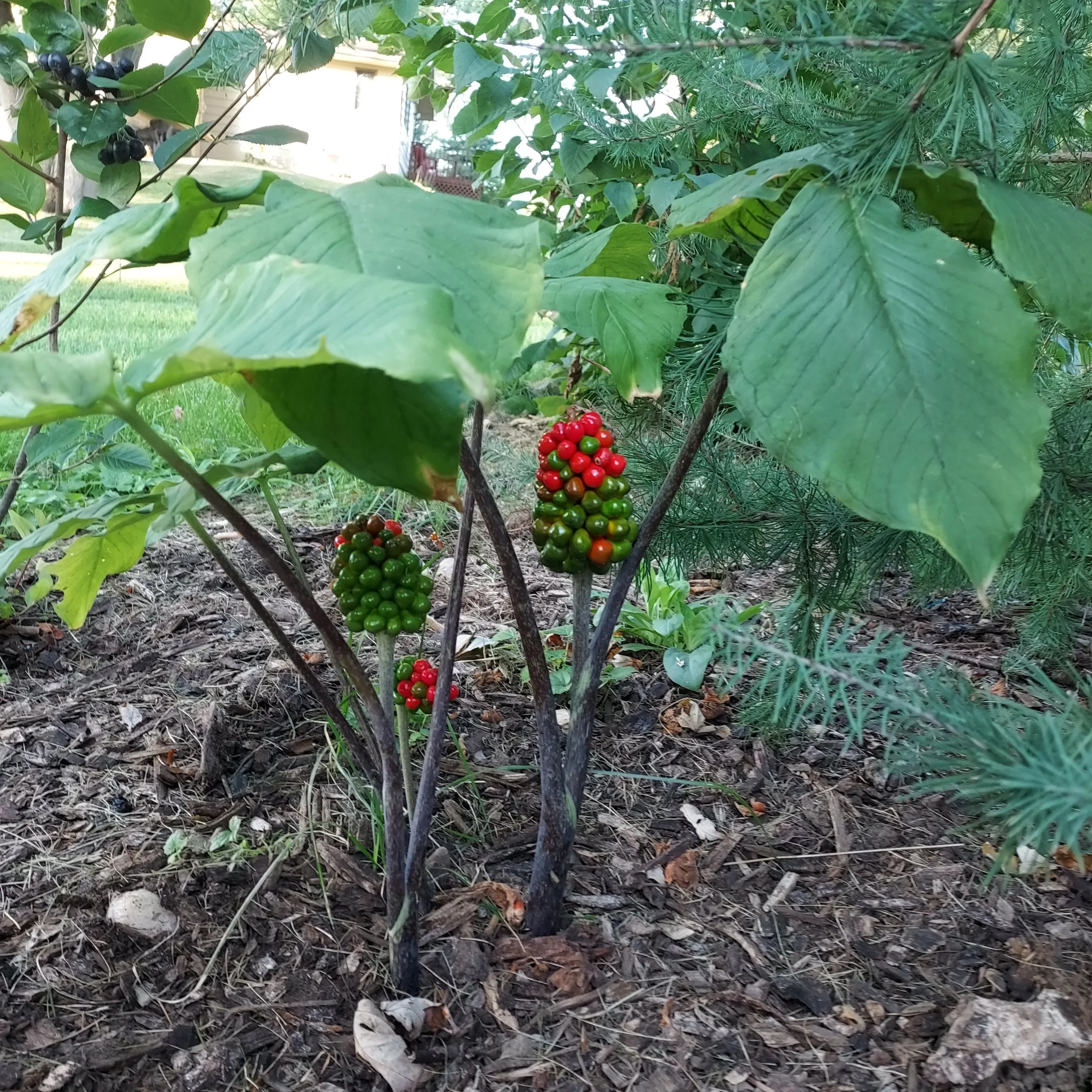
Aug. 28, 2022 - Berries turning red. You can see some Larch branches.
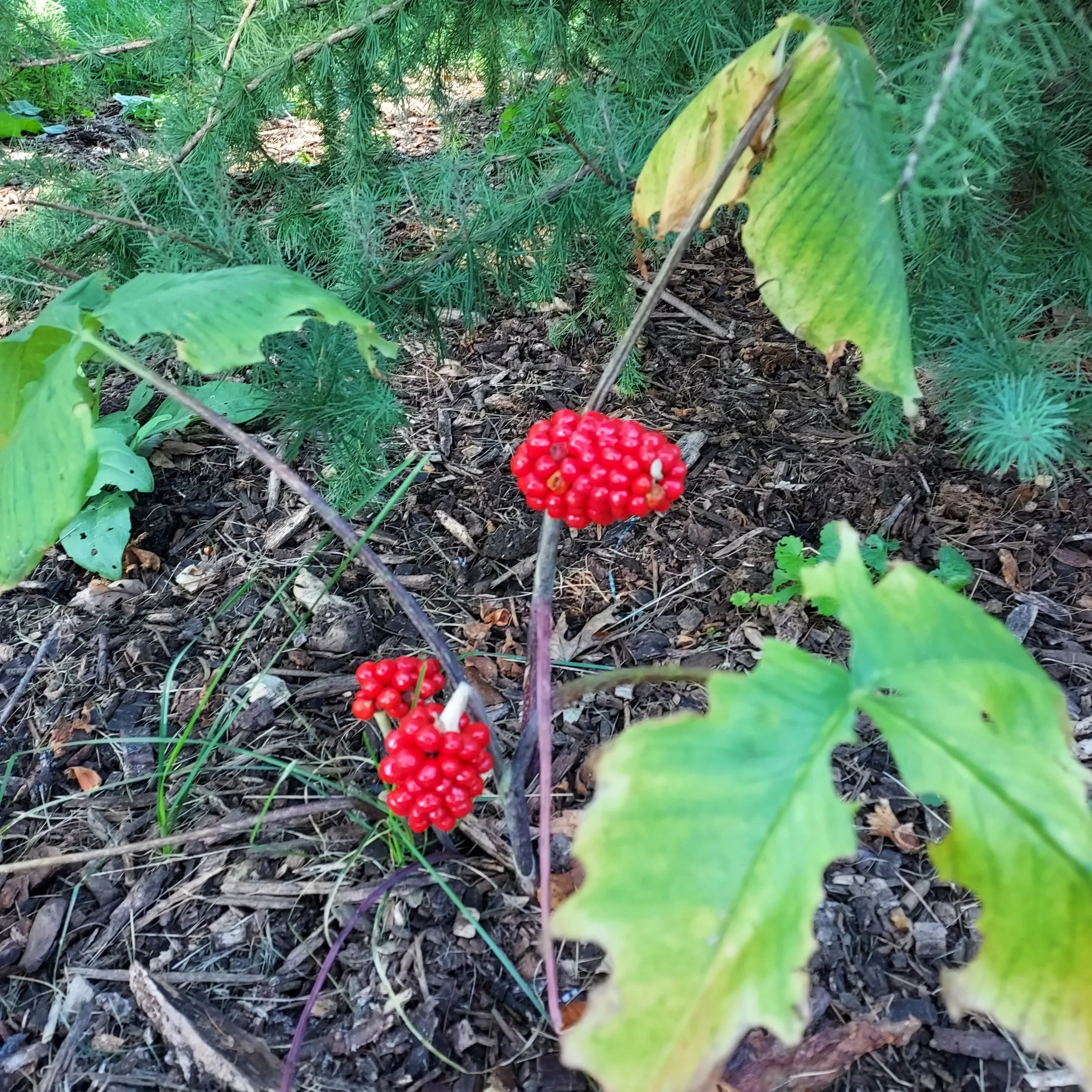
Sept 14, 2023 - Plant is dying back
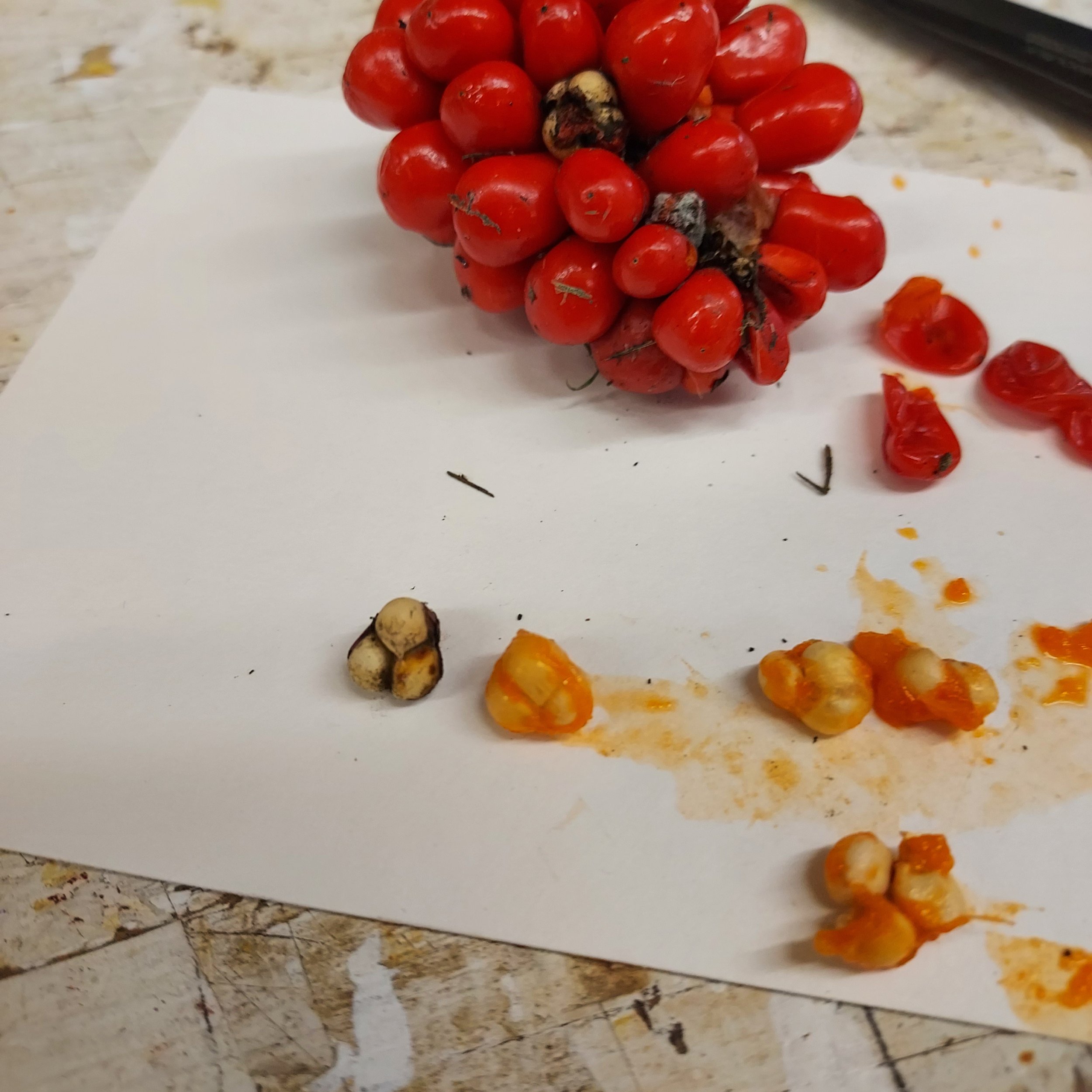
October 1, 2024 - Seeds Harvested.
I experiment with getting the seeds to grow. After I cleaned the berry pulp from the seeds [Note: Wear latex gloves], I stratified them over winter in the refrigerator and planted them in pots the next spring. They germinated and grew some 4 or 5 inches high. But, alas, they languished and died. I don’t think they liked being in pots. I may harvest the seeds and try again this coming Fall. I read that they can be propagated by digging up and dividing the root or corm. I hesitate trying for fear I’ll kill the plant.
Shown below, Gardeningknowhow.com has a great description of jack-in-the-pulpit sexual propagation :
“As mentioned, jack-in-the-pulpit (Arisaema triphyllum) reproduces both vegetatively and sexually. During vegetative propagation cormlets, lateral buds, rise from the parent corm to form new plants.
During sexual propagation, pollen is transferred from male blooms to female flowers by pollinators via a method called sexual hermaphroditism. This means that any plant may be male, female, or both. When growing conditions are prime, plants tend to produce female blooms. This is because females take more energy since they will form brilliant red berries or seeds for propagating future jack-in-the-pulpit plants.
Come spring, a single shoot emerges from the soil with two sets of leaves and a solitary flower bud. Each leaf is made up of three smaller leaflets. When the bloom opens, a leaf-like hood called a spathe appears. This is the ‘pulpit.’ Inside the folded over spathe is a rounded column, ‘Jack’ or spadix.
Both male and female blooms are found on the spadix. Once the blossom is pollinated, the spathe shrivels up revealing a cluster of green berries which grow in size and ripen to a brilliant crimson color. “
AI tells me:
“Jack-in-the-pulpit (Arisaema triphyllum) is primarily pollinated through deception by fungus gnats (families Sciaridae and Mycetophilidae) and specialized thrips, which are lured into the plant's hooded spathe by a fungus-like odor. Male plants allow trapped gnats to escape, covered in pollen, while female plants trap them, often resulting in the insect's death after pollination. “
Not as picturesque as butterflies and bees, but better than Pawpaw:
Pawpaw (Asimina triloba) flowers bloom with a, dull purplish-red color and produce a faint odor of rotting meat or decay, specifically to attract flies and beetles for pollination rather than bees. To increase fruit set, some gardeners hang rotting meat, fish, or chicken liver in the branches during spring to attract these pollinators. [A. I.]
That was enough to steer us clear of planting Pawpaws.