
High Bush Cranberry
High Bush Cranberry - (Viburnum trilobum) As you might expect from the name, the leaves generally have three lobes.
Not really a cranberry, though the fruit sort of looks like cranberry. It is native to North America - the upper Northeast and the Great Lakes region of the U.S. (probably Canada too).
While self-pollinating (has both male and female parts), it can be wind pollinated, but it mainly relies on the help of insects like bumble bees to aid in pollination.
I am told that the fruit is eaten by birds like cedar waxwings (2020 bird of the year), robins, ruffed grouse, and pheasants, as well as mammals such as deer, moose, foxes, raccoons, and beaver.
Initially we thought the berries were not edible for humans, but it turns out that …“the tart berries are a good source of Vitamin C and are often processed into jams, jellies, and sauces.”
Even growing here on the north side of our house here in Wisconsin, under the roof eaves, where it gets 75% or more shade during the day, it grows rapidly and will need to be pruned down every year to keep it lower than the eaves of the house. It does lean towards the light and away from the house.
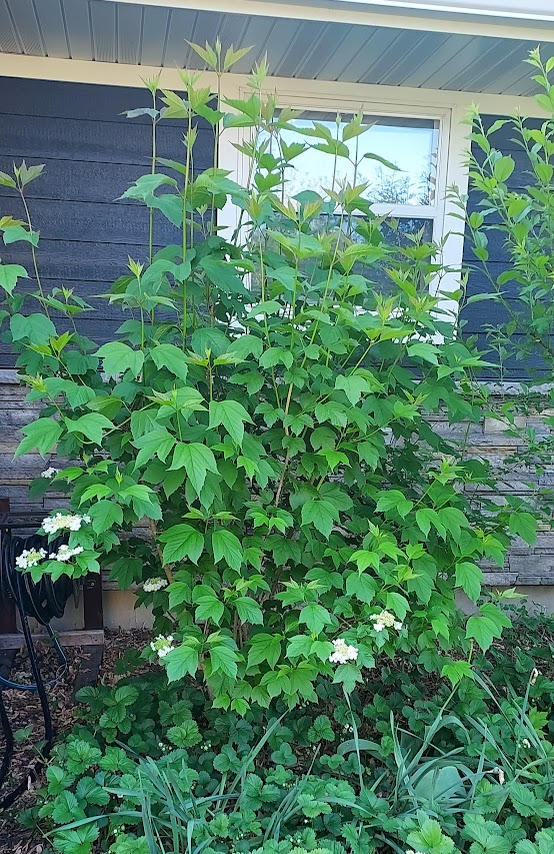
May 2025 - By autumn the branches will have grown tall enough to press against the soffits (underside of the eaves) and extend up higher than the gutter.
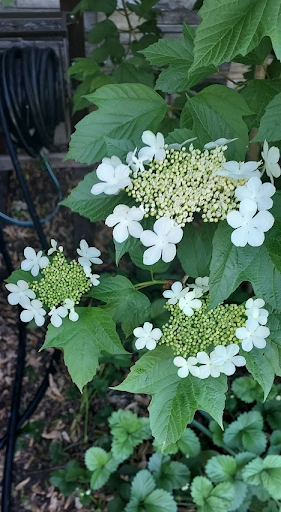
May 2025 - Early Flowers
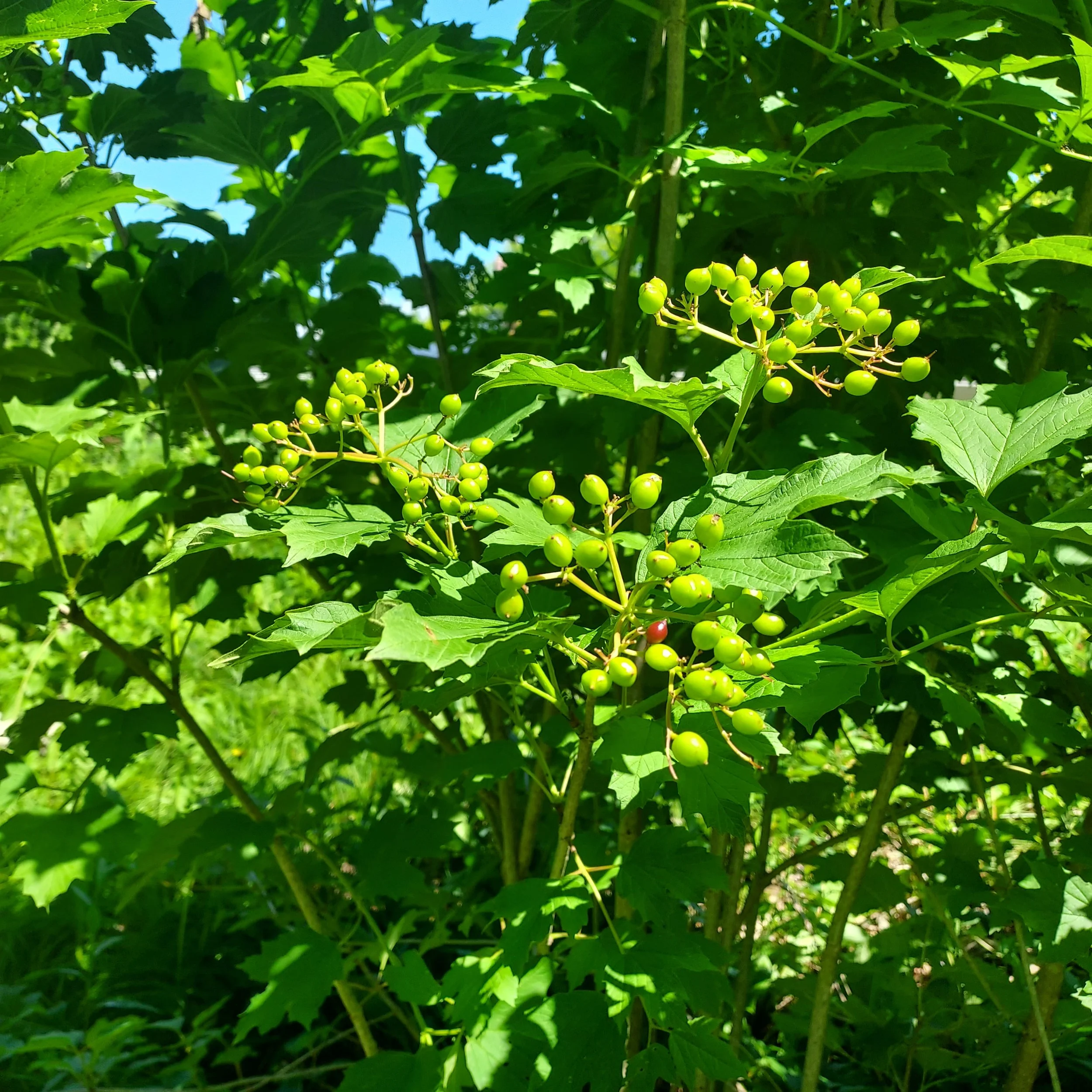
June 24, 2026
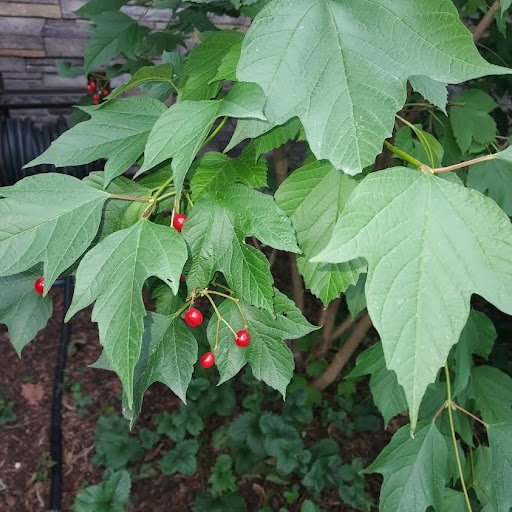
September 2025 - High Bush Cranberry fruit
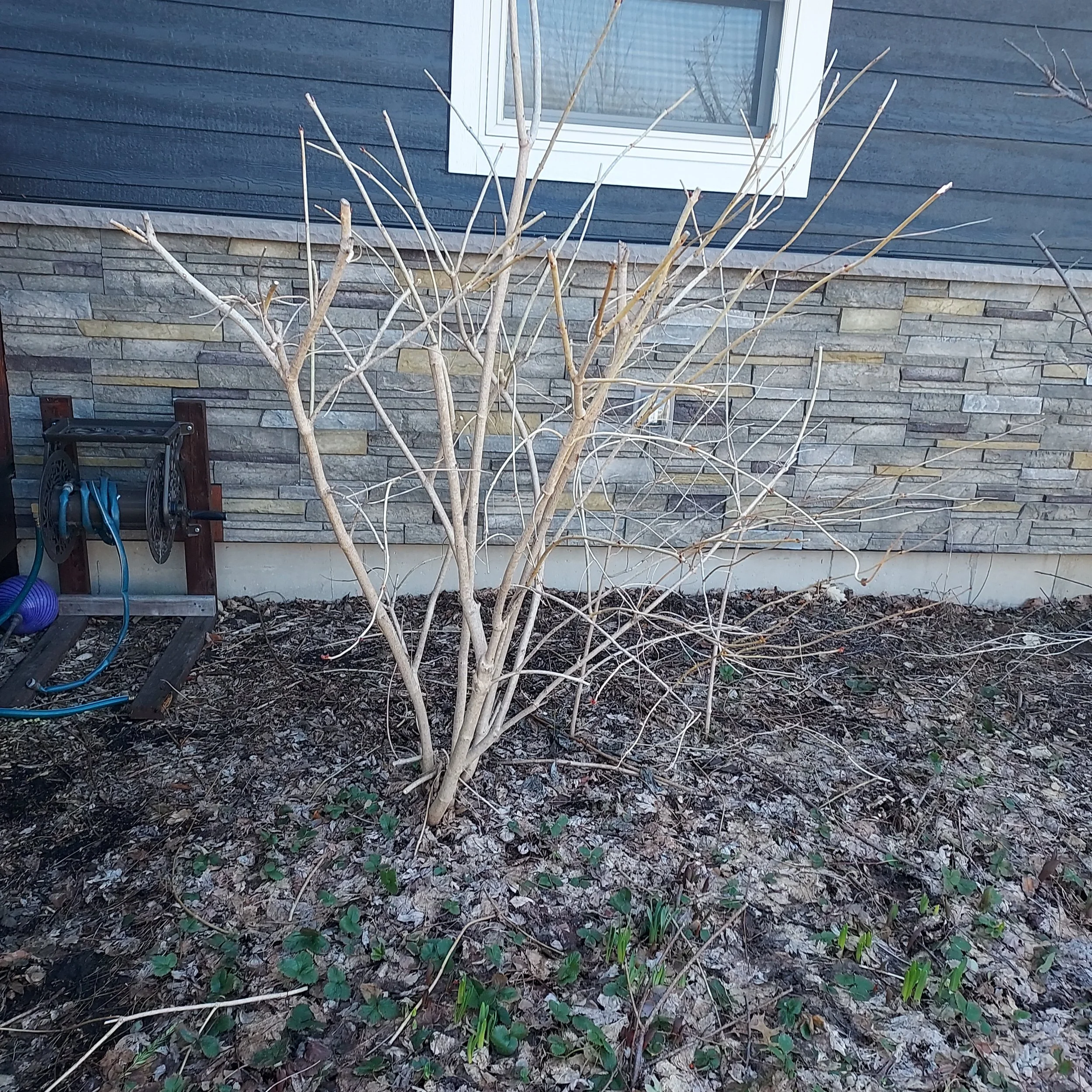
March 21, 2026 - Having made it through winter, pruned in February and ready for spring.