
Jack-in-the-Pulpit
Jack-in-the-Pulpit (Arisaema triphyllum)
I have a particular affection towards Jack-in-the-pulpits (Jacks-in-the-pulpit?) in general and this one in particular which grows in our back yard. I first saw this plant growing wild on my grandparents’ farm in Central Illinois 60 years ago. Much of the property was in corn, but a good portion was wooded with fairly old, established trees. In addition there was a creek that ran through the property, and also a spring that welled up from the ground. That was 60 years ago, but just six years ago a Jack-in-the-pulpit mysteriously appeared in one of our raised vegetable beds, sharing space with tomatoes and cucumbers. I didn’t think it would reappear after the first year, but it made it through the winter and re-emerged. So, with some trepidation, I replanted it under the shelter of the Larch tree (aka Tamarack) we planted in the back yard. That spot must have suited it because it has returned every spring for the past 6 years
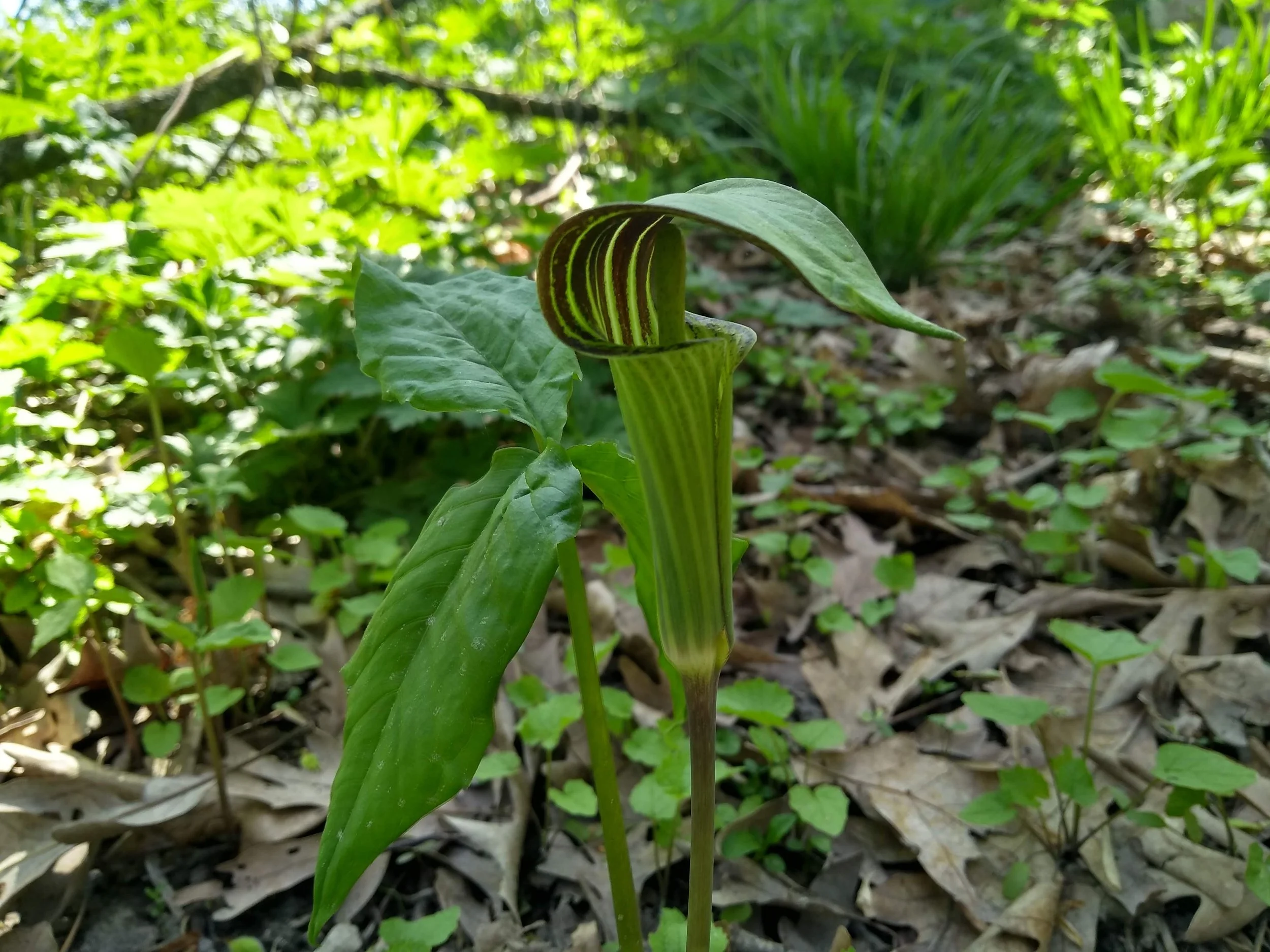
May 2, 2021
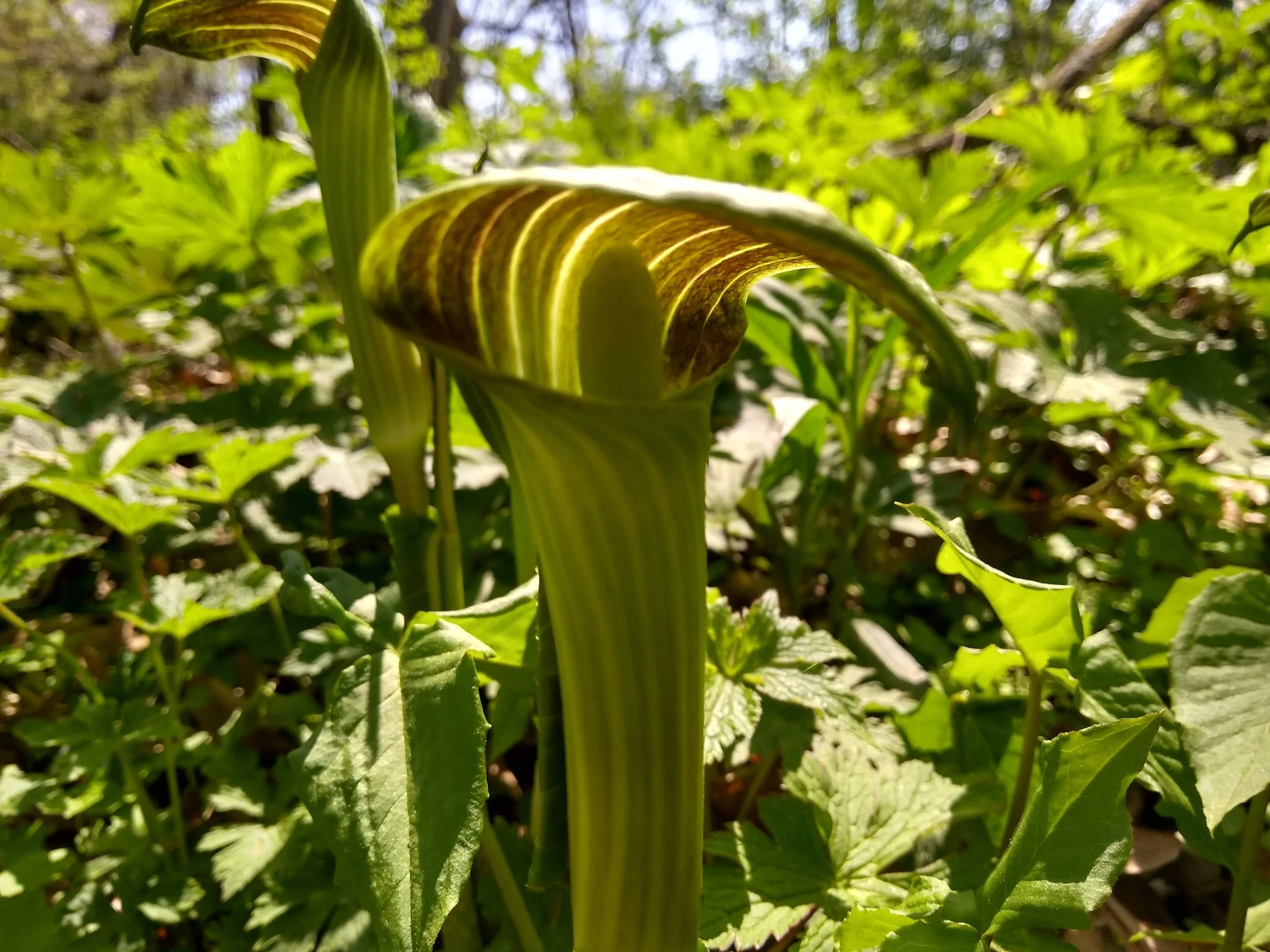
May 2, 2021
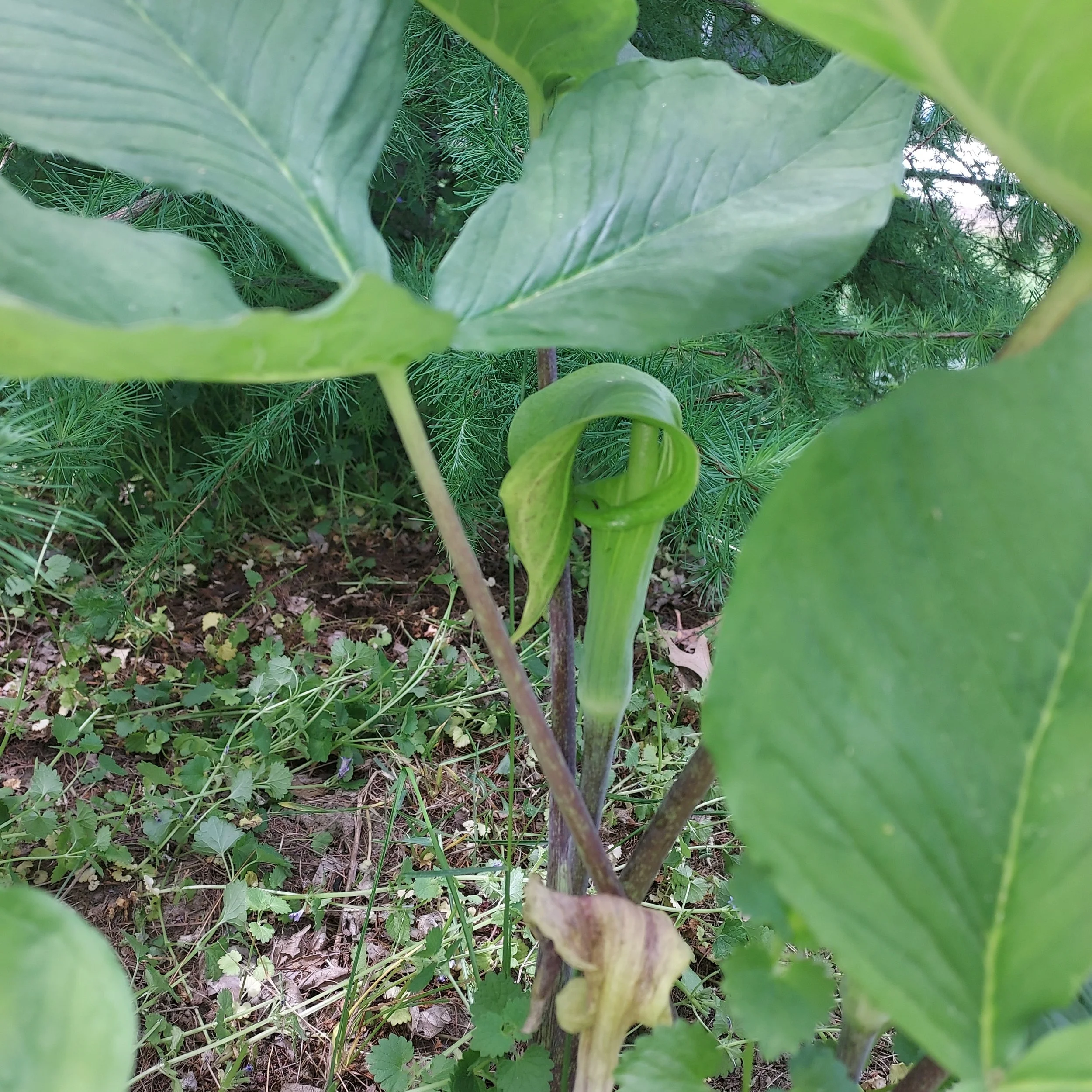
May 29, 2023
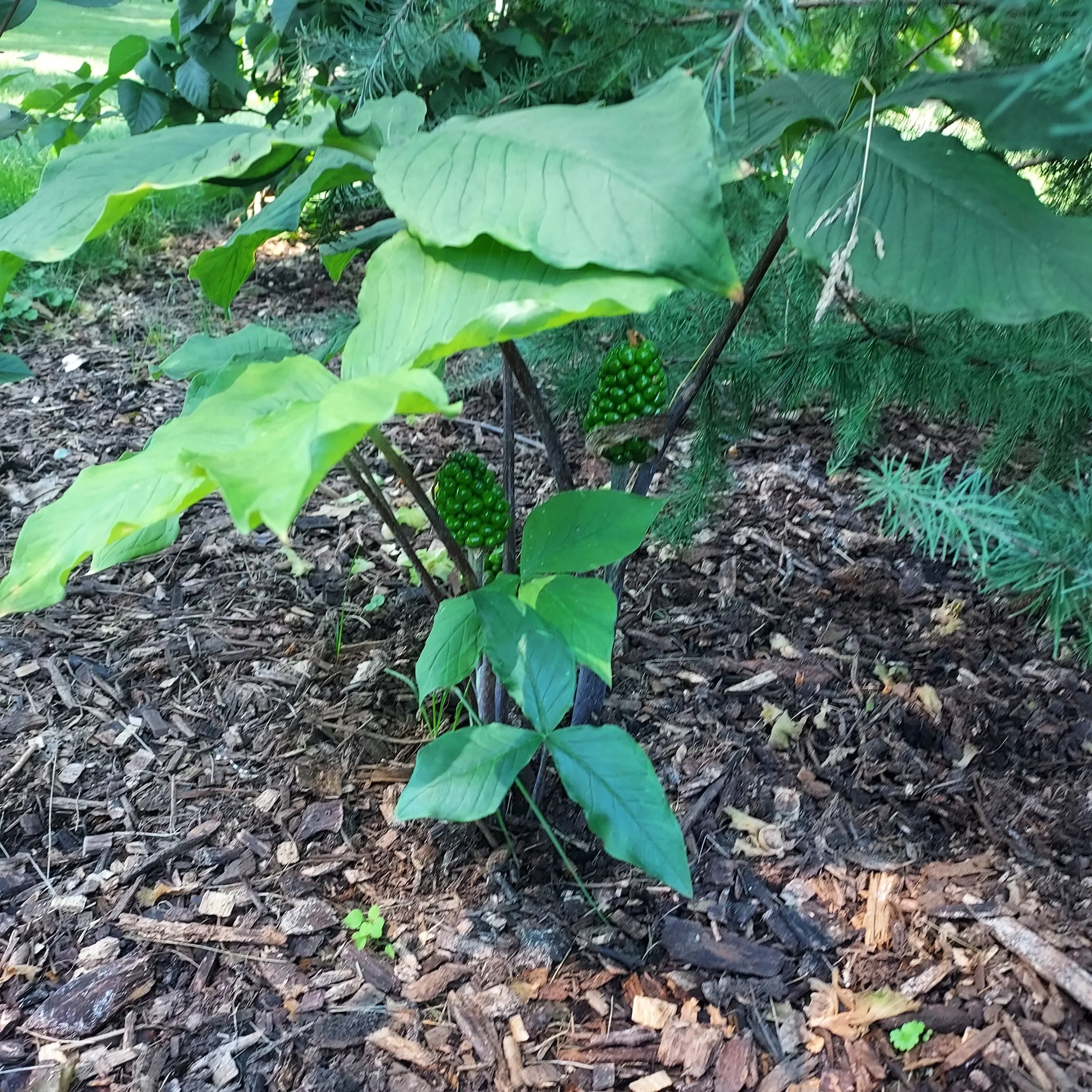
July 27, 2023 - Berries have formed
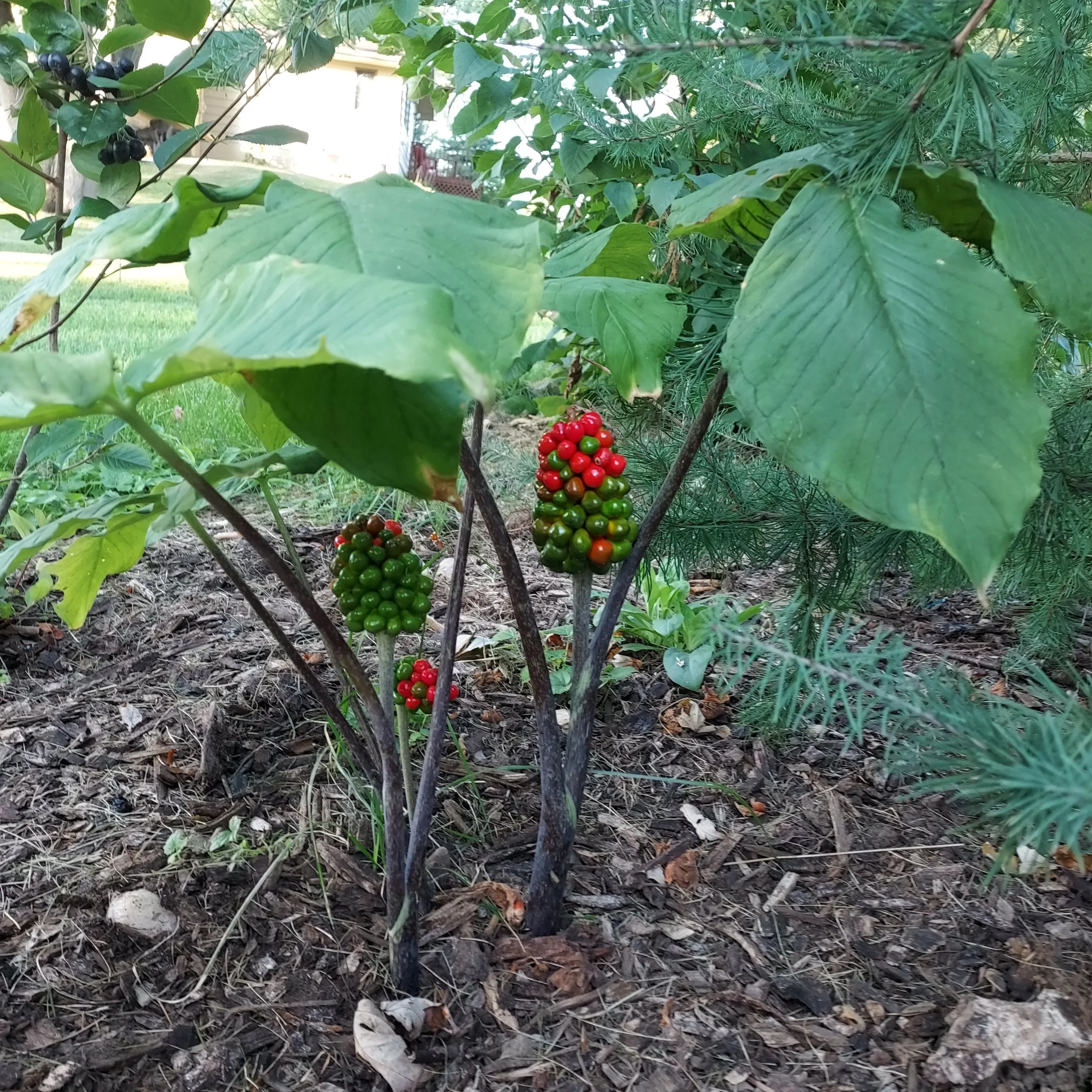
Aug. 28, 2022 - Berries turning red. You can see some Larch branches.
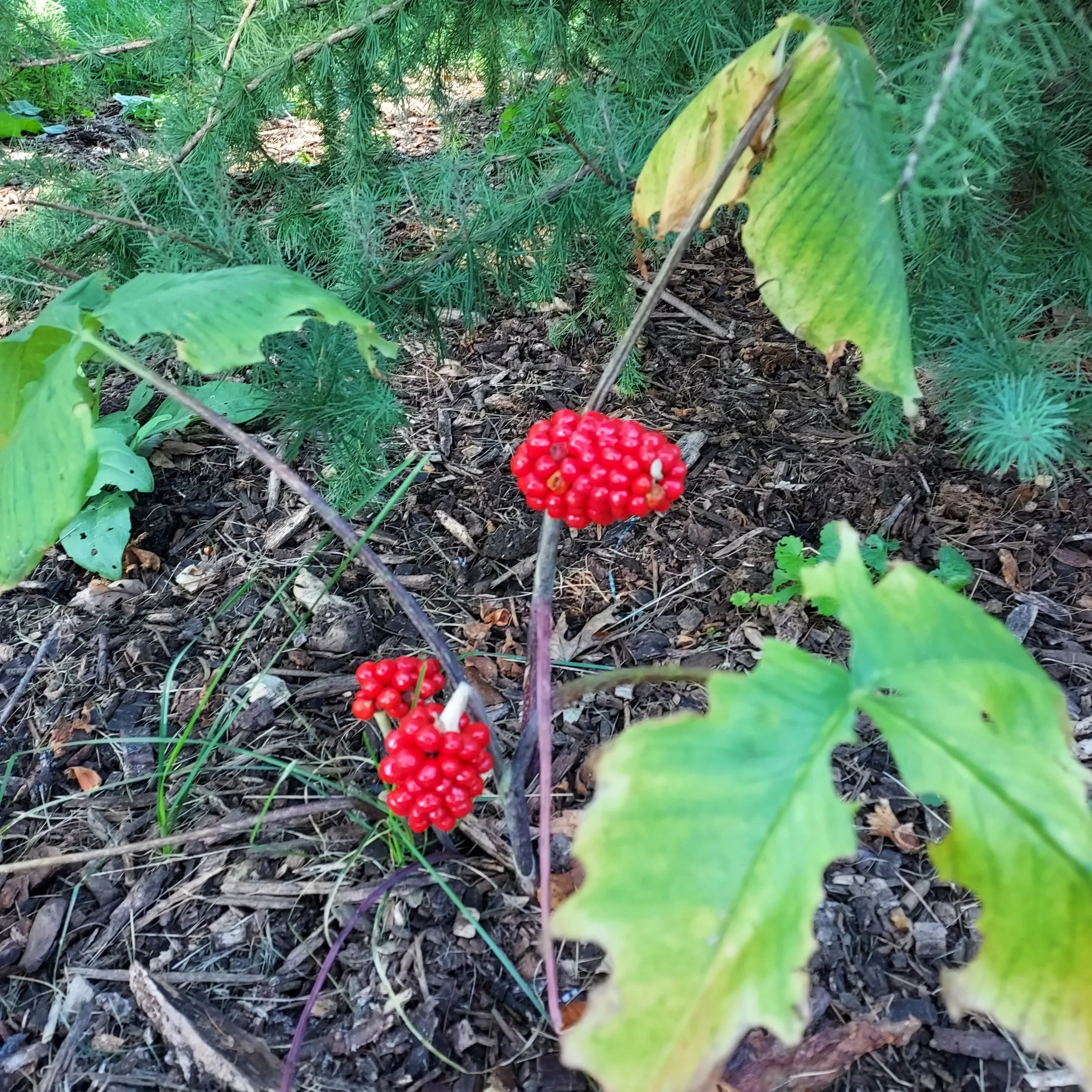
Sept 14, 2023 - Plant is dying back
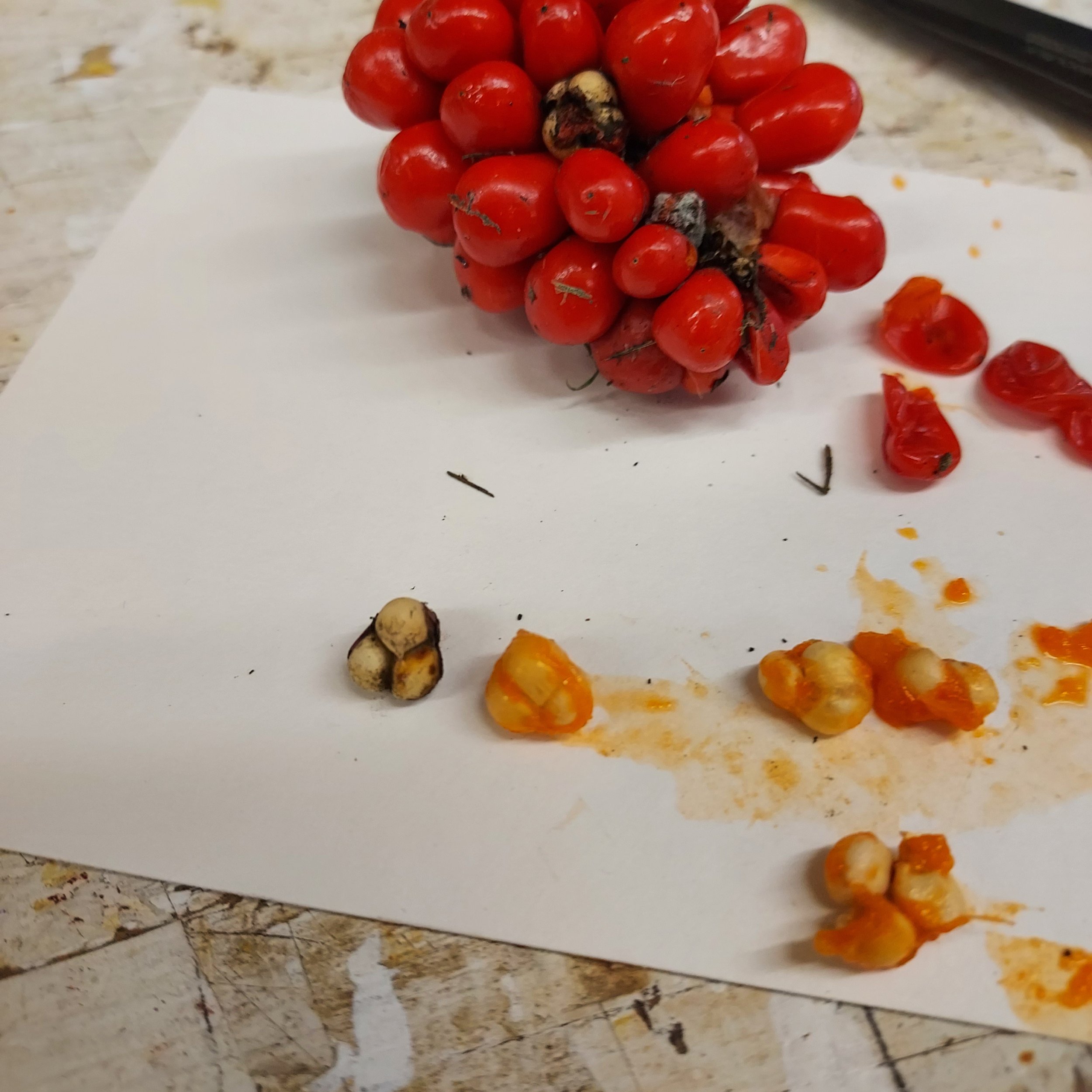
October 1, 2024 - Seeds Harvested.
I experiment with getting the seeds to grow. After I cleaned the berry pulp from the seeds [Note: Wear latex gloves], I stratified them over winter in the refrigerator and planted them in pots the next spring. They germinated and grew some 4 or 5 inches high. But, alas, they languished and died. I don’t think they liked being in pots. I may harvest the seeds and try again this coming Fall. I read that they can be propagated by digging up and dividing the root or corm. I hesitate trying for fear I’ll kill the plant.
Shown below, Gardeningknowhow.com has a great description of jack-in-the-pulpit sexual propagation :
“As mentioned, jack-in-the-pulpit (Arisaema triphyllum) reproduces both vegetatively and sexually. During vegetative propagation cormlets, lateral buds, rise from the parent corm to form new plants.
During sexual propagation, pollen is transferred from male blooms to female flowers by pollinators via a method called sexual hermaphroditism. This means that any plant may be male, female, or both. When growing conditions are prime, plants tend to produce female blooms. This is because females take more energy since they will form brilliant red berries or seeds for propagating future jack-in-the-pulpit plants.
Come spring, a single shoot emerges from the soil with two sets of leaves and a solitary flower bud. Each leaf is made up of three smaller leaflets. When the bloom opens, a leaf-like hood called a spathe appears. This is the ‘pulpit.’ Inside the folded over spathe is a rounded column, ‘Jack’ or spadix.
Both male and female blooms are found on the spadix. Once the blossom is pollinated, the spathe shrivels up revealing a cluster of green berries which grow in size and ripen to a brilliant crimson color. “
AI tells me:
“Jack-in-the-pulpit (Arisaema triphyllum) is primarily pollinated through deception by fungus gnats (families Sciaridae and Mycetophilidae) and specialized thrips, which are lured into the plant's hooded spathe by a fungus-like odor. Male plants allow trapped gnats to escape, covered in pollen, while female plants trap them, often resulting in the insect's death after pollination. “
Not as picturesque as butterflies and bees, but better than Pawpaw:
Pawpaw (Asimina triloba) flowers bloom with a, dull purplish-red color and produce a faint odor of rotting meat or decay, specifically to attract flies and beetles for pollination rather than bees. To increase fruit set, some gardeners hang rotting meat, fish, or chicken liver in the branches during spring to attract these pollinators. [A. I.]
That was enough to steer us clear of planting Pawpaws.